


















































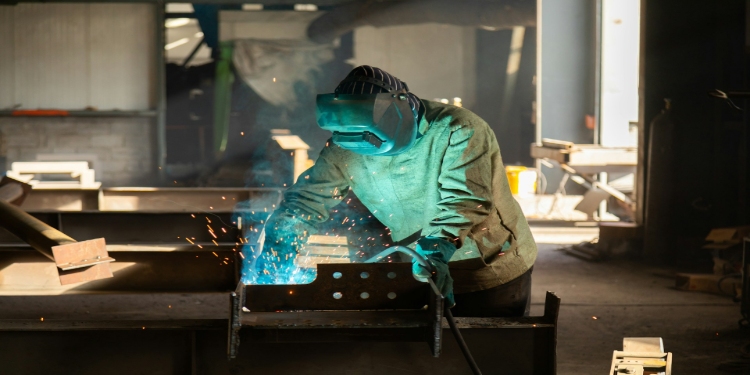
Stainless steel is commonly used, so the chances that you will need to weld something made out of it are very high. Welding this material requires exceptional accuracy, as weak or distorted joints can lead to poor performance. Years of testing show that TIG welders are the best for working with stainless steel. Indeed, those machines can produce clean, strong, and visually appealing welds.


Challenges of Stainless Steel Welding
Stainless steel has several unique challenges for those who use it in fabrication. Its relatively low thermal conductivity and tendency to retain heat increase the risk of warping. It can become more susceptible to corrosion if it is not handled correctly.
Moreover, stainless steel welding often requires careful control of heat input and shielding gas to prevent defects. As you can see, even minor errors can weaken joints or damage the material’s protective properties. TIG welding deals best with all these challenges.
Technical Advantages of TIG Welders
It is not surprising giving that TIG welders offer several technical benefits that make them ideal for stainless steel fabrication, namely:
- the use of a non‑consumable tungsten electrode that ensures a stable arc;
- consistent heat input throughout the weld;
- shielding gases that preserve the material’s corrosion resistance;
- precise heat control reduces distortion.
Furthermore, TIG machines are able to produce a clean weld appearance with minimal spatter and smooth finishes. Thus, there is less probability that you will need to do additional grinding or polishing.
Comparing TIG to Other Welding Methods
TIG stands out with accuracy and finish quality if you compare it with other welding methods. The ability to control heat input and produce clean welds is what ensures professional results, and, as a result, the high popularity of TIG machines for working with stainless steel. Yet, it is not without drawbacks, as it is less suitable for efficient and high-volume tasks.
TIG vs MIG
MIG welding is often done faster, so it is more suitable for high-volume orders. However, the weld might not look perfect. Spatters are possible, so be ready that the result might not be visually appealing. If the visual part is essential, it is better to use TIG welders. When those machines are applied, you might expect cleaner joints and less need for post‑weld finishing.
TIG vs Stick
Stick welding is versatile and effective outdoors or on thick steel. As it uses consumable electrodes coated in flux, Stick welding can handle dirty or rusty materials. Moreover, it is less sensitive to wind or adverse conditions. However, do not expect much precision or a refined finish that TIG welders can provide.
Cost, Skill, and Value Considerations
When you consider whether to buy a TIG welder, it is worth knowing about the cost and skill requirements. Thus, before choosing a TIG machine, it is worth analyzing your needs and your experience in welding to be sure that you will be able to work with it professionally.
Equipment Cost
TIG welders typically require a higher upfront investment compared to other machines. Therefore, it might not be cost-effective to buy it if you have basic work to do that does not need either precision or excellent quality. However, if you are performing complex welding tasks regularly and often work with thin steel, it might be a good option for you.
Consumables
Be ready that the usage of TIG welders involves ongoing expenses for tungsten electrodes and shielding gas. Without them, you will not achieve clean, high-quality welds that meet industry standards and look professional. Thus, buying TIG is not a one-time investment, but an ongoing payment for consumables, too.
Skill Requirement
TIG welding demands a steady hand, precise coordination, and patience. Ideally, you should also have experience in using other welding machines to learn to use TIG quickly and effectively. Furthermore, when using TIG, you would need to control both the filler material and the arc simultaneously. It is difficult to master, even for some seasoned welders.
Long-Term Value
Despite those nuances mentioned above, the purchase of TIG for working with stainless steel might be a smart choice, as it minimizes rework and ensures that your work will be in line with most, if not all, quality standard requirements.
Choosing the Right TIG Welder for Stainless Steel
Finding the right TIG welder might also be challenging, as there are a couple of nuances that any welder should know. It is also worth paying attention to the manufacturer itself to ensure that you are buying quality equipment that will not let you down for years.
PATON is one of those companies that offer a strong balance between cost, durability, and quality of TIG welders. It is manufactured in Europe with branded, genuine parts that ensure excellent quality of welds and durability of the machine. Advanced digital controls allow fine‑tuned adjustments for consistent results, while compact designs make them suitable for transportation to different locations.
The brand itself is confident in the quality of its machines, so it offers a robust warranty that is not provided by any other manufacturer in this industry. Warranty on its products can be available for up to five years.
This company has a wide range of TIG welder models to choose from. Thus, it is worth following these tips to make the right decision about the TIG welder that fully meets your needs:
- choose a welder with a wide range to be able to work with both thin and thick steel sheets.
- opt for machines with a strong duty cycle;
- take a machine with AC/DC capability to be able to work with aluminum and other metals, on top of stainless steel.
- opt for digital controls with pulse settings and memory presets to save time on repetitive adjustments;
- choose a compact, lightweight machine to be able to move it to different locations;
- select high‑quality regulator and cylinder to prevent contamination from gas shielding.
- match machine capacity to your workload and stainless steel thickness.
A TIG welder is an advanced option for those working with stainless steel often. Even though it requires advanced skills and is more expensive than other options, this investment pays off with high-quality work and long-term service.

David Prior
David Prior is the editor of Today News, responsible for the overall editorial strategy. He is an NCTJ-qualified journalist with over 20 years’ experience, and is also editor of the award-winning hyperlocal news title Altrincham Today. His LinkedIn profile is here.