





















































A sectional can look like a standard sofa with an extra seat attached, yet its price may be considerably higher. The difference becomes easier to understand when you compare the complete configuration: how much seating it provides, what goes into its construction, and which features you will actually use.
Still, a higher price does not automatically mean better quality. A well-made couch can outperform a poorly built sectional. Before deciding which offers better value, look beyond the product label and examine the furniture you are buying.


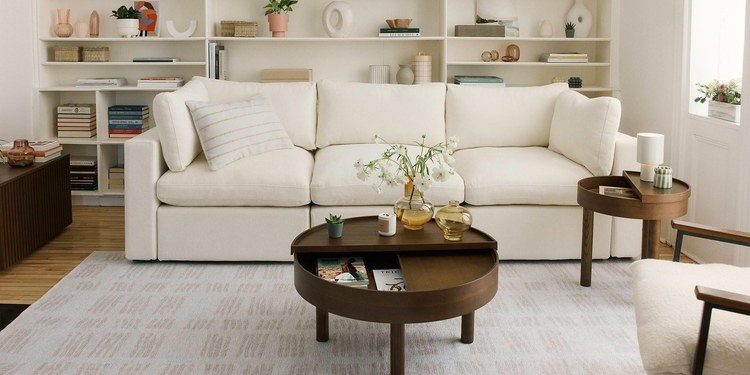
Ciello collection by Cozey. Image courtesy of Cozey.
Start by comparing equivalent seating
A three-seat sofa and a large corner sectional serve different needs. Comparing their headline prices alone can make the sectional seem disproportionately expensive, even when it accommodates more people.
For a simple illustration, a $2,000 sofa with three usable seats costs roughly $667 per seat. A $3,000 sectional with five usable seats costs $600 per seat. These are hypothetical figures, but they demonstrate why the total price is only part of the comparison. Check usable seating width, too: a chaise provides lounging space without necessarily accommodating another seated adult.
Household habits matter here. If one person usually stretches out across the chaise, count that as the space you actually use. A nominal seat count on a product page may not reflect your preferred way of sitting.
Size increases the material bill
Larger configurations generally require more upholstery, cushioning, frame components, and support underneath the seats. A deep chaise or oversized corner can add substantial surface area, even if the furniture looks visually simple.
Materials also vary within each category. Two sectionals of similar dimensions may use different cushion fillings, fabrics, suspension systems, or frame construction. Compare published specifications and ask questions where details are missing. The amount of material helps explain the price, but its quality helps determine whether that price is reasonable.
Fabric selection deserves particular attention in busy homes. Ask how to clean spills, whether the fabric suits pets, and how replacement covers are priced. An appealing colour should also work with the care routine you can realistically maintain.
Connections and configuration add complexity
Separate seating units must align properly and stay connected during everyday use. Depending on the design, that means additional hardware, repeated frame components, and upholstery work across several pieces.
It is also important to distinguish shape from modularity. A sectional describes a seating arrangement, often with a corner or chaise. A modular sofa uses separate units that can be combined in different ways. Some sectionals have a fixed orientation; others can be rearranged or expanded. Check the actual connection system rather than assuming every sectional offers the same flexibility.
Extra functions can change the price
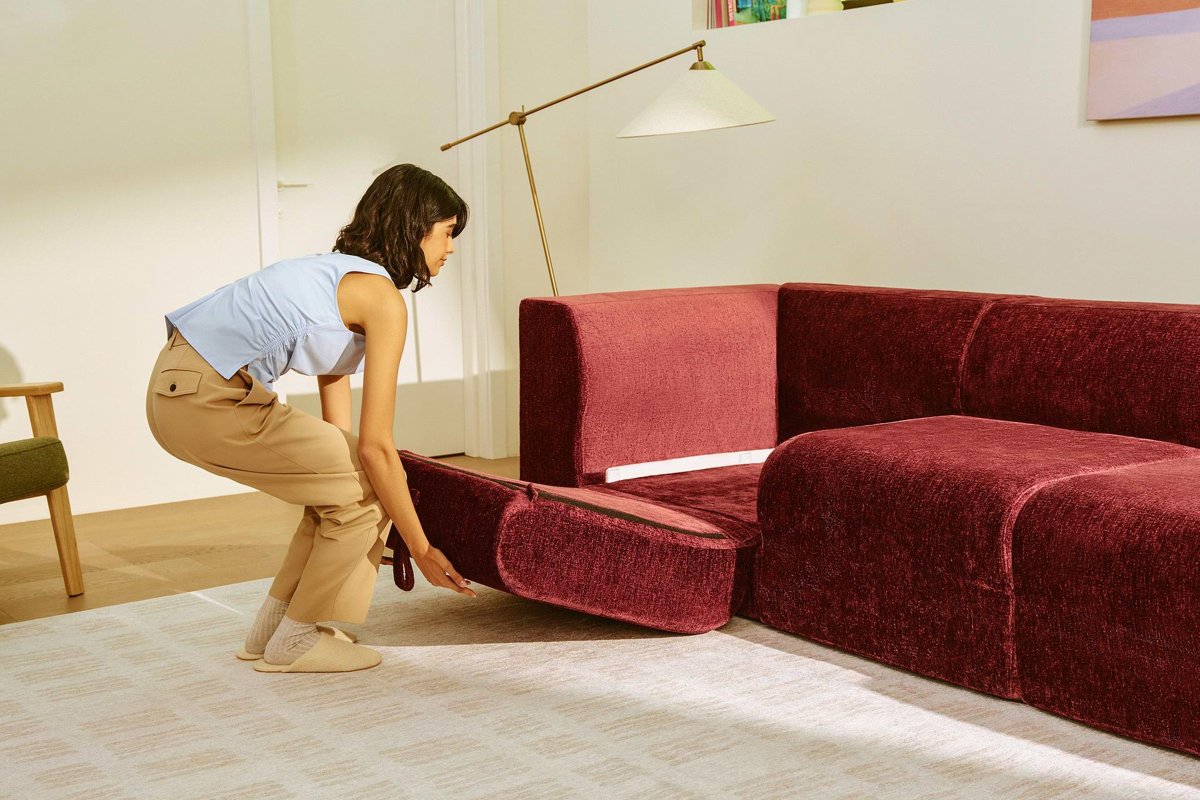
Storage compartments, sleeper mechanisms, adjustable elements, and upgraded upholstery can all increase the final cost. These additions may be useful, but their value depends on your household. Hidden storage may be practical in an apartment, while a sleeper option may make sense for occasional overnight guests.
Compare the exact configuration shown in the cart with the advertised starting price. Check whether ottomans, corner units, cushions, or other accessories are included. An entry-level price may represent a smaller arrangement than the one pictured, making an apparently affordable option more expensive once configured.
Retail pricing can also reflect design development, service, and the seller’s operating model. Brand recognition alone does not prove superior construction. Use it as context, then evaluate the specifications and support attached to the particular model you are considering.
Think about the room before paying for more
A sectional can help organize an open living area, but extra seating is only valuable when it fits comfortably. Measure its full footprint, including the chaise, and leave room for doors, drawers, and normal movement around the furniture.
Mark the outline on the floor with removable tape before ordering. Measure entrances, stairs, elevators, and the largest packaged component as well. For households exploring adaptable layouts, modular sofas can offer a useful starting point for comparing configurations. Choose a layout around how you live, rather than filling every available inch of the room.
Maintenance matters as much as the purchase price
Neither a sectional nor a conventional couch is inherently longer-lasting. Durability depends on construction, materials, use, and care. A modular design may make certain repairs or replacements more manageable, but only when compatible components remain available.
Look for clear care instructions and ask whether individual covers, cushions, or modules can be purchased separately. Cozey’s Ciello collection, for example, offers removable, washable covers and a modular layout. Follow the instructions for the particular fabric rather than assuming every upholstery material can be machine-washed.
Repairability can also help preserve a product’s usefulness. The Government of Canada identifies repair and refurbishment as value-retention processes that can extend product service life. That principle supports checking repair options before buying, without assuming any specific sofa will last a guaranteed number of years.

Include delivery and returns in your budget
Shipping charges, assembly services, taxes, and potential return costs can change the real difference between two options. Multiple boxes may make access easier, but they do not automatically mean delivery will be cheaper.
Read the delivery method and return conditions before paying, particularly for custom configurations. Quebec’s Office de la protection du consommateur recommends measuring furniture and checking exchange and refund policies before purchase. Keep the order confirmation and warranty details so you can refer to the agreed specifications and terms.
A practical checklist for comparing options
Use the same criteria for every sofa or sectional on your shortlist:
- Compare the complete configuration, usable seating, and dimensions.
- Check frame, cushion, upholstery, and connector specifications.
- Request fabric samples and assess comfort where possible.
- Confirm replacement-part availability and written warranty coverage.
- Calculate the delivered total and understand return conditions.
If a large sectional exceeds your budget, consider a smaller sofa with an ottoman or a compact modular arrangement. Buy only the seating you need now, and confirm compatibility before relying on future expansion.
Choose the value that fits your home
Sectionals often cost more because they combine greater size with additional components and, sometimes, more functionality. Whether that premium is worthwhile depends on the specific product and the space it will occupy.
Compare equivalent configurations, inspect the construction details, and account for maintenance and delivery. The strongest purchase is the one that provides comfortable, practical seating at a total cost you can justify. A smaller, well-chosen arrangement can deliver better everyday comfort than a larger configuration that restricts movement, exceeds your budget, or includes features your household will rarely use.

David Prior
David Prior is the editor of Today News, responsible for the overall editorial strategy. He is an NCTJ-qualified journalist with over 20 years’ experience, and is also editor of the award-winning hyperlocal news title Altrincham Today. His LinkedIn profile is here.