


















































There’s a certain kind of excitement that comes with launching an online store.
You hit publish.
The homepage looks clean.
The product pages feel convincing.
The ads are ready.


For a moment, it feels like you’ve built something real.
And then… nothing.
Or worse something happens. A few sales trickle in, followed by confusion. High ad costs. Low conversions. Customer questions you weren’t prepared for. Delivery delays you didn’t anticipate.
Within 30 days, the excitement fades. Not because the idea was bad but because the foundation wasn’t ready.
In dropshipping, the first 30 days don’t just test your store. They expose your decisions.
Let’s break down where most eCommerce dreams quietly break and how to avoid it.
1. Day 1–7: The Illusion of “Ready to Launch”
Most stores don’t fail because they never launch.
They fail because they launch too early.
Common early-stage mistakes include:
- Choosing products based on personal preference
- Copying competitors without understanding their backend
- Skipping proper validation
- Assuming ads will “figure it out”
The problem isn’t effort. Its direction.
In competitive markets like the US and Europe, launching without validation is expensive. Ad costs are high, and customer expectations are even higher.
A store might look polished but if the product isn’t validated, everything built on top of it becomes fragile.
2. Day 7–14: The Reality Check (Ads vs Expectations)
This is where things start getting uncomfortable.
You launch ads. You expect traction.
Instead, you see:
- High CPCs
- Low click-through rates
- Few or no conversions
At this stage, many sellers blame creatives or ad platforms.
But often, the issue runs deeper:
- The product lacks real demand
- The offer isn’t compelling
- The positioning doesn’t connect
Here’s the hard truth:
Ads don’t create demand. They amplify it.
If the product isn’t inherently desirable, no amount of ad spend will fix it.
3. Example #1 The “Trendy but Empty” Product
A beginner seller in the US launched a store around a trending gadget seen on social media.
The product had:
- Viral engagement
- Multiple creators talking about it
- Strong visual appeal
They skipped deeper validation and went live.
Within two weeks:
- Ads struggled to convert
- Customer interest didn’t translate into purchases
- Returns started coming in
Why?
The product was entertaining, not essential.
This is where proper product validation makes the difference.
4. Day 14–21: Fulfillment Starts to Break
Let’s say your store does get sales.
Now the real test begins.
In dropshipping, fulfillment isn’t just logistics, it’s reputation.
This is where many stores collapse.
Common issues:
- 12–20 day shipping times
- Supplier stockouts
- Poor packaging quality
- Lack of tracking transparency
Customers in the US and Europe expect:
- Fast delivery
- Clear communication
- Reliable service
When those expectations aren’t met, trust erodes quickly.
5. Why Supplier Choice Is a Growth Decision
Many sellers treat supplier selection as an afterthought.
But in reality, it’s one of the most critical decisions in the first 30 days.
Reliable supplier networks can make or break early momentum.
For example:
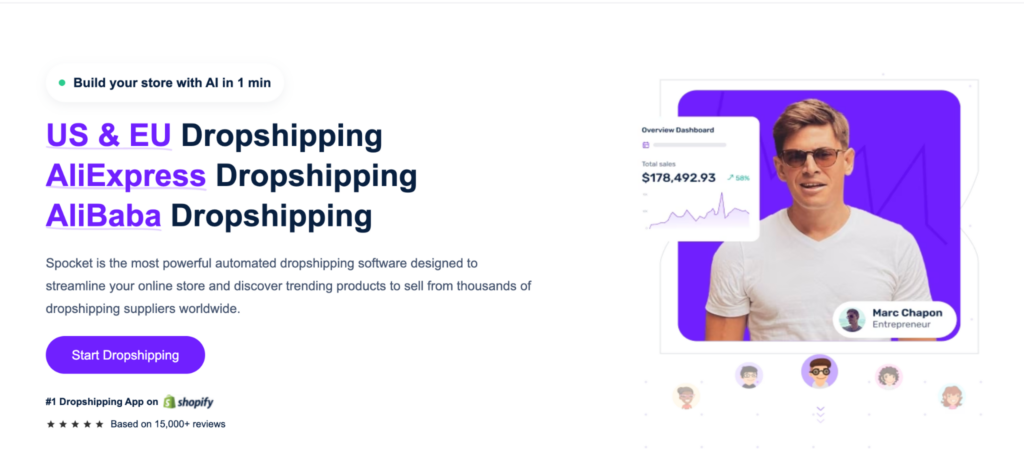
- Platforms like Spocket focus on connecting sellers with US and EU-based suppliers, which helps reduce shipping times and improve consistency.
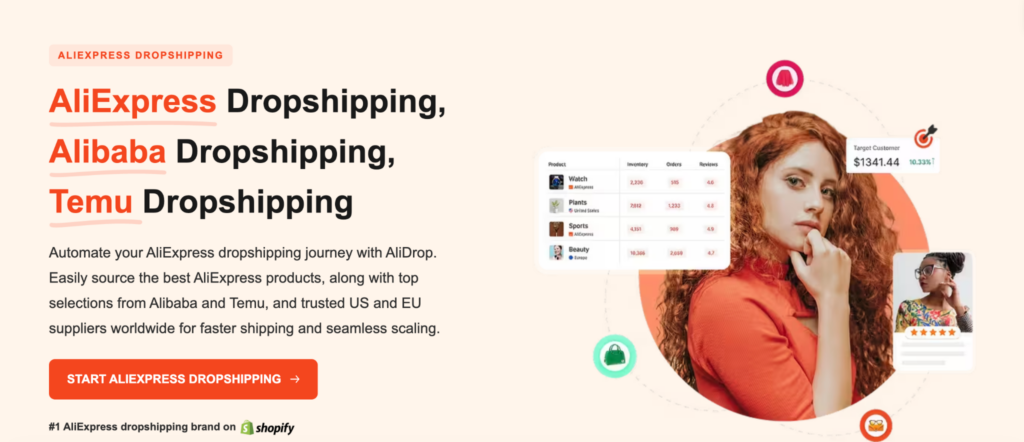
- Solutions like AliDrop simplify sourcing from platforms like AliExpress, making it easier to test products quickly and manage operations more efficiently.
Each approach has its place.
The key is alignment.
If you’re targeting Western markets, faster regional fulfillment often creates a better customer experience. If you’re testing multiple products quickly, broader sourcing options can help with experimentation.
What matters is understanding the trade-offs before customers do.
6. Example #2 The Store That Fixed Fulfillment Early
A UK-based lifestyle store launched with a promising product and saw initial traction.
But within 10 days:
- Customer complaints increased
- Delivery times stretched beyond expectations
- Refund requests started rising
Instead of scaling ads blindly, they paused.
They restructured:
- Switched to EU-based suppliers
- Tested delivery timelines
- Improved communication with customers
When they relaunched:
- Delivery dropped to under 7 days
- Customer satisfaction improved
- Ads became more profitable
They didn’t change the product.
They fixed the system behind it.
7. Day 21–30: The Breaking Point (Or Turning Point)
By this stage, most stores fall into one of two categories:
Category A: Reactive Sellers
- Constantly switching products
- Blaming ads
- Chasing trends
- Losing confidence
Category B: Structured Sellers
- Analyzing data
- Adjusting strategy
- Fixing fulfillment
- Improving positioning
The difference isn’t intelligence.
It’s a process.
The first 30 days reveal whether your store is built on assumptions or systems.
8. The Most Common Early Mistakes
Let’s summarize where things usually go wrong:
1. Poor Product Validation
Launching based on hype instead of real demand.
2. Weak Offer Positioning
Failing to communicate why the product matters.
3. Ignoring Fulfillment
Overlooking shipping times and supplier reliability.
4. Unrealistic Profit Expectations
Not accounting for full costs ads, fees, refunds.
5. Scaling Too Early
Increasing ad spend before fixing foundational issues.
9. A Simple Framework to Survive the First 30 Days
Here’s a practical approach that works:
Step 1: Validate Before Launch
Focus on demand, not just trends.
Step 2: Align Suppliers Early
Use platforms like Spocket or AliDrop depending on your strategy and target market.
Step 3: Start Small
Test with controlled ad budgets.
Step 4: Monitor Real Signals
- Conversion rate
- Refund rate
- Delivery time
- Customer feedback
Step 5: Improve Before Scaling
Fix problems before increasing spend.
This turns the first 30 days into a learning phase not a losing phase.
10. Why US & European Markets Expose Weakness Faster
In these regions:
- Customers leave reviews quickly
- Delivery expectations are strict
- Competition is intense
- Refund policies are strong
You don’t get long to figure things out.
Weak foundations are exposed early.
But strong systems scale faster.
11. The Psychological Side No One Talks About
The first 30 days aren’t just operational.
They’re emotional.
Many sellers:
- Lose confidence quickly
- Doubt their decisions
- Jump between ideas
- Burn out early
But often, the issue isn’t effort.
It’s structure.
When you have:
- Validated products
- Reliable suppliers
- Realistic expectations
You make better decisions.
You stay consistent.
You give your store time to work.
Conclusion: Where Dreams Break And Where Real Brands Begin
The first 30 days of an eCommerce store are rarely glamorous.
They’re messy.
Uncertain.
Sometimes frustrating.
But they’re also revealing.
They show whether your business is built on hype or clarity.
On shortcuts or systems.
In dropshipping, success isn’t determined by how fast you launch.
It’s determined by how well you prepare.
The brands that survive past the first 30 days don’t just get lucky.
They:
- Validate before they build
- Choose suppliers carefully
- Understand their margins
- Fix problems early
Because the truth is simple:
Most stores don’t fail loudly.
They fade quietly within the first month.
And the ones that don’t?
They treat those first 30 days not as a gamble…
But as the foundation of something real.