





















































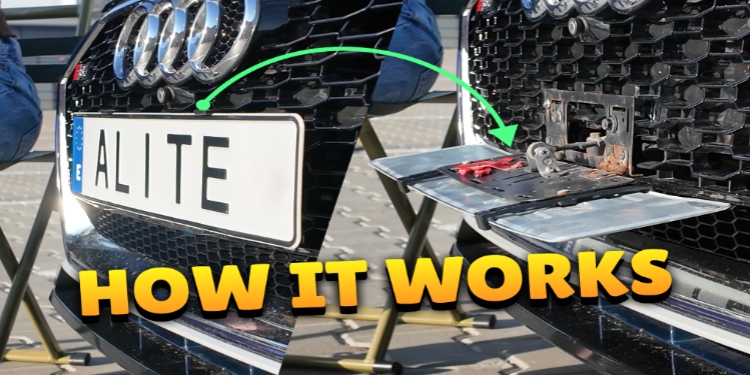
Automotive accessories are becoming more responsive, compact, and convenient to control. Even license plate mounting systems have moved beyond traditional fixed frames. Folding mechanisms can now combine mechanical movement with electronic control, allowing the plate position to change without manual adjustment.
A license plate flipper from Alite uses a remotely controlled folding mechanism. Unlike a blackout cover, which changes the transparency of a surface, a flipper physically changes the position of the license plate. This distinction defines how the system is designed and how its components work together.


How the Folding Mechanism Works
The central element of a flipper is its moving frame. The license plate is attached to a mechanism that allows it to shift between positions instead of remaining permanently fixed.
Movement requires several components to operate together:
- a folding plate frame;
- an electric drive mechanism;
- a power connection;
- a control unit;
- a remote control.
When the system receives a command, the drive mechanism moves the frame. The plate follows the movement because it is mounted directly to the folding section.
After the movement is complete, the plate remains attached to the same assembly. There is no need to remove it or manually reposition the frame each time.
Why Remote Control Matters
Remote operation separates an electronic flipper from a purely mechanical folding bracket. A manual system requires physical access to the frame, while an electronically controlled version can receive a command from a compatible controller.
The operating sequence is relatively straightforward:
- The user sends a command with the remote.
- The control system receives the signal.
- Power is supplied to the drive mechanism.
- The mechanism changes the plate position.
This process turns a basic folding frame into an electronically controlled automotive accessory. The mechanical and electrical parts must remain coordinated for the movement to work consistently.
Design and Installation Requirements
A flipper has moving components, so its design needs to account for both available space and the dimensions of the license plate. A bulky mechanism could interfere with installation or look disconnected from the vehicle.
Plate formats also differ between countries and vehicle categories. Width, height, mounting points, and surrounding space can affect compatibility. Alite therefore offers folding systems intended for supported plate configurations rather than treating every license plate as identical.
Installation also involves electrical connections. The mechanism needs a suitable power supply and correctly positioned components so that movement is not restricted.
From Fixed Frames to Moving Systems
Traditional license plate holders perform a passive function. They keep the registration plate securely attached to the vehicle. Remote-controlled flippers add movement and electronic control to the same basic mounting area.
This development reflects a wider trend in automotive accessories. Compact motors, wireless controls, and smaller electronic components allow functions that once required manual operation to become remotely controlled.
A license plate flipper combines these technologies in a relatively small assembly. The frame provides the physical structure, the drive creates movement, and the controller sends the command.
Alite folding frames demonstrate how a familiar vehicle component can become a more technical system through mechanical and electronic integration. Regulations concerning license plate position and visibility vary by jurisdiction, so local requirements should be checked before use.

David Prior
David Prior is the editor of Today News, responsible for the overall editorial strategy. He is an NCTJ-qualified journalist with over 20 years’ experience, and is also editor of the award-winning hyperlocal news title Altrincham Today. His LinkedIn profile is here.