















































Remote work is no longer limited to home offices. More professionals now operate from field sites, mobile setups, rural locations, and off-grid environments. Their phones need to keep up.
A standard smartphone breaks under these conditions. One rainstorm, one drop onto a hard surface, or one dead battery at a critical moment disrupts the entire day. The cost is not just the device. It is the missed call, the lost file, and the hours spent recovering.


Choosing the best rugged phones for remote work means thinking beyond a tough case. It means matching battery endurance, connectivity flexibility, durability protection, and built-in tools to the way you actually work away from the office. This guide covers every factor that matters, in plain terms, so you can choose with confidence.
Why Remote Workers Need Rugged Phones
Working remotely creates unique device stress that most people underestimate. Remote workers face unpredictable weather, limited access to charging, and unreliable networks all at once.
A cracked screen in a rural area cannot be repaired the same day. A dead battery during a client video call costs more than the device itself. A phone that drops signal in a low-coverage zone can halt an entire remote workflow. Consumer smartphones are optimised for consistent indoor use with regular access to power and Wi-Fi. Remote work strips away those assumptions entirely.
What Durability Ratings Mean for Remote Work
Two standards define meaningful protection. Neither is marketing language if you understand what they actually cover.
IP Ratings
IP stands for Ingress Protection. The first digit indicates dust resistance. The second indicates water resistance. IP68 means the device is sealed against dust and can withstand water immersion, with depth and duration declared by the manufacturer. It covers rain, splashes, and short-term submersion. IP69K adds resistance to high-pressure, high-temperature water jets at close range. For remote workers in rainy, humid environments or near wash-down equipment, IP69K provides a meaningful step up in protection.
MIL-STD Context
MIL-STD-810H is a U.S. military testing framework. In general terms, it covers environmental stresses including drops, vibration, humidity, altitude, and temperature extremes. Manufacturers declare which specific tests their device has passed. A phone citing MIL-STD-810H compliance is not automatically tested against every condition in the standard. Always check which specific tests are listed in the product documentation.
Battery Life Is the Biggest Remote Work Variable
Battery capacity separates productive remote work from constant anxiety about finding a power outlet.
Consumer phones average 4,500 to 5,000 mAh. That is enough for a standard office day with reliable charging access. Remote workers in the field often go eight to fourteen hours without an outlet. A rugged phone in the 10,000 to 17,000 mAh range changes that equation completely.
Fast charging matters equally. A 90-minute full charge from a vehicle outlet or generator means you recover a full day of power in a short break. Reverse charging via USB-C adds another layer of field utility. It lets you charge a headlamp, radio, or Bluetooth device directly from your phone when no nearby power source is available.
Here is what to verify before choosing a battery for remote work:
- Capacity of 10,000 mAh or above for multi-shift use without charging
- Fast charging of 60W or higher to recover power in short windows
- Reverse wired charging for powering other devices in the field
- Battery performance rated across extreme temperature ranges
- Low-power modes that protect runtime without cutting core communication
A phone that scores on all five points eliminates the most common remote work failure point.
Connectivity That Does Not Quit
Connectivity defines whether a remote worker can actually do the job. A tough phone that cannot maintain a signal is just an expensive brick.
eSIM and Dual SIM
Remote workers who move between regions or countries need carrier flexibility. eSIM support allows instant carrier switching without swapping a physical SIM. This removes a practical bottleneck when crossing network zones or travelling internationally for work. Dual-SIM capability lets you keep a work line and a local data SIM active at the same time.
GPS and Wi-Fi
Dual-frequency GPS covering both L1 and L5 bands delivers accuracy of one to two metres in open and dense environments. For remote workers navigating rural roads, managing field routes, or logging site coordinates, that level of precision matters. WiFi 7 provides low-latency, high-speed connectivity wherever infrastructure exists. It reduces reliance on cellular data when working near a fixed access point.
Built-In Tools That Replace Gear You Would Otherwise Carry
The best rugged phones for remote work function as multi-tool devices. Every piece of kit you eliminate reduces weight, reduces risk of loss, and speeds up your workflow.
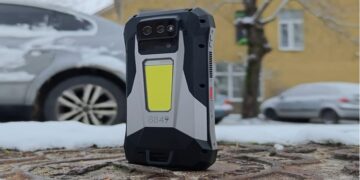
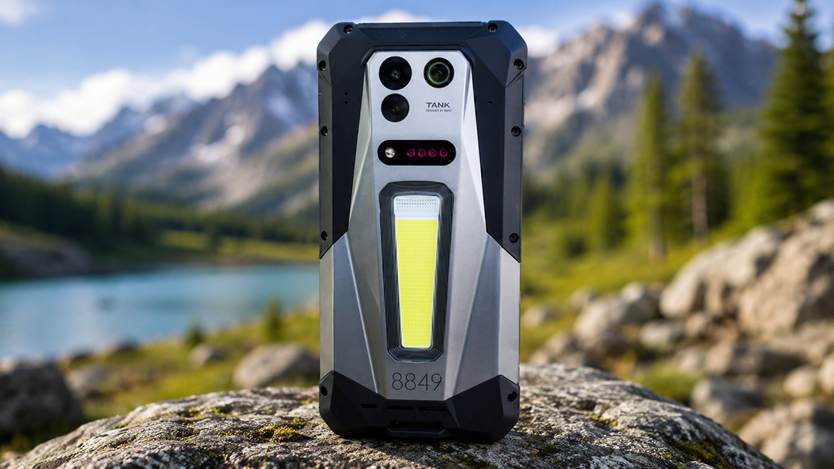
A strong example is the 8849 Tank 5, a flagship rugged projector phone built around a 220-lumen 2K DLP projector with laser autofocus. Remote workers can project site plans, presentations, or data dashboards directly onto any flat surface. No separate projector required. The built-in laser rangefinder delivers instant distance, area, and volume measurements, eliminating the need for a separate measuring tool.
A 50MP night vision camera with 940nm IR illuminators enables clear imaging in low-light and confined spaces up to 15 metres. The Toolbox app covers a compass, barometer, bubble level, protractor, speedometer, noise meter, and more in one place. For remote workers who want to reduce their kit without reducing capability, that combination is hard to match.
How to Choose Based on Your Remote Work Environment
| Remote Work Setting | Top Priority | Key Supporting Feature |
| Rural and off-grid sites | Battery above 15,000 mAh | Reverse charging via USB-C |
| Travelling and multi-region roles | eSIM and dual SIM | Dual-band GPS L1 and L5 |
| Low-light and night-shift roles | Night vision camera | IR illuminators at range |
| Presentation and briefing work | Built-in 2K projector | Keystone correction and autofocus |
| Mobile office setup | USB-C video output | High-brightness display above 2,000 nits |
Use the top priority column to confirm the device solves your single biggest daily challenge. Then check the supporting feature column to ensure nothing critical is missing for your specific environment.
What Makes a Rugged Phone Worth the Higher Price
This is the question most remote workers ask. The short answer is total cost over time.
A consumer smartphone replaced twice a year due to field damage costs more than one rugged device built to last three years. Factor in downtime from a broken screen, data recovery costs, and communication gaps during replacement, and the rugged option pays for itself quickly. For teams equipping multiple remote workers, those savings scale across every device in the fleet.
Conclusion
Remote work demands more from a device than the office ever did. The best rugged phones for remote work combine genuine protection ratings, long battery endurance, flexible connectivity, and built-in tools that reduce the gear you carry. Those features are not bonuses. For remote workers, there are requirements. Start by identifying your single biggest daily risk: battery failure, signal loss, physical damage, or limited kit. Match your device to that priority first. Then confirm it covers your secondary needs. A phone chosen this way becomes reliable infrastructure, not a liability. Invest deliberately, and your device will work as hard as your remote setup demands.