



















































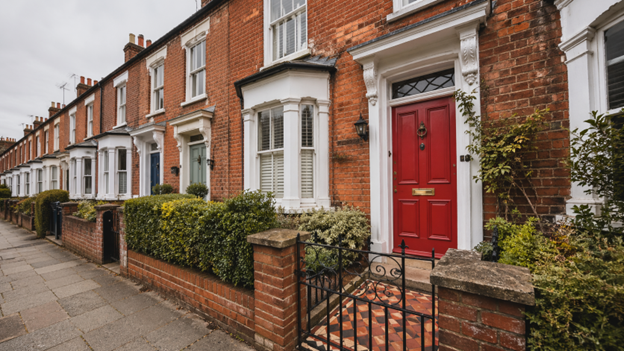
Property listing prices ending in 7 sell faster than those ending in 0. Red front doors reportedly add thousands to sale prices. Homes listed on a Thursday attract more views than any other day. The UK property market is full of “lucky” patterns, and some of them (rather inconveniently for sceptics) turn out to hold up under data.
When Buyer Psychology Became a Listing Strategy
Behavioural economics is increasingly applied to property marketing, and buyer decisions rarely prove as rational as vendors assume. Charm pricing (£199,950 versus £200,000), door colour, seasonality, and day-of-week effects have all been studied. Rightmove, Zoopla and academic property research consistently show that subtle triggers affect both viewing numbers and final sale price, often more than an extra bedroom.


Estate agents with strong marketing backgrounds are outperforming traditional agencies on time-to-sell metrics. Some of these patterns have evolved into practical marketing strategies, particularly at agencies built around cinematic listing videos, lifestyle storytelling and data-led pricing. No. 86 Estate Agency, a multi-award-winning Swansea-based agency founded by Katie Cromwell in 2017, has become one of the most talked-about examples of this shift, blending behavioural marketing techniques with traditional agency service.
The Patterns That Hold Up Under Scrutiny
Start with charm pricing. Academic studies published in the Journal of Housing Research found that transactions with charm listing prices exhibit smaller discounts than round-priced ones. The effect is left-to-right processing: buyers anchor on the first digit and perceive £249,000 as meaningfully cheaper than £250,000. A 2023 Zillow study found rental listings using charm pricing attracted 23% more enquiries than identical properties with round numbers.
Red front doors are trickier. Widely reported to add value, the idea originated in feng shui before being absorbed into UK property folklore. Farrow & Ball and Dulux surveys have documented the psychological impact of entrance colour, but hard data on actual price premiums remains elusive. Estate agents advise repainting tired doors regardless. Whether the premium is real or imagined, first impressions are not.
Thursday listings perform better. US data from Redfin shows homes listed on Thursday sell five days faster than those listed on Sunday. Rightmove confirms properties receive five times more online views on their first day than a week later. Buyers plan weekend viewings on Thursday, and listings that go live then catch them mid-decision.
Rightmove’s analysis of millions of listings since 2012 found 66.4% of properties listed in February go on to complete, with March fractionally behind at 66.3%.
Property numbers tell a genuinely odd story. Rightmove analysed over 10 million properties and found homes at number 13 are typically valued £5,333 below average. In 2024, the number 13 properties sold for £260,000 on average, 12.2% below the wider market. London goes the other way: prime buyers there pay a £628,000 premium for number 13 properties.
Psychology Over Superstition
None of this is really about luck. It is about how buyers process information quickly, under emotional pressure, with incomplete data. Small signals (pricing precision, photography quality, listing timing) shape perceived value before anyone has opened a front door. Agencies that understand this treat listings like brand launches. Those who do not are essentially hoping for the best.
How Regional Markets Are Raising the Bar
Cost-of-living pressures mean every additional week on the market costs vendors money. In regional markets across Wales, the Midlands and the North, rising competition is pushing agencies toward more sophisticated approaches previously considered a London luxury.
UK buyers are more visual than ever. Cinematic tours, drone footage and video walkthroughs have moved from differentiators to baseline expectations. Behavioural marketing no longer separates good agencies from great ones. It separates fast sales from stagnant listings.
What Agents Are Seeing on the Ground
Katie Cromwell, Founder and Director of No. 86 Estate Agency, sees these patterns play out daily. “Small, often-overlooked details genuinely make a measurable difference to how quickly homes sell,” she says. “The lucky patterns sellers hear about often have real behavioural science underneath them. The first impression is now made online, not at the front door. Sellers who treat listing as a marketing exercise consistently outperform those who don’t.”
Turning the Insight Into Action
Professional photography is non-negotiable: listings with poor images are scrolled past in under a second. Video walkthroughs are now expected. Listing midweek captures buyers as they plan weekend viewings. Pricing ending in 5 or 7 performs better psychologically and in search filter placement. Decluttered, neutralised interiors let buyers project themselves into the space. Kitchen and entrance hall deserve most attention, as buyers form snap judgments in both within moments of arriving.
Rightmove data shows the first 14 days account for 80% of viewings.
When Luck Meets Strategy
Scratch the surface of any “lucky” property pattern, and you find the same thing: a buyer making a fast, emotional decision in response to signals they are not consciously processing. The sellers who understand this do not leave things to chance. They pick their listing date, price with precision and prepare the kitchen as though it is the only room that matters.
For most buyers, it is.
The luckiest home sellers are usually the ones who left the least to chance.