















































Designing safe pedestrian flow is a crucial responsibility for businesses, local authorities, and event organisers across the United Kingdom. Whether managing a retail space, coordinating a public event, or planning a large sporting fixture, ensuring people move efficiently and safely is essential.
From busy high streets in London to stadiums and transport hubs nationwide, poor crowd movement can quickly lead to congestion, frustration, and even serious safety risks. This is where careful planning and the strategic use of crowd control barriers become invaluable.


Below is a practical, step-by-step guide to designing safe and effective pedestrian flow
1. Understand Your Crowd
Every environment attracts a different type of crowd. A music festival, a football match, and a shopping centre will all have distinct movement patterns and behaviours.
Start by assessing:
- Expected attendance numbers
- Demographics (families, commuters, tourists)
- Behaviour (leisurely browsing vs time-sensitive movement)
This insight helps determine how structured your layout should be and how barriers for crowd control can be used effectively.
2. Establish Clear Entry and Exit Points
Confusion at entry and exit points is one of the main causes of congestion. Visitors should immediately understand where to go without hesitation.
Using crowd control barriers, you can:
- Clearly separate entrances and exits
- Prevent opposing pedestrian flow
- Create visible, well-defined routes
In busy UK locations, especially urban centres, this clarity is essential for maintaining order and safety.
3. Design Natural Movement Pathways
People naturally follow the path of least resistance. If routes feel restrictive or unnatural, they are more likely to ignore them.
To encourage smooth movement:
- Keep walkways wide and consistent
- Avoid sharp turns or sudden narrowing
- Maintain clear sightlines
Solutions developed by Queue Tech are particularly effective in this area, as they focus on guiding pedestrian flow in a way that feels intuitive rather than forced.
4. Plan for Peak Capacity
In the United Kingdom, crowd volumes can increase rapidly during peak times, particularly during major events or commuting hours.
To prepare:
- Estimate maximum attendance rather than averages
- Identify peak arrival and departure periods
- Allow sufficient personal space to prevent overcrowding
Proper planning ensures your barriers for crowd control can handle demand without creating dangerous pressure points.
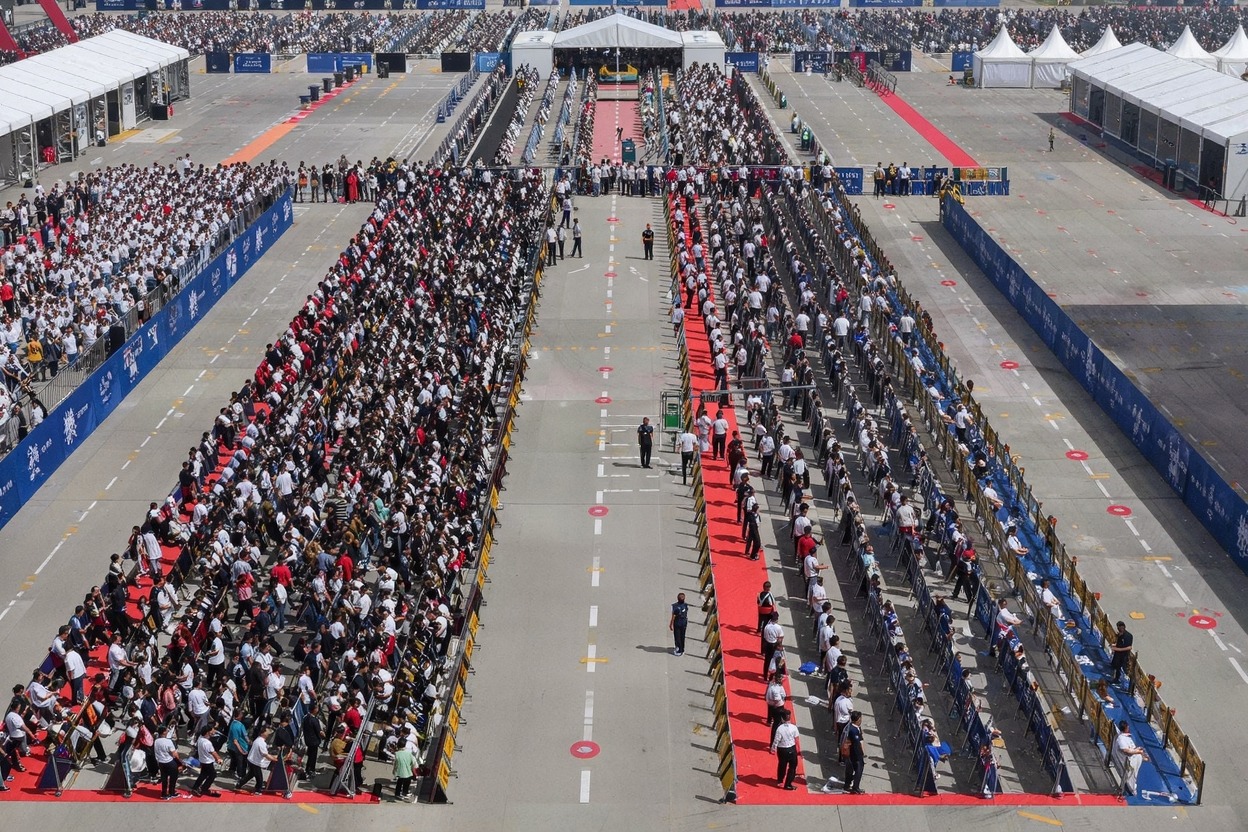
5. Implement Structured Queue Systems
Queues are often where pedestrian flow becomes disorganised. Without proper structure, lines can become chaotic and inefficient.
With the right use of crowd control barriers, you can:
- Create orderly, serpentine queue systems
- Maximise available space
- Maintain a steady and predictable flow
Queue systems inspired by Queue Tech are widely used across the UK in airports, stadiums, and public venues for precisely this reason.
6. Identify and Manage Bottlenecks
Bottlenecks occur when large numbers of people attempt to pass through a restricted space. These areas require careful planning.
Common locations include:
- Security checkpoints
- Ticket validation areas
- Narrow corridors or entrances
Using barriers for crowd control, you can gradually funnel people into these spaces, reducing congestion and maintaining a safe flow rate.
7. Use Clear Signage Alongside Barriers
Physical guidance alone is not enough. Clear communication is equally important in ensuring smooth pedestrian movement.
Support your crowd control barriers with:
- Visible directional signage
- Clearly marked entry and exit points
- Staff assistance at key locations
This combination is particularly important in UK cities where venues often serve both local residents and international visitors.
8. Prepare for Emergency Situations
A safe pedestrian flow design must always include contingency planning. In an emergency, crowd behaviour can change rapidly.
Ensure that:
- Emergency exits remain fully accessible
- Barriers can be quickly repositioned or removed
- Evacuation routes are clearly defined
Flexible systems, such as those offered by Queue Tech, are especially useful in these scenarios, allowing for quick adjustments when needed.
9. Monitor and Refine Your Layout
Even the best plans require real-world testing. Once your system is in place, observe how people interact with it.
Look for:
- Areas where movement slows down
- Points of confusion or hesitation
- Unexpected crowd patterns
Adjust your barrier system accordingly to improve efficiency and safety.
10. Balance Safety with User Experience
While safety is the primary objective, the overall experience should not be overlooked. People should feel guided, not restricted.
Well-designed crowd control barriers:
- Reduce stress and uncertainty
- Improve the overall flow of movement
- Enhance safety without being intrusive
In the United Kingdom, where expectations around organisation and public safety are high, achieving this balance is essential.
Designing safe pedestrian flow requires a thoughtful approach that combines planning, behavioural understanding, and the right equipment. By using retractable crowd control barriers effectively and incorporating modern solutions such as those from Queue Tech, organisations can create environments that are both safe and efficient.
Whether managing a public event in London or overseeing a commercial space elsewhere in the UK, a well-designed pedestrian flow system protects people while delivering a smoother, more professional experience.