


















































The choice of elements that shield interiors and provide daylight has a direct impact on occupants’ comfort and on a building’s operating costs. The right combination of frame profiles and glazing units with shading systems makes it possible to control indoor temperature and noise levels with precision. The effectiveness of these solutions depends on matching specific technologies to the requirements of the architectural design and to the stage of construction.
Profile Design and a Building’s Thermal Insulation
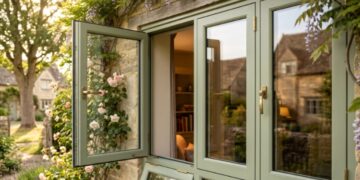
Properly designed frames are the foundation of protection against heat loss. Modern solutions such as PVC windows are available in 70 mm, 73 mm, and 82 mm variants, using five- and seven-chamber constructions. Their depth and precisely arranged internal partitions directly affect the heat transfer coefficient, and in the case of flagship models, their performance significantly exceeds the minimum requirements set by building regulations. Combining such profiles with double- or triple-glazed units, in which the spaces between the panes are filled with noble gas, creates a physical barrier that protects interiors from cooling down.


Everyday performance is also influenced by the internal hardware. Advanced window series, such as the DPQ-82 thermoSecure, feature thermal insulating inserts, concealed hinges with adjustable compression, and double anti-burglary locking points. Additional mechanisms, such as the SecuForte handle or the dual-function DFE component with handle rotation lock and sash lifter, noticeably improve ease of use. The frame material effectively resists UV radiation, strong wind pressure, and rainfall, and can be cleaned simply with soap and water. Since there is no need to strip coatings or repaint the surface, users save time over the years.
Protection from Sunlight and Lower Electricity Costs
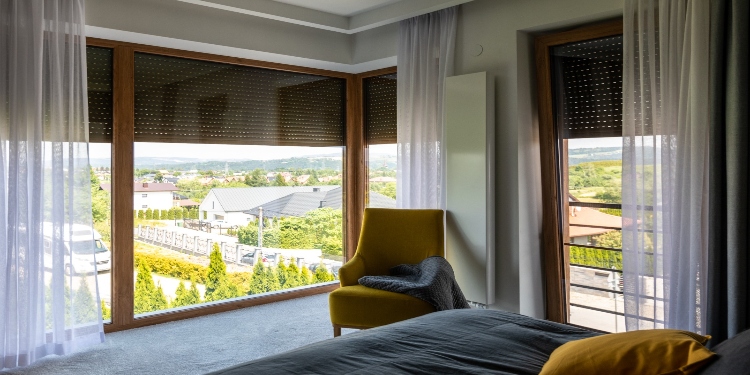
Is a thick pane of glass alone enough to prevent a living room from overheating on a July afternoon? Even the best insulating glass becomes more effective when, at the most critical times of day, it is supported by shading systems integrated into the wall structure. Dedicated shading solutions, including external window shutters, physically block sunlight during the hours of greatest intensity. When air conditioning is running, cutting off direct sunlight can noticeably reduce electricity consumption. In winter, a lowered shutter curtain creates an air barrier between the glass and the outdoor environment, helping to retain heating energy inside the room.
External shutters also protect the joinery itself from finish fading caused by intense sunlight. This is particularly important for frames in darker finishes, such as the widely used anthracite color. In addition to protection from extreme temperatures, a closed system ensures complete privacy. It creates a visual barrier against neighbors and passers-by, while also increasing resistance to attempts to force the glazing mechanically, which enhances occupants’ sense of security after dark.
Installation Options Depending on the Stage of the Project
The method of mounting the shutter box depends on when the decision to install it is made. Top-mounted and concealed systems must be planned no later than the stage at which the openings are being prepared for specific frame sizes. Concealed versions are installed from the outside directly beneath the facade surface, making the entire mechanism completely invisible from the street. In existing buildings, facade-mounted models are used instead, available in three different box shapes and installed without interfering with the load-bearing wall structure.
The choice of a specific type also determines the position of the inspection flap. Access to the service mechanism from the outside of the building makes any necessary maintenance easier for technicians, without requiring a ladder to be brought into the house. The shape of the covers can also be adapted to various window opening systems. The manufacturer from Nowy Sącz in Poland has provided integration with inward-opening and outward-opening sashes, as well as with tilt-and-turn mechanisms based on scissor hinges.
Integration with Automation Systems
Why shouldn’t a house raise its shutters on its own on a bright winter morning, letting in the desired solar warmth? Electric motors within the shutter systems make it possible to program precise time-based scenarios for each room. Integrating radio-controlled drives with smart home networks allows users to manage the opening level of the shutters directly from an app.
The practicality of these components becomes especially clear in the optional features that complement the main structure. Available technologies offer users tangible construction and visual benefits, the most important of which include:
- Built-in retractable insect screens that roll directly into the box and operate on their own guides independently of the shutter curtain.
- Noticeably improved acoustic insulation when the system is locked, helping to reduce street noise outside the window.
- Visual consistency between window profiles, garage doors, and shutters thanks to the HarmonyLine design concept.
- The use of bi-color technology, which allows the frames to have one finish on the facade side and another on the interior side of the living room.
Conclusion
A coherent approach to designing building openings provides full control over thermal performance, acoustics, and protection against burglary. By combining multi-chamber profiles with automated external shading systems, the investor gains a mechanical barrier against heat loss, street noise, and severe weather conditions. Correctly determining the installation depth, the number of glass panes, and the type of shutter construction results in reliable operation for decades. Such a configuration significantly reduces electricity consumption for heating and air conditioning, while continuously stabilizing the microclimate throughout the home.