


















































When it comes to protecting your home from the harsh Australian elements, standard off-the-shelf shades often fall short. From the scorching summer heat of Perth and Adelaide to the sudden monsoonal downpours of Darwin and the high-UV coastal winds of Sydney and Brisbane, exterior fittings demand structural integrity.
If you are looking to upgrade your property’s exterior, understanding the nuances between awning doors (awning window doors), door awnings, and awning windows is essential. Combining heavy-duty structural aluminium frames with solid polycarbonate sheet panels offers the gold standard in modern architectural protection.


1. Demystifying the Terms: Door Awnings, Awning Doors, and Awning Windows
While they sound incredibly similar, these three architectural features serve very different functional purposes on a building’s facade:
Door Awnings (Overhead Canopies)
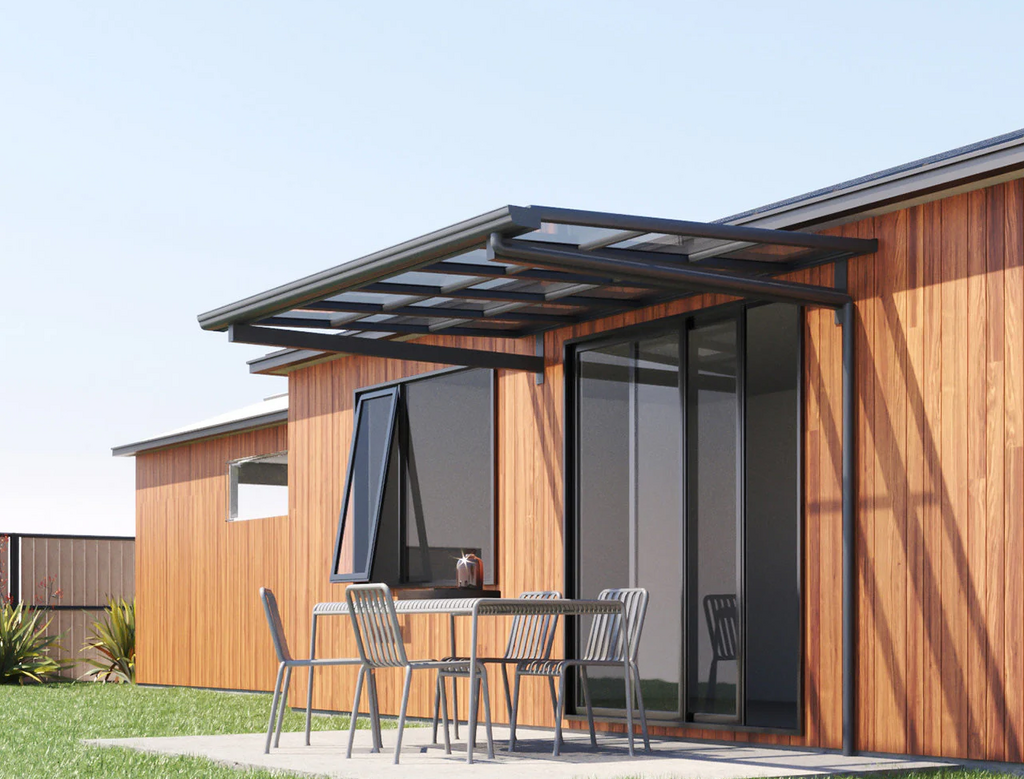
A door awning is a protective canopy mounted directly above an external entryway.
The Purpose: It shelters people searching for keys in the rain, prevents water from pooling at the threshold, and shades the door itself to reduce indoor heat transfer.
The Material Advantage: Utilizing a heavy-duty aluminium bracket system with a solid polycarbonate cover ensures it can withstand high wind loads (up to Category 2 cyclones in northern regions) without buckling or rusting.
Awning Windows
An awning window is a type of window that is hinged at the top and swings outward from the bottom.
The Purpose: Its unique design acts as a built-in umbrella, allowing you to keep the window open for ventilation even during a steady Australian downpour.
The Material Advantage: Framed in structural-grade aluminium, these windows offer superb air tightness and security, especially when paired with premium glazing or integrated insect screens.
Awning Doors (Outward-Opening Hinged/Glass Doors)
An awning door (often referred to in design as a top-hinged awning door or an awning-style server window/door) operates on a similar principle to the awning window but on a grander scale.
The Purpose: Frequently used in modern Aussie alfresco areas, cafes, and backyard pavilions, these swing outward and upward to seamlessly merge indoor living spaces with the deck or patio.
The Material Advantage: Because of their sheer size, these require the immense structural strength of premium aluminium alloys (such as 6061-T6 or 6063-T6) to prevent sagging and ensure smooth mechanical operation over decades.
2. Why Aluminium and Solid Polycarbonate are the Perfect Match for Australia
Traditional wood, fabric, or hollow-walled (multi-wall) plastic awnings struggle to survive Australia’s extreme climate. Wooden frames rot and warp in tropical humidity; fabric fades, rips, and mildews; and cheap hollow-chamber plastic panels yellow, crack, and trap unsightly dirt inside the flutes.
The premium alternative is the engineering combination of structural aluminium and solid polycarbonate sheets:
| Feature | Structural Aluminium Frames | Solid Polycarbonate Panels |
| Durability | Zero rust or corrosion; impervious to coastal salt air and termites. | Virtually unbreakable (250x stronger than glass); hail-proof. |
| Maintenance | Minimal maintenance required; standard powder-coated finishes won’t peel. | Smooth surface naturally washes clean with rain; does not collect dirt inside. |
| UV Protection | Structurally unaffected by long-term solar exposure. | Built-in double-sided UV block filters 99% of harmful rays while letting light through. |
| Weight | Highly structural yet lightweight, reducing load on external brickwork. | Extremely lightweight compared to double-glazing, allowing wider unsupported spans. |
3. Key Benefits for Australian Homeowners
Extreme Weather Resilience & Hail Protection
Australian summer storms are notorious for golf-ball-sized hail. While glass shatters and hollow-chamber plastic gets punctured, solid polycarbonate sheets possess incredibly high impact resistance. Paired with a rigid, engineered aluminium frame, these awnings easily handle heavy rain, hail, and high wind-pressure zones.
Seamless Architectural Aesthetics
Whether you have a classic Queenslander, a coastal beach house in Byron Bay, or a modern minimalist townhouse in Melbourne, clean-lined aluminium profiles offer an instant curb-appeal upgrade. Clear, bronze, or tinted solid polycarbonate sheets mimic the sleek, high-end look of glass without the immense weight or structural risk.
Energy Efficiency & UV Defense
Unprotected doors and windows are the primary source of radiant heat entry into Australian homes. Installing a door awning or window awning blocks direct summer sunlight before it touches the glass or wood, dramatically lowering air conditioning costs.
4. Custom Architectural Kits Delivered Australia-Wide
Whether you are looking to install a heavy-duty door awning over your front entryway, integrate functional awning windows into your living room, or configure a large-scale opening awning door system for your outdoor entertainment area, opting for high-quality components is paramount.
We specialize in supplying engineered, heavy-duty aluminium frame and solid polycarbonate window/door canopy kits across Australia. Built to withstand local conditions, our modular and custom-sized kits are designed for straightforward installation and lifetime durability.
We offer fast, secure delivery to major metro areas and regional hubs:
Sydney & NSW Coast
Melbourne & Regional Victoria
Brisbane, Gold Coast & Sunshine Coast
Perth & WA Regions
Adelaide, Hobart, & Darwin
Ready to protect and elevate your home’s exterior?
Browse our range of custom aluminium and solid polycarbonate door & window awnings online today, or contact our engineering team to discuss custom sizing for your project.