



















































In 2022, as the UK economy slowed down following the inflationary shock, there was an interesting divide in brands’ behaviours. On the other side, enterprise marketing teams focused on the downward trend in metrics and applied the brakes to their media budgets to conserve margins in the short-term. On the other side, the agile minority continued to spend or shifted their spending in a tactical way. The results were spectacular; not only did the brand lose a day’s visibility in the short term, but it also lost VI in the long term and at a structural level, which would cost millions to correct later on.
The misconception is that an economic downturn presents a chance to hide out underground. In lower consumer confidence UK environments, these senior practitioners will need to position themselves proactively with marketing strategies if they are to enter into the difficult marketplace. However, many finance directors are unaware that they’ve compromised the brand by cutting costs at low confidence levels until it is too late and the share has been extorted by brands more confident enough to stake their claim. To create a resilient strategy, brands can work with strategic growth networks, such as Konfidant, to reframe their consumer confidence marketing strategy and plan a budget around commercial opportunity, not panic.


Beyond the Gfk Index: Why Macro Metrics Mislead
Each month, Marketing Press gives the GfK Consumer Confidence Barometer a close look. While this is an interesting indicator of consumers’ overall sentiment nationwide, it is a big mistake to rely on this as the basis for your UK consumer sentiment brand planning. The headline index doesn’t actually reflect spending but is a composite mood ring. It combines the loudest of backlash and the loudest of hopes, and all too frequently, something that feels further and further removed from a true till count.
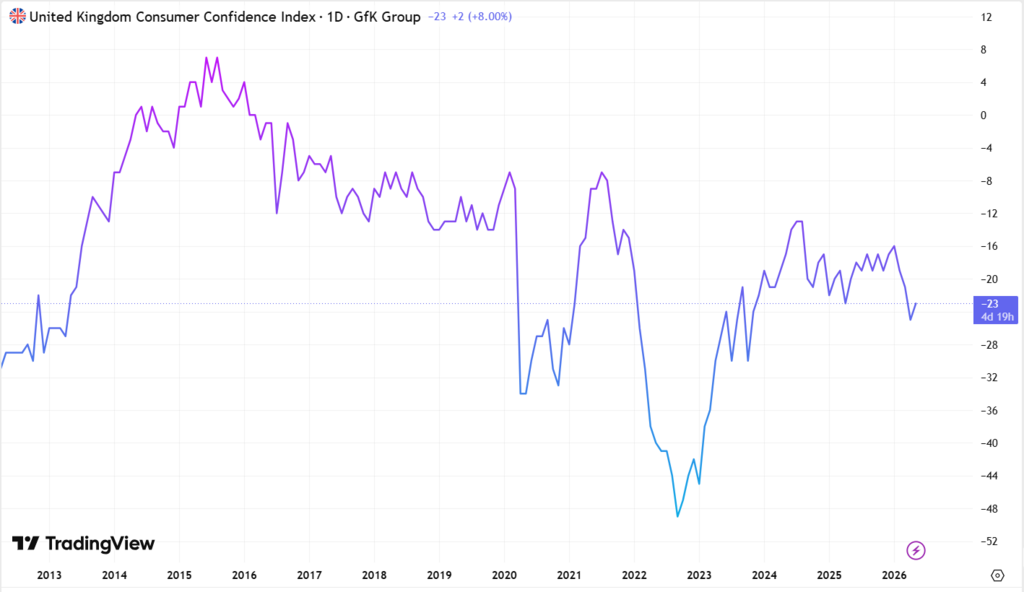
(Source: https://www.tradingview.com/chart/?symbol=ECONOMICS%3AGBCCI)
A typical macro-illusion is the macro index that could have a steady and uniform trendline of weak sentiment, but there is quite another story regarding the actual volume of retail. The decision to buy rests with the consumer and not the national average for the month, as his/her disposable liquidity.
Trading on the Weekly Rhythm
What would you watch if the average was done per month? So, during an extended recession, the weekly is more significant than the macro time frame for the actual aspect of a marketing strategy towards consumers. It is not always when people get anxious at home that it is -25. Rises significantly on some days because of certain things: quarter bills, news cycles, payload days, and so forth.
The week before payday is the week when there is a huge drop in discretionary spending as people tend to consolidate their spending, and the week after payday is a very brief, focused spending week. Those brands that want to buy out the continuous media without any context, without any worry about the scarcity of media, are wasting a ton of money without any purpose. The brands that do match these micro-patterns, however, can do more to get conversions from a higher number of views with the same spend, ultimately reducing views during times of fear, and vice versa, increasing views during times of cash flow.
Three Structural Pivots for Your Campaign Briefs
It is about a change of strategy and not spending more, just doing things differently in order to outperform. The three changes to consider when answering the question of how to market during cost of living crisis UK are:
- From aspiration to reassurance (but not discounting). Do not cut costs to bring in prospective buyers who are scared. Rather than lifestyle aspiration, remind them of what it will do for them. Present your offer in terms of durability, total cost of ownership, and guaranteed functionality.
- Focus on loyalty, not scale. Attracting customers will be far more costly when customers are risk-averse. Allocate some of your top-of-the-funnel resources towards maintaining and rewarding your current customer base. When the general market declines, re-engagement and retention can pay off many times over.
- Think ahead to the next big thing before sentiment improves. Consumer attitudes and behaviors change more quickly than corporate planning cycles. So if you wait for the GfK index to go back into positive numbers before you brief agency partners on your next big campaign, you’ll be missing out on the first big spending spree. Construct your pipeline during the low point, so that you are in place when wallet share re-opens.
Marketing can be restructured without a catastrophic drop in prices or loss of margin, due to these three focus changes. When it comes to winning in tough times, though, being predictable, valuable, and on-target – but not aggressive – is what wins for certain brands.
The Briefing Question that Changes Execution
The next time a campaign brief comes to your desk in a tough economic time, cross out the boilerplate paragraphs about inflation or market pressure. Rather, add one very real and actionable constraint, forcing your agency partners to think dynamically:
In the current environment of household liquidity, what should our channel selection and messaging be before and after the pay period’s end on the 15th of each month?
Simply, this one question can instantly eliminate fluffy, generic proposals. It makes your planners dispense with the monthly calendar model and embark on an agile approach that reflects the financial world as it actually exists for the modern British consumer.
The best marketers aren’t the ones who have the biggest budget to dedicate to the downturn; they are those who market with the greatest accuracy against the pulse of their audience in the real world. Shifting to this mindset forces agency partners to trade rigid, pre-planned roadmaps for real-time responsiveness. Ultimately, it transforms marketing from a speculative overhead into a precision tool that navigates economic volatility alongside the customer.