




















































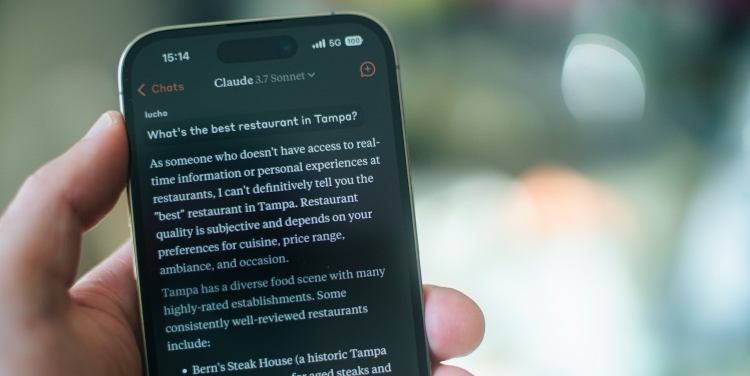
Elon Musk made a surprising decision on May 7, 2026, when he leased one of the world’s most powerful supercomputers to a company he had called “evil”, “misanthropic”, and accused of being against Western civilization.
The AI lab behind Claude has established a partnership with SpaceXAI, which will allow them to utilize all computing resources of Colossus 1. Located in Memphis, Tennessee, this data center operates at 300 megawatts and contains more than 220,000 NVIDIA GPUs, including H100, H200, and next-gen GB200 accelerators.


This is not just a reconciliation, it is a transaction. Understanding why it happened reveals everything about where the AI race is actually heading. SpaceX filed a confidential S-1 with the SEC on April 1, 2026, targeting a valuation of $1.75 trillion and a raise of up to $75 billion, which would make it the largest IPO in history.
That roadshow is weeks away. The Anthropic deal, announced the same day Musk dissolved xAI as an independent company and rebranded it SpaceXAI, gives the IPO narrative exactly what it was missing: a major AI customer and a credible cloud infrastructure revenue line.
According to Antoine Chkaiban, an analyst at New Street Research, the deal will generate $3 to $4 billion in annual revenue for SpaceX, with over $2.5 billion in cash profit. These extreme margins are possible because Colossus 1’s capital expenditure has already been fully absorbed. This would provide an important source of additional revenue just ahead of the SpaceX (SPCX) IPO.
The deeper reason Colossus 1 was available at all is that xAI’s flagship product, Grok, has been losing ground quickly. Between March and April 2026, Grok’s daily active users fell 12.5%: from 13.9 million to 12.2 million, pushing Grok from second to fifth place worldwide, behind Claude, Gemini, and DeepSeek.
Meanwhile, xAI spent approximately $28 million per day throughout 2025, and the company reported a total operating loss of $6.4 billion for that year. SpaceXAI had already shifted its own model training to the next facility, Colossus 2, making Colossus 1 a $4 billion-per-year asset sitting idle.
Anthropic obviously needed the deal, especially as it moves closer to its anticipated upcoming IPO. In March 2026, the Pentagon declared the company a supply chain risk and blacklisted it from U.S. defense contracts — a market the Department of Defense is now covering with Grok.
At the same time, Claude’s global daily active users surged 44%, from 16 million to 23 million between March and April, creating urgent capacity pressure. Accessing 300 megawatts of GPU compute overnight, without the 18-month lead time required to build a new facility, was a solution very few actors could offer.
The AI war is no longer decided primarily at the model level; increasingly, it is decided in megawatts, GPU clusters, and data center contracts. Ideological rivals become infrastructure partners when the economics demand it. As one analyst put it: “He who controls the data center really does control the application of artificial intelligence right now.”
The deal also includes an expression of interest in developing multiple gigawatts of orbital AI compute capacity in partnership with SpaceX — a long-horizon play that doubles as the central thesis of SpaceX’s IPO narrative.
What looks like an unlikely alliance is, in fact, a perfectly rational one. Musk gets a landmark customer to sell to Wall Street. Anthropic gets the compute power it can’t afford to wait for. And the rest of the industry gets a reminder: in this race, infrastructure is the moat.

David Prior
David Prior is the editor of Today News, responsible for the overall editorial strategy. He is an NCTJ-qualified journalist with over 20 years’ experience, and is also editor of the award-winning hyperlocal news title Altrincham Today. His LinkedIn profile is here.