


















































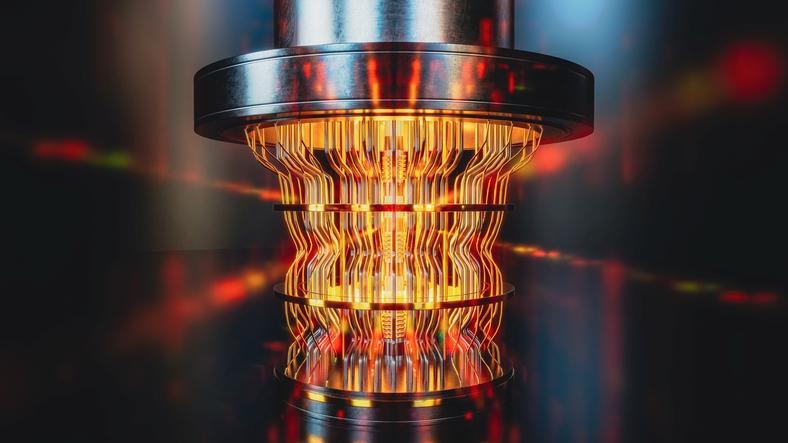
Qubit coherence and gate fidelities are no longer paving the path for quantum computing R&D teams. As they look for utility-scale systems, Helium has emerged as an equally formidable and terrestrial barrier in the supply chain. As per a recent analysis, the reliance on dilution refrigerators is now creating a financial and operational chokepoint for cutting-edge quantum cooling technologies. As global scarcity drives up helium prices to an unprecedented range of $1900-$2300 per liter, it has transformed the conventional dilution fridge into a strategic liability.
It is an unsustainable cost trajectory for organizations planning to scale beyond the pilot stage, data-center-ready fleets of quantum computers. It also represents a direct threat to long-term capital efficiency.


There is one strategic question that R&D teams have been asking: can sub -20 mK temperatures be achieved without a single drop of liquid helium? Emerging advanced materials science and evolving cryogenic engineering are turning the plausible answer to it into yes slowly.
Nevertheless, new helium-free pathways are now getting the attention of R&D portfolio managers. Out of these, two are mainly grabbing headlines: supersolid triangular-lattice cobaltates and modern Adiabatic Demagnetization Refrigerators (ADRs). Both offer credible pathways to sub- 20mK operations without liquid cryogens. However, both are yet in pilot phases and waiting for full-scale commercialization. Therefore, the question now shifts to what it will take to move these concepts to mass production.
Physics is no longer the problem
Triangular-lattice boaltates have garnered a lot of attention lately. Because in their spin supersolid phase, a giant magnetocaloric effect is capable of reducing temperatures to approx 94 mK without any complex gas recovery systems. The solid-state nature of their operations is quite appealing in the context of data-center deployment. Their low-vibration, compact, and compatible rack environment is ideal for cloud infrastructure teams that actually want to work with them.
The physics, too, is really compelling. The engineering white gaps are distinct and solvable. However, the crystal quality is inconsistent when it comes to production volumes. The heat lift capacity at millikelvin temperatures is also very limited. Lastly, cycling efficiency data for thousands of operational hours just doesn’t exist. These aren’t fundamental obstacles, but these are the decisive factors between lab demonstrations and something a fab operations could touch.
The modern version of ADR (adiabatic demagnetization refrigeration) is pretty close to deployment. Advanced systems employing magnetic refrigerant materials, without any helium-3 pre-cooling, are now achieving temperatures below 30 mK. This was feasible 5 years ago. Its carbon footprint is much lower than that of the dilution fridges, with lower maintenance costs and a much better cost structure than that of a full program lifecycle. Other friction points around cooling power at the lowest stages of temperature and the integration smoothness with pulse-tube pre-cooling.
This distinction is important to understand when structuring R&D investments. Cobaltates represent a higher upside and higher-effort bet. However, ADR platforms reflect a near-term path with a much clearer path to pilot-stage validation.
What Should an Ideal R&D Program Be Structured?
- The first half year needs to be deliberately narrow: The first priority needs to be materials intelligence. The companies must investigate which crystal suppliers are actually working at the most relevant quality levels, where the relevant IP is being held, and what it really means for your commercial path. A system optimized for one of these will automatically become suitable for the other. This alignment seems simple and can be overlooked easily. However, skipping would lead to expensive course corrections at the 14th month.
- Rapid prototyping — real prototyping, not breadboarding — should start between months 6 and 18. The specific integration challenges that will govern your program won’t surface in simulation. Vibration coupling into qubit control lines, thermal anchoring geometries, EMI profiles from the magnetic cycling in ADR systems: these have to be measured under conditions that resemble your actual operating environment. Teams that run these tests early find out early. Teams that defer them find out during qualification, which is a much more expensive place to find out.
- Manufacturability and supply-chain buildout occupy months 18–36. This phase is where most technically successful programs fail commercially. A cooling system that works in one lab-built unit and a cooling system that can be produced consistently at 50 units per year are different engineering objects. Reliability qualification protocols, cost modeling at volume, and the partner ecosystem that supports sustained production — these require deliberate investment, not optimism.
Honest Assessment is the Need of the Hour
- ADR platforms are the best options when it comes to near-term pilot validation. The engineering challenges pertaining to them are well-defined, their supply chains are smoother, and their magnetic refrigerants are more developed.
- However, with respect to long-term edge, it is cobaltate supersolids that carry an upper hand. But they require more patient engineering investment. Crystal supply, magnetic fatigue behavior over long operating cycles, and heat lift scaling are risks that need structured de-risking programs.
- Neither pathway is all wrong or all right. The suitable choice relies on the qubit architecture, deployment timeline, risk tolerance, and funding structure of an organization.
The Window Is Specific
- Even if the Helium prices don’t rise to thousands of dollars per liter, the supply chain risks alone raise allocation uncertainties and other risks for teams working without any backup.
- Quantum organizations that establish helium-independent cooling roadmaps in the next 12–24 months won’t just reduce cost exposure. They’ll have better control over their own deployment timelines, and they’ll have done the qualification work while the competitive landscape is still being shaped rather than after it’s settled.
- The science is ready enough to start. The question is whether your R&D program structure is.
Looking for helium-free cooling pathways for your future growth trajectory? Stellarix’s R&D and innovation strategy services are helping organizations translate emerging innovations into substantial growth roadmaps. For a focused technical discussion, reach out to Stellarix’s experts.