




















































For the better part of a decade, the “streaming wars” have been framed as a battle of the titans. We’ve watched as multi-billion dollar conglomerates like Disney, Amazon, and Netflix engaged in a high-stakes arms race for content library supremacy. For a time, it seemed that if you weren’t a tech behemoth with a bottomless war chest, you simply didn’t belong in the broadcasting industry.
However, a significant shift is occurring beneath the surface of the mainstream market. The era of “one-size-fits-all” entertainment is reaching a saturation point, and a new generation of agile, specialized broadcasters is emerging. By leveraging sophisticated OTT solutions, these smaller companies are proving that relevance, community, and technical precision are often more valuable than raw scale.


The Technical Leveling of the Playing Field
Historically, the biggest barrier to entry in the video-on-demand (VOD) market was the infrastructure. To launch a service that didn’t crash during peak hours or buffer on mobile devices, a company needed a massive internal DevOps team and a proprietary Content Delivery Network (CDN). This “tech tax” effectively locked out independent creators and regional broadcasters.
Today, the democratization of technology has changed the rules. Small companies can now bypass years of R&D by adopting end-to-end ott solutions. These platforms provide a “plug-and-play” architecture that handles everything from secure transcoding and digital rights management (DRM) to complex billing systems.

When the technical foundation is robust and outsourced to experts, a small team can launch a professional-grade service in a fraction of the time. This shift allows them to focus 100% of their resources on what truly matters: curating a content library that speaks directly to a specific audience.
The Strategic Advantage of the “Super-Niche”
While Netflix attempts to be a global department store of content, niche streamers act as high-end boutiques. The power of a niche strategy lies in community loyalty. A general audience streamer might have a high “churn rate”—where users subscribe for one show and then cancel. In contrast, a service dedicated to a specific passion, such as classic cinema, extreme sports, or localized cultural programming, becomes an essential part of the viewer’s lifestyle.
According to research by Deloitte, consumers are increasingly “stacking” their subscriptions. They keep one major global service for blockbusters but supplement it with niche services that offer depth in their areas of interest. Because the cost of maintaining these services has plummeted due to scalable OTT solutions, smaller players can remain profitable with a fraction of the subscriber base required by the giants.
UX Parity: Matching the “Gold Standard”
In the modern tech ecosystem, user experience (UX) is a non-negotiable factor. A viewer doesn’t care if a company is a startup or a Fortune 500 giant; they expect the app to load instantly, remember where they stopped watching, and offer a seamless interface across their phone, tablet, and Smart TV.
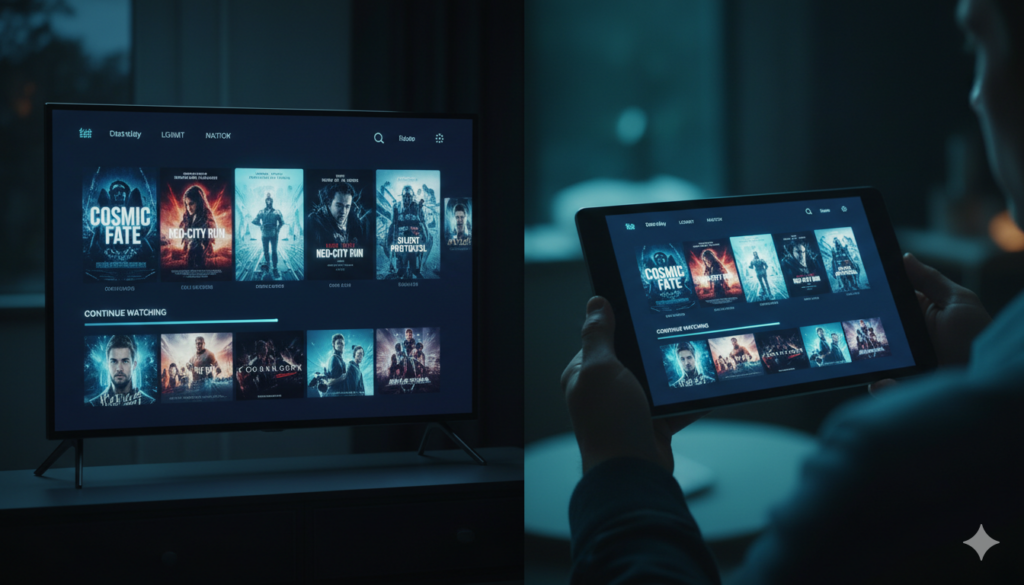
This is where many independent services failed in the past. Their content was good, but their apps were clunky. However, modern OTT solutions provide smaller operators with high-performance white-label apps. These apps include the features users have come to expect:
- Cross-Device Synchronization: Start watching on a train (mobile) and finish at home (TV).
- Adaptive Bitrate Streaming: Ensuring high-quality video even on unstable internet connections.
- Personalized AI Discovery: Using data to recommend the right content at the right time.
By achieving “tech parity” with the industry leaders, small companies remove the friction that previously prevented users from switching to smaller platforms.
Data Agility and New Revenue Models
The giants are often slowed down by their own weight. Changing a pricing tier or experimenting with a new ad model at a company like Disney+ is a global undertaking that takes months or years. Smaller, more agile companies can pivot in weeks.
By utilizing the analytics dashboards built into professional ott solutions, smaller broadcasters can gain a granular understanding of their audience. They can see exactly which content drives the most engagement and where viewers are dropping off. This data allows for rapid experimentation with monetization models:
- SVoD (Subscription): For dedicated fanbases willing to pay monthly.
- TVOD (Transactional): Perfect for one-off events, like a local sports tournament or a digital film festival.
- FAST (Free Ad-Supported TV): Reaching a wider audience by mimicking the traditional lean-back TV experience.
This agility is a defensive shield against the giants. When a small company knows its 50,000 subscribers better than Netflix knows its 200 million, that small company has the competitive edge.
Scaling Globally from a Local Base
Finally, the internet has effectively killed the “local” limitation. A company based in the UK that focuses on specialized British documentaries can, through the right technology, find a passionate audience in the US, Australia, and beyond.

This globalization of niche content is the final frontier of the streaming wars. We are seeing a “reverse-globalization” where local stories, powered by global ott solutions, are exported to the world. Smaller companies are no longer limited by their geography; they are limited only by the quality of their vision and the reliability of their technology.
Conclusion: The Future is Fragmented (In a Good Way)
The monopoly of the streaming giants is not ending, but it is certainly being challenged. The future of digital entertainment is not one giant “master app,” but a vibrant ecosystem of specialized platforms. For small companies and ambitious broadcasters, the message is clear: the technology is no longer the gatekeeper. With a focused content strategy and the right technical partners, any company can build a streaming empire that rivals the best in the business.

David Prior
David Prior is the editor of Today News, responsible for the overall editorial strategy. He is an NCTJ-qualified journalist with over 20 years’ experience, and is also editor of the award-winning hyperlocal news title Altrincham Today. His LinkedIn profile is here.