



















































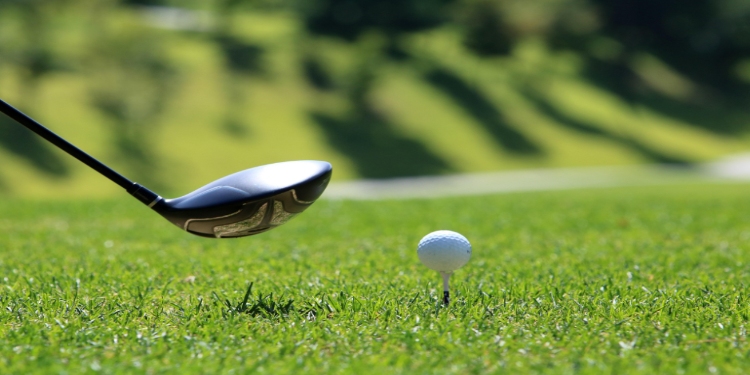
Almost every shot on a golf course presents a new challenge. Within the same hole, the margin for error changes from generous to harsh, the lie, the distance, and the wind. One of the most beneficial things a golfer can do for their scoring is to build a bag that consistently handles this diversity, and hybrid clubs are at the core of that goal. Golfers have a practical way to add true versatility without completely changing the bag, thanks to retailers like Affordable Golf, who have a variety of hybrid alternatives appropriate for various swing patterns and playing levels.
What Makes a Hybrid Different
A hybrid club uses design aspects from both the long iron and the fairway wood to create a product that performs both tasks satisfactorily and, in many cases, far better than the long iron. The club won’t dig into the turf on a bad lie thanks to the larger sole. Launching the ball from the ground without a perfectly centred hit is made easier by the lower center of gravity. For players who have trouble with the sweeping action required by longer clubs, the shorter shaft in comparison to a fairway wood makes it easier to handle.


The result is a club that, compared to the long iron it usually replaces, achieves acceptable results from a wider variety of impact conditions, which directly translates into fewer wasted shots from challenging positions for the majority of amateur players.
The Long Iron Problem
Among the most difficult clubs in the bag to consistently hit are long irons, usually the three and four irons. They need a lie that is clean enough to allow for clean contact, a precise, descending blow, and a somewhat quick swing speed to provide the compression required to propel the ball well. A low, weak shot that travels far less than the planned distance results from slightly missing the centre of the face.
Regardless of skill, the physics of a long iron operate against players whose swing speed is less than about 95 miles per hour. By offering a more forgiving face, a more accessible launch angle, and a sole shape that adapts to slight changes in the angle of attack, the comparable hybrid gets around this. The uniformity across a variety of strikes is far better, even though the distance attained may be comparable.
Performance From Difficult Lies
The hybrid’s ability to withstand lies that would cause problems for a long iron is one of the strongest justifications for carrying one. Fairway divots, tight lies on hardpan, rough that clutches at the hosel of a narrow-soled iron, and the slightly uneven ground that characterises many real-world fairway positions all work better with the hybrid’s wider sole and lower centre of gravity than with a blade-style iron profile.
This is important during a round because challenging lies are a common occurrence when playing golf on actual courses. A club that consistently manages them keeps a round going forward rather than sideways and decreases the number of recovery shots.
Distance Coverage and Bag Gaps
The distance range between the shortest fairway wood and the longest iron that a player can use efficiently is typically filled by hybrids. This is a real coverage gap for many golfers, distances from which neither the five wood nor the five iron yields consistent results. With a club that fits the shot type usually needed at that range, a hybrid suited to that particular distance range decreases the gap.
A hybrid’s loft should be chosen in relation to the lofts in the bag on either side of it. Even distance coverage results from a five-degree gap between the hybrid and the following club up and down the set; a ten-degree gap creates a hole that will reemerge on the course at inconvenient times.
Confidence and Commitment
A golfer’s level of commitment to the shot they are about to make is influenced by the club they use. A 190-yard approach with a three iron that has yielded variable results over the course of a round leads to hesitation; the same distance with a hybrid that the player is confident in promotes a committed swing.
This dedication has a quantifiable impact on the strike’s quality. A player who swings with full conviction is more likely to hit a good shot than one who decelerates during impact due to uncertainty about the outcome. The confidence that results from having faith in a club has a direct impact on the physics of impact; thus, it is not a soft benefit.
When to Consider Adding a Hybrid
Consistent difficulties with long irons, such as shots that yield poor, low outcomes even when struck quite well or that become unreliable from anything other than a perfect lie, are the most obvious indication that a hybrid would enhance a bag. The distance difference between the longest consistently used iron and the shortest fairway wood is known as a secondary signal. Either scenario is an issue that a carefully selected hybrid is intended to address.

David Prior
David Prior is the editor of Today News, responsible for the overall editorial strategy. He is an NCTJ-qualified journalist with over 20 years’ experience, and is also editor of the award-winning hyperlocal news title Altrincham Today. His LinkedIn profile is here.