




















































You may have heard investors say that time in the market is more important than timing the market. It’s an old saying that tells investors to focus on long-term gains over trading the peaks and troughs that print on charts every day. Those who heed this advice practice dollar-cost averaging (DCA), or perhaps pound-cost averaging for British traders, where they buy a fixed amount of an asset at regular intervals. Here are two big reasons why DCA appeals to many investors.
It’s Easier Than Finding the Right Moment
Many traders get by with short-term day trading, but they tend to be the ones who have dedicated a lot of time learning the market and devising their own trading strategies. That’s a far cry from investors, who tend to hold for longer and have other jobs keeping them busy.

DCA allows long-term traders to build a steady position over time, since they buy when the stock is up, down, or sideways. Assuming the stock is trading normally, this tends to create a solid position where the average cost basis isn’t subject to nasty spikes in price. If it’s a good pick backed by solid due diligence, then the stock may steadily rise over months and years, over the cost basis and into profit.
This DCA benefit applies to stocks, indices, even cryptocurrency; the only requirement is that it’s a long-term hold. The big exceptions are derivative trades that expire or use leverage. For example, contracts for difference (CFDs) can work best for short-term traders who want to profit off ticks upward/downward on a chart. They could be held for longer, for an overnight fee, but leverage makes it much more sensitive to movements that go against you, which could margin call your trade. As a result, most clients on a CFD trading platform are watching for short-term opportunities where they can pick a stock, put that leverage to work, and then get out fast.
Volatility Matters Less Long Term
Every trader should understand volatility and how it impacts securities. When volatility is high, a stock will move faster and more aggressively. This can be rewarding for traders who are well-positioned, but those are the ones lucky enough to time the market. Others get burned by volatility instead.
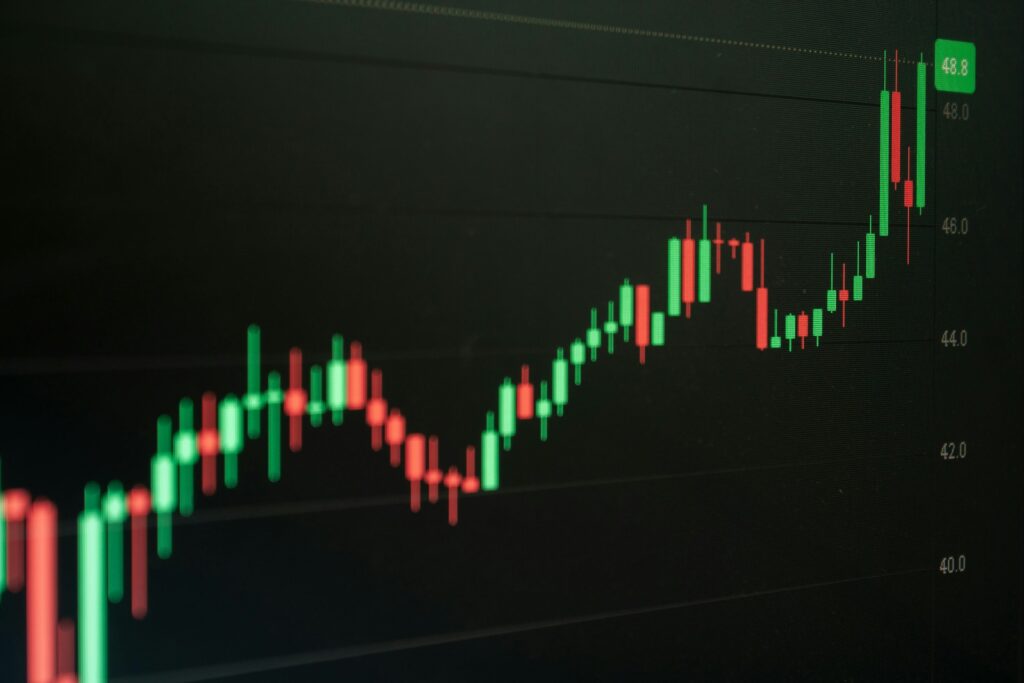
Traders rely on charts like the VIX to track how volatile things are in the market, with historical patterns showing conspicuous spikes around 2008 and 2020, for obvious reasons. Volatility is important for short-term traders, as it supplies opportunities they can exploit for profit.

Long-term traders don’t need to worry about volatility. A downturn could hurt a short-term trader’s trade, but it’s a buy opportunity for DCA investors who are strapped in for the long haul. Since DCA uses small, fixed investments, risk-averse investors don’t get antsy about buying into a volatile market. It lessens the financial and emotional stress that occurs when markets move hard and fast, sometimes by forgoing high-profit exit opportunities for peace of mind instead.
DCA investing sidesteps two of the biggest barriers to success in the market. Those who use it don’t need to worry about timing the market, and they equally avoid most of the downsides of volatility. Of course, they avoid the upsides of volatility too. As a strategy, DCA tends to produce lower expected returns than those who catch the tallest market waves.

David Prior
David Prior is the editor of Today News, responsible for the overall editorial strategy. He is an NCTJ-qualified journalist with over 20 years’ experience, and is also editor of the award-winning hyperlocal news title Altrincham Today. His LinkedIn profile is here.