




















































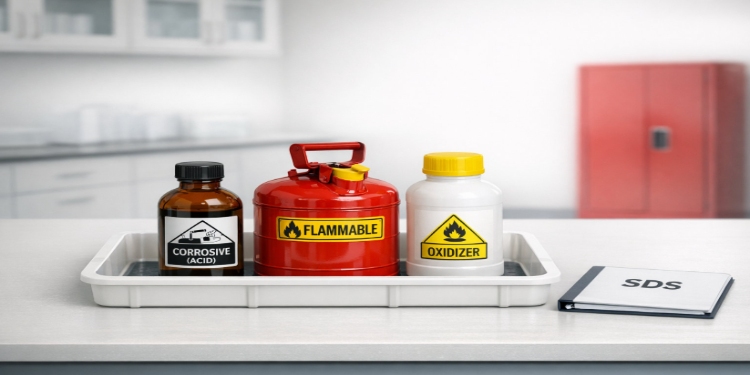
Safe storage of chemicals in laboratories plays a decisive role in preventing hazardous incidents. Many accidents arise from poor organisation, inadequate segregation, or insufficient labelling of chemicals. By following established best practices, you can significantly reduce the risk to people, equipment, and research progress.
Chemical storage is a critical component of laboratory safety, directly impacting your workplace’s risk profile and operational consistency. Proper organisation and maintenance of chemicals aid in accident prevention and regulatory compliance. Mishandling can lead to spills, fires, or toxic exposures, highlighting the importance of a robust chemical storage strategy. Understanding best practices enables you to create safer environments for you and your colleagues. In many cases, specialised containment solutions such as biological safety cabinets play a key role in protecting both laboratory personnel and sensitive materials.


Addressing common risks posed by poor storage
One of the leading causes of laboratory incidents is the improper storage of incompatible chemicals. Storing acids alongside bases, or mixing oxidisers with organics, can result in dangerous reactions that threaten safety and research continuity.
Degraded containers and inadequate labelling are additional factors that contribute to chemical-related accidents. When you cannot quickly identify contents or notice leaks, you increase the likelihood of exposures and chemical spills.
Principles for maintaining safe laboratory storage
Effective chemical management begins with clear segregation by hazard class. For example, separating flammable liquids from oxidisers or storing water-reactive substances away from moisture are widely accepted safety protocols.
Maintaining up to date inventories and limiting the amount of hazardous materials in storage help prevent overcrowding and confusion. Chemicals should be arranged to keep emergency supplies accessible at all times, and working areas uncluttered to enable swift emergency responses.
Practical considerations: segregation, containment, and readiness
Simple but essential guidelines include using bunded trays for corrosives, flammable cabinets for volatile chemicals, and temperature-controlled spaces where heat sensitivity matters. Ventilation should always be appropriate to the types of materials stored, reducing the build-up of hazardous fumes.
Regular inspections for leaks, crystallisation, or degradation are vital. Assigning responsibility to specific staff and keeping accurate records help you spot problems before they cause harm, supporting legal and institutional safety standards.
Importance of labelling, documentation, and training
Effective labels must include substance names, hazards, and dates, ensuring you can track both inventory and expiry risks efficiently. Safety Data Sheets should be available to all laboratory staff and kept up to date alongside your chemical register.
Regular staff training and clearly defined roles help ensure accountability and consistency in chemical storage procedures. This structured approach supports compliance with standard laboratory safety frameworks and reinforces a culture of safe practice.

David Prior
David Prior is the editor of Today News, responsible for the overall editorial strategy. He is an NCTJ-qualified journalist with over 20 years’ experience, and is also editor of the award-winning hyperlocal news title Altrincham Today. His LinkedIn profile is here.