



















































For years, “data-driven decision making” was one of those phrases that everyone nodded along to in meetings but very few businesses actually lived by. You’d have spreadsheets, maybe a few reports emailed around on a Friday afternoon, and a general sense that things were moving in the right direction. That was usually good enough.
It isn’t anymore.


The businesses that are pulling ahead right now — across retail, logistics, property, and professional services — share one thing in common: they’ve stopped guessing where their customers are and started actually looking. Not in a vague, “our target market is 25-to-45-year-olds” kind of way. In a precise, postcode-level, visualised-on-a-map kind of way.
This shift is partly driven by better tools, and partly by the fact that the cost of being wrong has gone up considerably. With tighter margins, rising operational costs, and consumers who are quicker than ever to take their money elsewhere, UK businesses simply can’t afford to plant stores, hire staff, or run campaigns based on gut instinct alone.
The Gap Between Data and Decisions
Here’s a problem that comes up more often than people admit: companies have plenty of data, but it’s scattered. Sales figures live in one system, customer postcodes in another, footfall numbers in a third. Nobody has a clear picture because the picture is never in one place.
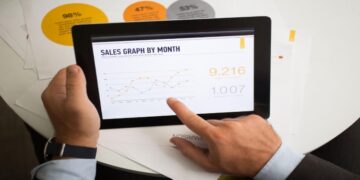
This is where business intelligence tools have genuinely changed things. Power BI, Microsoft’s data visualisation platform, has become a staple in many mid-sized UK businesses — and for good reason. When it’s set up well, it pulls all of that scattered data into one dashboard that actually makes sense to look at.
The catch is “when it’s set up well.” Most teams that struggle with Power BI aren’t struggling because the tool is bad — they’re struggling because setting it up properly requires a specific kind of expertise that’s hard to find in-house. That’s why more companies are turning to Power BI dashboard consulting to get their reporting infrastructure built correctly from the start, rather than spending months wrestling with something that was never quite configured for their actual business needs.
A good consultant doesn’t just build you a prettier version of what you already had. They ask harder questions: what decisions are you trying to make? What do you need to see every morning? What data are you currently ignoring because it’s too hard to access? The answers to those questions shape a dashboard that people actually use, rather than one that gets opened once and then quietly forgotten.
Location Data Is the Missing Layer
Even with solid business intelligence in place, many companies are missing something important: the spatial dimension. Numbers tell you what is happening; location data tells you where — and often, that’s the more useful answer.
Say you’re a regional logistics company trying to reduce delivery costs. Your dashboard might show you that certain routes are consistently over budget. But without a map layer showing where your drivers are going, where delays are happening, and how that correlates with traffic patterns or depot locations, you’re still guessing at the cause.
Or say you’re a retail group deciding whether to open a new site. You can look at footfall averages and population density figures, but neither of those tells you how many of your existing customers live within a ten-minute drive, or whether your competitor has already sewn up the area.
This is why spatial analytics has moved from a niche capability to something businesses across industries are actively investing in. Platforms like a spatial analytics platform make it possible to layer geographic context on top of your existing data — turning rows of numbers into something you can actually see and act on.
The visual element matters more than it sounds. When a board can look at a map showing exactly where their best-performing customers cluster, or where their delivery costs spike, or where a competitor’s nearest location sits — that’s when decisions get made with confidence rather than crossed fingers.
The Practical Side: What This Looks Like Day to Day
It’s worth being concrete about what businesses are actually doing with these tools, because it’s easy for this kind of conversation to get abstract.
A property consultancy might use spatial analytics to assess which postcodes are seeing rising rental demand before their competitors catch on. A food and beverage brand might use location intelligence to decide which festivals and events are worth sponsoring, based on where their core customer base actually lives. A haulage firm might use it to redesign their depot network — identifying areas where they’re spending too much on last-mile delivery because their nearest hub is simply too far away.
None of these insights are particularly exotic. They’re the kinds of things that good managers have always tried to figure out. The difference now is that the answer doesn’t take three weeks and a consultant flying in from somewhere expensive — it’s visible in a dashboard that updates in real time.
Don’t Wait for the “Right Time”
One thing that holds businesses back is the idea that they need to sort out all of their data before they start doing anything useful with it. They want clean data, a clear strategy, sign-off from every stakeholder, and a perfectly scoped project before anyone does anything.
That rarely works. The businesses making the most progress tend to start small — one dashboard, one data source, one genuine question they want answered — and build from there. They learn what they actually need by using something imperfect, rather than planning indefinitely for something perfect.
If your business is making location-based decisions — and almost every business is, even if it doesn’t describe them that way — then it’s worth asking whether you’re making them with the best information available. The tools exist. The expertise is out there. The gap between the businesses that use them and those that don’t is only going to widen.