



















































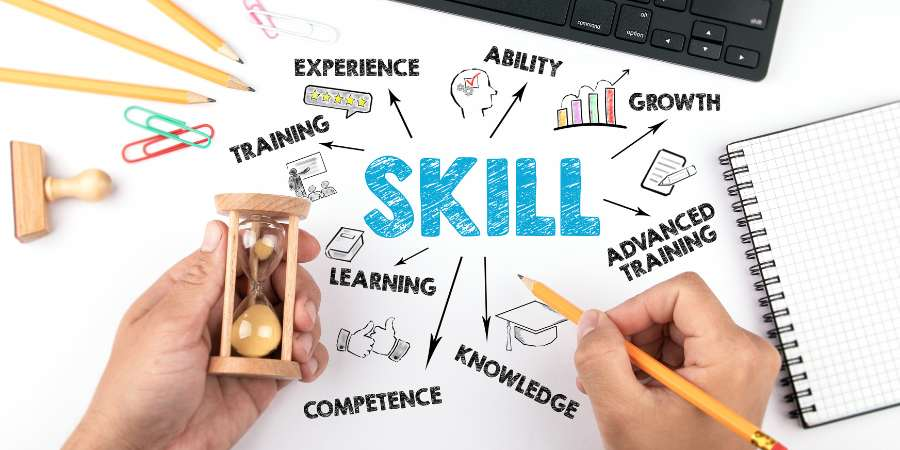
Education is undergoing a significant transformation. For decades, traditional systems focused heavily on theoretical knowledge, standardized testing, and academic credentials. However, as industries evolve faster than ever, there is growing recognition that knowledge alone is no longer enough. Today, schools, universities, and training institutions are shifting toward a more practical, outcome-driven model known as skills-based learning.
This shift reflects a deeper change in how society defines success in education. Instead of asking what students know, educators and employers are increasingly asking what students can actually do. This fundamental change is reshaping curricula, teaching methods, and even hiring practices across industries.


Understanding Skills-Based Learning
Skills-based learning focuses on developing practical abilities through real-world application rather than relying solely on theoretical instruction. It emphasizes hands-on experiences, problem-solving, collaboration, and measurable competencies.
Unlike traditional models that prioritize memorization and exams, this approach encourages students to actively engage with what they are learning. Whether through projects, internships, simulations, or case studies, students gain experience applying concepts in realistic scenarios.
“In high-stakes environments, knowledge alone is never enough. What matters is how effectively someone can apply that knowledge under real conditions, which is exactly what skills-based learning is designed to prepare individuals for,” says Sharon Amos, Director at Air Ambulance 1.
This model is closely tied to competency-based education, where progress is measured by mastery rather than time spent in a classroom. Students move forward when they demonstrate they can perform a skill effectively, not just when they complete a course.
Why Education Is Moving Toward Skills
The shift toward skills-based learning is largely driven by changes in the workforce. Employers today are less focused on degrees alone and more interested in candidates who can contribute immediately. Practical experience, adaptability, and problem-solving abilities have become key differentiators in hiring decisions.
There is also a clear gap between what traditional education provides and what industries need. Many graduates enter the workforce with strong theoretical knowledge but struggle with applying it in real-world situations. Skills-based learning helps close this gap by aligning education with actual job requirements.
Another important factor is the rise of lifelong learning. In a world where technology and industries evolve rapidly, individuals must continuously update their skills. Education is no longer a one-time phase but an ongoing process, and skills-based learning supports this continuous development.
Traditional teaching methods have also shown limitations. Passive learning through lectures and memorization does not always lead to deep understanding or practical competence. In contrast, active learning methods encourage engagement, experimentation, and retention.
Benefits of a Skills-Focused Approach
One of the most significant advantages of skills-based learning is improved employability. Students who graduate with hands-on experience are better prepared to meet the expectations of employers. They can demonstrate their abilities through real work rather than relying solely on academic credentials.
This approach also strengthens critical thinking and problem-solving. When students are exposed to real-world challenges, they learn to analyze situations, evaluate options, and develop effective solutions. These skills are essential in almost every profession.
“Employability today is less about what candidates know in theory and more about what they can demonstrate in practice. Skills-based learning bridges that gap by giving learners tangible proof of their capabilities before they even enter the workforce,” says David Lee, Managing Director at Functional Skills.
Engagement is another major benefit. Students are more motivated when they see the practical value of what they are learning. Hands-on activities and real-world applications make education more meaningful and relevant.
In addition to technical skills, this model supports the development of soft skills such as communication, teamwork, and leadership. These are often overlooked in traditional education but are crucial for long-term success.
Skills-based learning also allows for more personalized education. Students can focus on areas that align with their interests and strengths, progressing at their own pace and building confidence in their abilities.
How It Is Being Applied in Practice
The implementation of skills-based learning can be seen across various educational settings. Project-based learning is one of the most common methods, where students work on real problems that require the application of multiple skills. This approach helps bridge the gap between theory and practice.
Internships and industry collaborations are also becoming more common. By working directly with companies, students gain exposure to real work environments and understand the expectations of employers. This experience often gives them a competitive advantage when entering the job market.
Technology plays a crucial role in supporting this shift. Digital platforms, simulations, and virtual labs allow students to practice skills in interactive and controlled environments. These tools make learning more accessible and adaptable.
Assessment methods are also evolving. Instead of relying solely on exams, institutions are increasingly evaluating students based on their ability to demonstrate specific competencies. This provides a more accurate reflection of their capabilities.
Challenges and the Road Ahead
1. Resource Limitations and Infrastructure Gaps
Despite its many advantages, the transition to skills-based learning comes with challenges. One of the main obstacles is the need for resources. Implementing hands-on learning requires infrastructure, technology, and trained educators, which may not be readily available in all institutions.
2. Resistance to Change in Traditional Systems
There is also resistance to change. Traditional education systems are deeply established, and shifting to a new model requires time, effort, and cultural adaptation. Educators and institutions must be willing to embrace new methods and rethink long-standing practices.
3. Complexity in Skill-Based Assessment
Another challenge lies in assessment. Measuring skills is more complex than grading exams, and institutions need reliable ways to evaluate performance and ensure consistency.
4. Balancing Theory with Practical Application
It is also important to maintain a balance between theory and practice. While practical skills are essential, foundational knowledge remains important. The goal is not to replace traditional learning entirely but to enhance it with real-world application.
5. The Evolving Role of Educators
Looking ahead, the role of educators will continue to evolve. Teachers will act more as facilitators and mentors, guiding students through learning experiences rather than simply delivering information. Educational institutions will need to build stronger connections with industry and continuously update their curricula to remain relevant.
Conclusion
The shift toward skills-based learning represents a meaningful evolution in modern education. It addresses the limitations of traditional models and aligns learning with the demands of the real world.
By focusing on practical abilities, adaptability, and continuous growth, this approach prepares students for both current and future challenges. It encourages them to apply their knowledge, think critically, and develop the confidence needed to succeed in a rapidly changing environment.
As education continues to evolve, one thing is becoming increasingly clear: success will depend not just on what individuals know, but on how effectively they can use that knowledge in real-world situations.