



















































What Is PT-141?
PT-141, also known by its chemical name bremelanotide, is a synthetic peptide that acts on melanocortin receptors in the body. It was originally developed from research into melanotan compounds, a family of peptides studied for their effects on pigmentation pathways. Over time, researchers noticed that this class of compounds also interacted with other melanocortin receptor subtypes tied to different physiological systems, which shifted the focus of study toward those broader effects.
Like other compounds in this category, PT-141 is supplied strictly for laboratory research and is not intended for general human use outside of approved clinical settings. Pepta Supply B.V. who list it should say this plainly, without hedging or suggestive marketing language that implies otherwise.

The Melanocortin System and Why It’s Studied
The melanocortin system is a network of receptors that influence a surprisingly wide range of processes, from pigmentation to appetite regulation to aspects of sexual physiology. Because a single receptor family touches so many different systems, it has become a popular area of study for researchers trying to understand how these pathways overlap and interact with one another.
PT-141 is particularly useful in this context because of how selectively it engages certain melanocortin receptor subtypes compared to earlier compounds in the same family. That selectivity gives researchers a more precise tool for isolating specific pathways during a study, rather than triggering a broad, less controlled response across the entire receptor system.
Current Areas of PT-141 Research
Researchers have studied PT-141 in connection with a few distinct areas. The most commonly referenced is sexual physiology, where the compound’s interaction with melanocortin receptors has been examined in various study models. It has also come up in appetite related research, given the same receptor family’s role in regulating hunger and satiety signals.
- Melanocortin receptor signaling and selectivity studies
- Sexual physiology and central nervous system pathway research
- Appetite regulation and energy balance models
- Neuroendocrine research examining receptor crosstalk
None of this reflects a claim about outcomes for individual, non research use. It simply reflects the kinds of questions that show up in published research literature and the reasons labs continue to keep this compound in active rotation for study work.
How PT-141 Differs From Other Melanocortin Compounds
It helps to understand where PT-141 sits relative to other compounds in the same family. Earlier melanotan peptides were studied primarily for their broad effects on pigmentation pathways, and they tend to interact with several melanocortin receptor subtypes at once. PT-141 was refined to engage a narrower set of receptors, which gives researchers a more targeted tool when a study design calls for isolating a specific pathway rather than triggering the entire receptor family.
This narrower selectivity is a big part of why PT-141 shows up so often in research focused on sexual physiology and central nervous system signaling, areas where a broader acting compound would introduce too many confounding variables to draw clean conclusions from. Knowing this history also explains why some suppliers still group PT-141 alongside melanotan products, even though the two behave differently once they interact with receptor tissue.
What to Look for When You Buy PT-141 Peptide
The same sourcing standards that apply to any research peptide apply here, and PT-141 shouldn’t be treated as an exception just because it’s a smaller molecule or a more established compound than something like retatrutide.
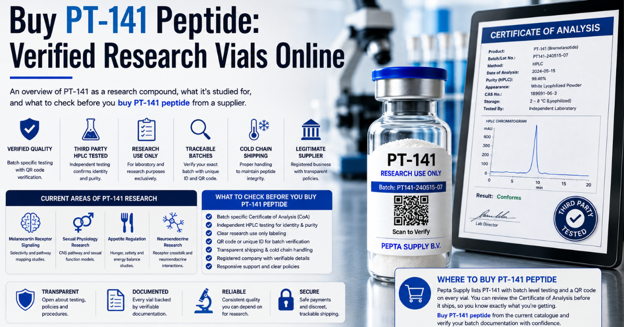
- A batch specific Certificate of Analysis rather than a generic product sheet reused across listings
- Confirmation of identity and purity through independent HPLC testing
- Clear research use only labeling on both the vial and the outer packaging
- A traceability system that lets you verify the exact batch you received against its own test data
- Transparent shipping practices, including cold chain handling where the product requires it
If a listing is vague about testing methodology or skips batch documentation entirely, treat that as a warning sign rather than a minor gap. It usually indicates the same corner cutting shows up elsewhere in how the company operates.
Understanding Testing and Documentation for PT-141
A proper Certificate of Analysis for PT-141 should include the batch number, the testing method used, typically HPLC, the measured purity percentage, and the date testing was completed. As with any research peptide, that batch number needs to match what’s printed on the vial you actually receive, not just what’s listed on the product page at the time of purchase.
Some suppliers also include mass spectrometry data alongside HPLC results for smaller, well characterized peptides like PT-141, since the molecule’s structure is thoroughly documented in existing literature. This additional layer of testing isn’t strictly necessary, but it’s a positive sign when a supplier includes it without being asked.
Storage and Documentation
PT-141 typically arrives as a lyophilized powder and should be stored according to the supplier’s specific instructions, usually refrigerated before reconstitution and used within the stated window once prepared. Keep the accompanying Certificate of Analysis on file rather than discarding it after checking the batch number once.
That document is the record tying a specific vial to its verified test results, and it matters if a study ever needs to reference exactly what material was used during a particular phase of research. Building a simple internal log, batch number, receipt date, storage conditions, is a small habit that pays off if any result ever needs to be reviewed or reproduced later.
Common Mistakes When Sourcing PT-141
A few mistakes show up repeatedly among buyers new to sourcing research peptides. The first is assuming that because PT-141 is a well established, well studied compound, testing standards matter less than they would for something newer. That assumption doesn’t hold up. Established compounds still vary in quality between suppliers, and a well characterized molecule is just as easy to under dose or contaminate as a newer one.
The second common mistake is skipping the batch verification step entirely once a shipment arrives, simply trusting that the vial matches the listing without confirming it against the actual documentation. The whole point of a batch specific system is that it only works if it’s actually used, so taking the extra minute to check is worth building into a standard receiving process.
A third mistake worth mentioning is buying larger quantities than a study actually needs just because a bulk price looks appealing. Lyophilized peptides remain most stable when they’re used within a reasonable window after reconstitution, and ordering more than a lab can realistically work through often means paying for material that ends up sitting unused past its useful window. It’s usually more cost effective, and more scientifically sound, to order what a current protocol actually calls for and reorder from the same verified batch source when the next phase begins.
Comparing Suppliers Beyond the Price Tag
When two listings for PT-141 look similar on the surface, price tends to become the deciding factor by default, mostly because it’s the easiest thing to compare at a glance. But price alone tells you nothing about what’s actually inside the vial. A more useful comparison looks at testing transparency first, company registration second, and price last. Suppliers that rank well on the first two points tend to justify their pricing with documentation you can actually check, rather than asking you to take their word for it.
Where to Buy PT-141 Peptide
Pepta Supply lists PT-141 with the same batch level testing standard applied consistently across its entire catalogue. Each vial includes a QR code linked to its individual lab report, so you can buy PT-141 peptide and review the documentation before it ships, rather than trying to track it down after the fact.
Frequently Asked Questions
Is PT-141 approved for general human use?
No. It’s classified as a research compound and is sold exclusively for laboratory and scientific research, not for therapeutic or clinical application outside of approved trials.
What does melanocortin receptor research actually involve?
It generally involves studying how these receptors respond to different compounds and signaling inputs, which helps researchers map broader pathways connected to appetite, pigmentation, and other physiological systems.
How should PT-141 be stored before use in a lab setting?
Follow the supplier’s specific instructions, but as a general rule, keep it refrigerated in lyophilized form and use it within the stated timeframe once it’s been reconstituted.
Is PT-141 the same as melanotan compounds?
It’s related but distinct. PT-141 was developed out of research into the melanotan family and has its own selectivity profile for specific melanocortin receptor subtypes.
What testing should I expect to see on a PT-141 Certificate of Analysis?
At minimum, expect a batch number, testing method, purity percentage, and testing date. Some suppliers add mass spectrometry data as an additional confirmation layer.