




















































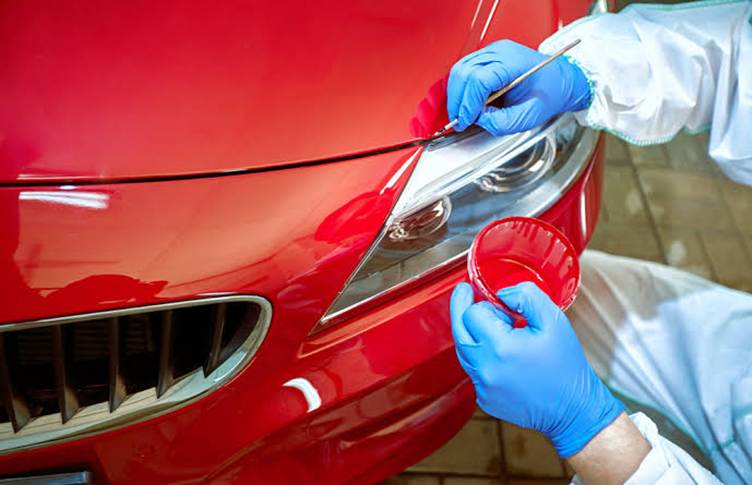
Repairing minor paint chips and scratches can protect a hidden amount of your car’s value, often more than the cost of the repairs to do them. When a car has a neat and well-looked-after body, it tells a buyer or dealer that the vehicle has also been taken care of mechanically and that perception has a direct influence on what they are willing to offer. A mere 20 to 40 on a touch-up kit to fix stone chips can be a simple way to save a few hundred pounds at the valuation.
The explanation is partly psychological and partly practical. If there is visible damage, it will give a buyer a reason to bargain, and dealers price part-exchanges in a defense manner, so they deduct more for the cosmetic damages than the actual cost of the repairs. Besides, the chips left untreated will lead to rust and that is a real condition problem whereas a cosmetic problem is only the surface, so the small mark that you think is minor today might be a really big deduction at the time of sale.


How Much Paint Damage Actually Affects Resale Value
Cosmetic imperfections hardly ever affect the mechanical value of a car. Yet, they do have a very strong impact on the way people see a car, and it is people’s perception that determines the price, whether you are selling the car privately or trading it in. A very quick way for the buyer to judge a car is a visual appraisal and in a bare moment, a bonnet full of stone chips or a scuffed bumper will tell the buyer that the previous owner disregarded the details. That single impression then influences how they will see everything else, from the service history to the condition of the tires.
Generally, industry guidelines on valuing used cars consider unrepaired paint damage as a bargaining tool rather than a fixed deduction, which puts the seller at a disadvantage. A dealer may reduce the price of a car part-exchanged by several hundred pounds for a panel that needs some work, even though the actual repair might only cost a small fraction of it. The difference between what they deduct and what the fix costs is simply the amount you lose by not fixing it. This sort of thing is more pronounced with higher-value and prestige cars, as buyers in this market segment not only expect a perfect finish but also that anything that breaks the perfect finish will leave them quite displeased.
Which Small Repairs Give You the Best Return
Stone chips on a bonnet and front bumper are the top-value repairs you can make. You can fix them quite easily, and buyers notice them as the first thing. On motorways, these chips occur in bunches as you keep driving with the front of the car exposed, so the front can even appear worn out on the car, which is great mechanically. It usually takes just minutes per chip to fill them and the material cost is almost zero after you have the kit.
A light scratch in the clear coat should be your next target for repairs. A scratch that has no color layer can be completely polished out, though even one that has color can still be touched so that it is practically invisible from a regular observation distance. Door-edge chips are definitely worth doing, not only because they are grouped together but also because they are so clearly seen by anyone opening the car. Alloy wheel scuffs are not exactly paint-related, but they contribute to that first impression, which is why kerbed wheels have the biggest negative impact on a valuation than the repair costs.
The only repairs that are not profitable for a DIY approach are the major ones. A deep scratch that runs through a panel, a dent with paint that is cracked, or any big area that needs a respray should be done by a professional. A visible patch done by a non-professional on a large panel looks worse than the original damage and can lose you more money on the sale than leaving it as it is.
What Small Paint Repairs Cost Compared to the Value They Protect
The maths here is what makes small paint repairs worth the afternoon. A touch-up kit runs roughly £20 to £40, and a single bottle of colour will cover every stone chip on the front of an average car with paint to spare. Against that, Body Shop quotes for the same cluster of chips often start around £150 and climb depending on the panel, while the resale deduction for leaving them can be larger still.
Colour matching is the part that determines whether the repair adds value or quietly subtracts it, because a mismatched patch reads as worse than an honest chip. Every car carries a paint code, usually on a sticker in the driver’s door jamb or under the bonnet, and matching that code rather than guessing at a generic shade is what separates an invisible repair from a visible one. Systems built around your specific code take most of the risk out of this, and products like chipex touch up paint bundle the matched colour with a blending solution and cleaning materials, so the whole job follows one method rather than a pile of mismatched bottles. For metallic and pearl finishes, which are the hardest to fake, this kind of code-matched approach matters even more.
Timing affects the return, too. Treating a chip while it is fresh, before water sits in it and rust starts, is the cheapest version of the repair. The same chip left through a wet winter becomes a rust spot that needs cutting back and priming, and at that point, a quick touch-up has turned into a real job.
How This Plays Out Differently Depending on How You Sell
If you are selling your car privately, the effort you put into making it look good will pay off most directly since you are dealing with a buyer who can easily walk away just because of a small visible damage like a scuffed bumper. A simple touch-up and a thorough cleaning can make the car sell quicker and at a price close to the asking one, because the car looks better in pictures and also in person. Private buyers have a strong reaction to someone taking good care of the car, and doing small visible repairs in a good way will greatly reinforce that feeling.
When you part-exchange your car at a dealer, the situation is a bit different because the dealer will do the reconditioning of the car themselves and the price discount they give you will be based on their costs plus the margin. Even if you do the cheap and very visible repairs by yourself, you will still gain something, but it is hardly ever worth trying to make the car perfect if you are doing a trade-in, because the professional bodywork costs that you pay will not be recovered through a higher offer. There is a different story with lease returns. Lease end inspections will have fixed damage charges that often seem very different pricing wise from the actual touch-up, so small repairs that you can do yourself with a kit, can be turned into charges that are several times that. Deciding what exactly you are planning to do will guide you on how far you should go.