



















































Some timber cladding is chosen to disappear into the background. Shou Sugi Ban does the opposite.
Also known more accurately as Yakisugi, this centuries-old Japanese charring technique turns ordinary boards into a deep, textured, weather-resistant material with real architectural presence. On UK homes, it is now appearing on extensions, garden rooms, fencing, decking and full exterior façades — not because it is a passing design trick, but because it solves a practical problem beautifully.


The charred surface helps protect the timber against moisture, insects and decay, while the brushed and oiled finish gives it the rich black, grey, brown or natural tones that make modern buildings feel sharper and more considered. For self-builders, renovators, architects and trade customers, that combination is difficult to ignore.
There are still a few sensible questions to answer before choosing it: which timber works best, what it costs, how long it lasts in the British climate, and what maintenance actually involves. This guide covers the history, process, species, prices and care of Shou Sugi Ban, so you can decide whether charred timber is right for your project.
What Is Shou Sugi Ban? The Centuries-Old Japanese Art of Charring Wood
Shou Sugi Ban, more correctly Yakisugi, is a traditional Japanese method in which the surface of timber is charred with fire to protect it. The fire does not weaken the board; it strengthens its outer face against the elements.
The name explains the technique itself. Yakisugi combines yaki (焼, burned or heat) and sugi (杉), the Japanese cedar Cryptomeria japonica, so it literally means “burnt cedar”. Shou sugi ban is simply an alternative reading of the same kanji (焼杉板).
The method dates to 18th-century Japan and is associated with the Sendai region, where it was developed for preservation rather than purely aesthetics. Builders charred cedar to make cladding last in a demanding climate.
The mechanism is straightforward. Surface carbonisation creates a thermally stable carbon layer that acts as a barrier, shielding the wood interior from moisture, insects and decay, much like an organic coating.
This layer also resists rot because the charred surface is theoretically free of the cellulose and sugars that wood-decay fungi feed on. With nothing left to consume, a properly charred surface gives decay fungi little to colonise.
How the Charring Process Works (Char, Brush, Oil)
The traditional Japanese method is san-mai, the “three-plank” technique, where three boards are bound into a triangular column and stood over a fire. The chimney effect inside the column draws the flames upward, producing an even, controlled burn across the inner faces.
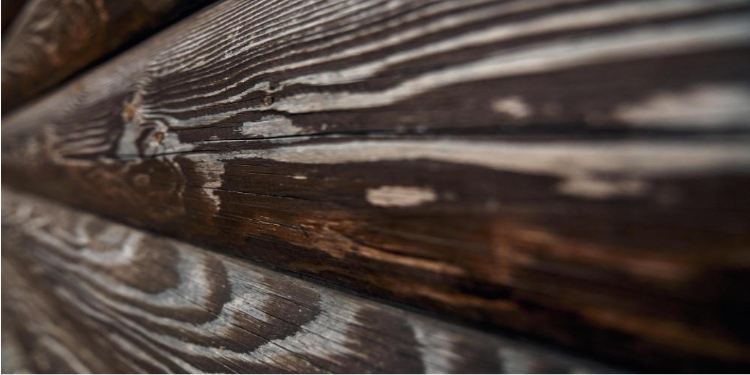
Modern production follows the same logic in three stages. First, the surface is charred. Then the board is left to cool before being wire-brushed to remove loose soot and reveal the grain. Finally, it is sealed with a natural oil that sets the finish and locks in the colour.
Because the surface is brushed and oiled, a properly finished charred board does not rub off in normal handling or use.
Depth and uniformity of char vary considerably by producer, and this directly affects both durability and appearance. A deep, consistent char performs better than a thin, patchy one.
Why Charred Wood Cladding Is Appearing on UK Homes
UK self-builders, architects and renovators are turning to charred timber because it pairs a striking contemporary aesthetic with low ongoing maintenance and natural weather resistance. The deep matte-black or brushed finish gives a building real presence, which explains why it now features so often on modern British exteriors.
The trend has gathered pace across self-builds, extensions, garden rooms, home offices and feature interior walls. In each case the charred surface lifts a building’s character, framing glazing and pale render with a sophisticated dark contrast that few other materials achieve.
The technique also suits the damp British climate. A charred, oiled surface resists moisture and decay better than untreated softwood, so it weathers wet and changeable conditions with little intervention.
Sustainability adds to the appeal. Roughly 0.9 tonnes of CO2-equivalent is stored in a single cubic metre of wood, and substituting timber for concrete and steel can cut a build’s emissions, provided the timber is responsibly sourced.
As a UK supplier, TimberSol pairs the traditional charring technique with modern profiles, shades and custom sizing for British projects.
Choice widens the design appeal further. Beyond classic black, shades such as carbon, anthracite grey, mahogany, walnut and natural let designers match charred timber to almost any architectural style.
Which Wood to Use for Shou Sugi Ban (Larch, Cedar, Accoya & More)
Denser, more stable timbers hold a deeper, longer-lasting char, so Siberian larch, cedar, oak, Accoya and thermally modified wood are the strongest performers for UK cladding.
Larch and Douglas fir offer good durability and value, which makes them the popular all-rounders for British exteriors. Oak, including brushed oak, gives a premium dense finish, while Accoya and thermowood add dimensional stability and resistance for the most demanding outdoor use.
Pine and spruce char well and suit DIY or budget projects, but they are softer and less durable than harder species over time.
The reason comes down to grain. A denser grain produces a more even char and a tougher surface, since the carbon layer forms uniformly across the board. Softer woods can char unevenly, leaving patches that weather at different rates.
Match the species to the job:
- Siberian larch – cladding and fencing, strong value and durability
- Oak – premium cladding and decking with a dense, refined finish
- Accoya / thermowood – exposed cladding needing maximum stability
- Douglas fir – cladding with good strength at mid-range cost
- Spruce – budget cladding, fencing and DIY projects
Because finish varies by species and shade, ordering charred cladding samples to compare per wood type lets you judge the char and colour in person before committing to a full order.
Is Shou Sugi Ban Expensive? Cost Breakdown for UK Buyers
Charred timber cladding in the UK typically costs around £75–£150 per m², depending on the timber species and the level of charring. That sits at a premium over plain, uncharred softwood.
The higher price reflects specialist processing. Each board is charred, often thermally modified for stability, then wire-brushed and sealed with oil to set the finish, which adds labour and material cost that standard timber does not carry.
That upfront premium buys low ongoing maintenance. Painted or stained timber needs frequent repainting to stay presentable, whereas a charred, oiled surface only requires an occasional reseal, so the lifetime cost gap narrows considerably.
Several factors shape the final figure:
- Timber species (larch and spruce cost less than oak or Accoya)
- Depth of char (deep charring takes more processing)
- Profile and finish (shiplap, shadow gap or feather edge)
- Quantity ordered and delivery to your site
Budget-conscious projects have clear routes. Choosing larch or spruce over Accoya lowers the per-square-metre cost, a feather-edge profile suits fencing affordably, and standard shades and sizes avoid bespoke surcharges.
If you want firm numbers for your project, ordering a charred timber sample is a low-commitment first step before you request a quote. Finance is available for larger jobs.
How Long Does Charred Wood Cladding Last? Durability & Maintenance
Deep-charred cladding in above-ground UK exterior use typically lasts around 25–40 years when correctly installed, while traditional Japanese yakisugi is often cited as lasting up to a century in milder conditions.
Durability depends on char method, depth and species. A deep, uniform, industrially produced char performs well, whereas a thin or inconsistent char may not improve performance at all. For that reason, charring should never be described as fireproof, waterproof or maintenance-free.
Controlled decay testing supports the principle: research published in Materials (2022) found that contact-charred samples lost far less mass to rot than unmodified wood. Yet results varied by char depth and timber species, which is why quality of production matters more than the technique alone.
Left uncoated, a brushed charred surface weathers to a silver-grey patina over roughly 5–10 years, because UV light gradually photodegrades the surface carbon. Many owners welcome this softer, natural look.
To keep the original shade, re-oil on a simple schedule:
- Exposed cladding and fencing: every 3–5 years
- Sheltered vertical cladding: every 5–10 years
- High-traffic decking: every 2–3 years
Recoating needs no sanding or stripping. Just wash the board, let it dry, then apply one coat of matched oil.
TimberSol’s matched Hi-Tech Hybrid Oil makes resealing straightforward in the original shade, so maintenance stays far lower than painted or stained timber that needs frequent repainting.
Shou Sugi Ban: FAQ
What Does Shou Sugi Ban Mean and Where Did It Come From?
Shou Sugi Ban literally means “burnt cedar,” from yaki (焼, burned) and sugi (杉), the Japanese cedar Cryptomeria japonica. The term Yakisugi is an alternative reading of the same kanji, and the trade increasingly treats Yakisugi as the more correct name.
The technique originated in 18th-century Japan and is closely associated with the Sendai region. It was developed for wood preservation rather than appearance alone, because charring the surface protected boards against moisture, insects and decay long before modern coatings existed.
Is Shou Sugi Ban Expensive Compared to Normal Cladding?
Charred timber cladding in the UK typically costs around £75–£150 per m², while plain uncharred softwood sits well below that. The premium reflects the specialist processing involved, including charring, brushing, oil finishing and often thermal modification.
Price varies by timber species, depth of char, profile and quantity ordered. You can reduce the cost by choosing larch or spruce over Accoya, selecting standard profiles such as feather edge, or sticking to common shades and sizes.
Which Wood Is Best for Shou Sugi Ban?
Siberian larch, cedar, oak, Accoya and thermally modified timber are the best performers, because harder, denser species hold a deeper, longer-lasting char with a more even surface. Oak gives a premium dense finish, while Accoya and thermowood add dimensional stability for demanding exterior use.
Pine and spruce char well and suit DIY or budget projects, but they are less durable than denser species over time. The choice depends on whether longevity or lower upfront cost matters more for the project.
How Do I Maintain Charred Wood Cladding?
Maintenance is minimal: a light clean and an occasional reseal with a matched oil, with no sanding or stripping required. Recoating simply means washing, drying and applying one fresh coat of the same oil to restore the original shade.
Typical re-oiling intervals are every 3–5 years for exposed cladding and fencing, 5–10 years for sheltered vertical cladding, and 2–3 years for high-traffic decking. This makes charred timber considerably lower-upkeep than painted timber, which needs regular stripping and repainting.
Want to compare shades and species in person before committing? Ordering a TimberSol sample is a low-commitment first step before requesting a full quote.
Whether you are planning a striking house exterior, a garden room, or a feature wall, charred timber delivers a distinctive look backed by genuine, long-term performance. TimberSol chars larch, oak, Accoya, thermowood and more to a consistent standard, then brushes and oils each board so the finish lasts in the British climate.
Start with a sample to see and feel the char and shade in person, or request a quote for your project. Our team is happy to guide self-builders, architects and trade alike, with custom sizes, matched re-oiling shades and UK delivery to make the whole process simple.

David Prior
David Prior is the editor of Today News, responsible for the overall editorial strategy. He is an NCTJ-qualified journalist with over 20 years’ experience, and is also editor of the award-winning hyperlocal news title Altrincham Today. His LinkedIn profile is here.