


















































Commercial energy storage is often introduced as a resilience tool. That is only part of the story.
In the right market, a battery system can become a revenue asset. It can help stabilize the grid, respond to price signals, support local flexibility needs, and earn income from services that are not tied to simple energy consumption. That changes the business case. Storage is no longer just protecting a site from outages or shaving peaks. It is participating in the power system as an active market resource.


That shift matters especially for larger assets. Once a system reaches a certain scale, it moves beyond purely behind-the-meter economics and starts to unlock broader value through grid participation. It can still shift load, but it can also support grid services, market participation, and operational flexibility in ways smaller systems often cannot.
The opportunity is real. So is the complexity. Revenue does not come from installing storage alone. It comes from using the system intelligently, in a market structure that rewards responsiveness, availability, and control.
Why grid services create a new value stream
Traditional electricity markets were built around energy. You pay for kilowatt-hours, and the utility supplies them. Storage changes that logic because it can do more than store energy. It can respond quickly, hold reserve, shift demand, and support the grid in real time.
That makes batteries useful for services such as:
- frequency regulation
- reserve capacity
- demand response
- congestion relief
- voltage support
- local balancing and flexibility programs
These services are valuable because they solve problems that generators and wires alone do not solve efficiently. A battery can react in seconds. It can absorb excess energy or inject power when the grid needs stability. That speed is the source of its market value.
For commercial owners, the important point is not just that these services exist. It is that storage can be paid for being available, not only for being discharged. That opens a different kind of revenue logic.
Flexibility is the new commodity
The electricity system is becoming harder to manage. Renewable generation is variable. Loads are less predictable. EV charging, electrified heating, and industrial automation create sharper demand patterns. Utility networks are under more pressure to stay balanced without overbuilding infrastructure.
In that environment, flexibility becomes valuable.
Flexibility means a site can change its load or generation behavior when the grid needs help. A commercial storage system can do that by charging when demand is low and discharging when the grid is tight. It can also avoid peaks that would otherwise stress local infrastructure.
That ability is increasingly monetized in flexibility markets, grid support programs, and utility-led demand-side initiatives. These markets vary by region, but the underlying idea is consistent: if a site can help the grid avoid cost or instability, that capability has economic value.
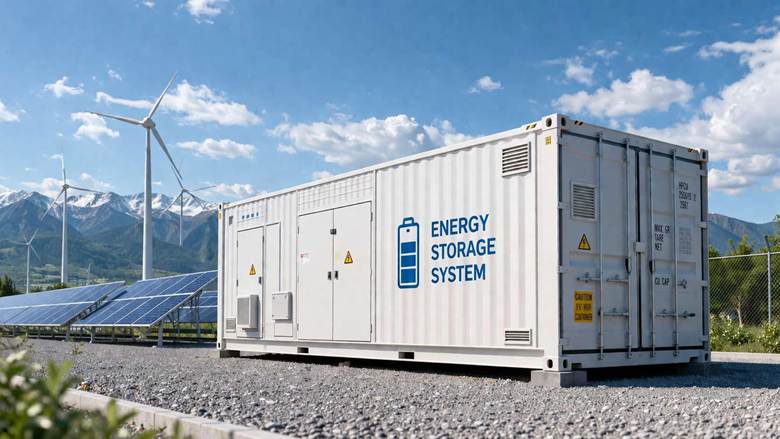
A 2000kWh energy storage system is often well suited to this role. It has enough capacity to provide meaningful flexibility, while still being responsive enough to participate in fast-moving grid services.
Revenue stacking is where storage becomes interesting
A battery system rarely needs to rely on a single revenue stream. In fact, the best projects usually do not.
The real value comes from revenue stacking, where one asset serves multiple functions over the course of the day or year. A commercial storage system may:
- reduce demand charges during the site’s highest load window
- support frequency response during system stress
- shift renewable generation into higher-value periods
- participate in utility flexibility programs
- maintain backup reserve for operational continuity
This is where storage becomes strategically useful. The battery is not sitting idle waiting for one perfect use case. It is moving between functions based on price, grid conditions, and site needs.
That said, stacking only works if the dispatch strategy is disciplined. If the battery is used too aggressively for one revenue stream, it may lose availability for another. If it is held in reserve too conservatively, it may underperform economically.
Grid services reward speed, precision, and reliability
Not every asset can earn grid service revenue. Storage has an advantage because it is fast and controllable, but those qualities only matter if the system can be trusted.
Markets and utilities tend to value three things:
Speed
The system must respond quickly to a signal or event.
Precision
The asset should deliver the requested power without drifting too far from the target.
Reliability
The system must be available when called.
This is why commercial storage projects increasingly depend on software, telemetry, and control integration. The asset needs to be visible to the operator and predictable enough to be trusted.
At this scale, performance consistency matters more than peak capability.
Local flexibility markets are expanding the business case
In many places, the most practical opportunities are not coming from wholesale markets alone. They are coming from local flexibility programs.
These programs are designed to solve specific network problems—congested feeders, overloaded substations, or areas with high renewable penetration. Instead of immediately investing in new infrastructure, utilities can pay flexible assets to respond when needed.
That creates a different value dynamic. The same system can earn based on where it is located, not just how much energy it can deliver.
For commercial sites, this opens up new revenue pathways. A well-positioned system can participate in both site-level optimization and grid-level support at the same time.
The economics depend on operating discipline
A storage project can look strong on paper and still underperform in reality. The difference usually comes down to how it is operated.
Every cycle has a cost. Every dispatch decision affects degradation. Every revenue stream competes with another.
A system that chases low-value opportunities too often may reduce its long-term return. One that is too conservative may leave value on the table.
The value of storage is not in movement alone. It is in selective movement.
This is where control strategy becomes critical. It must balance revenue, availability, and battery health over time—not just optimize for a single objective.
Interconnection and market access can be the real bottlenecks
Technology is rarely the limiting factor. Access is.
Many projects face constraints such as:
- interconnection limits
- approval timelines
- telemetry requirements
- minimum participation thresholds
- market-specific rules
A system may be technically capable but unable to participate fully due to these barriers.
That is why successful projects often start with market analysis, not just system sizing.
Commercial storage is becoming a grid asset
This is the broader shift behind everything.
A battery installed at a commercial site is no longer just a cost-saving device. It is increasingly part of the grid ecosystem. It can behave like a controllable resource, supporting both the site and the wider network.
In many cases, a system in the range of a 2000kWh energy storage system is large enough to do both effectively—serve internal needs while also participating in external markets.
That dual role is where the strongest business cases are emerging.
Conclusion
Commercial storage systems unlock revenue when they are treated as flexible, responsive assets rather than static infrastructure.
Grid services, flexibility markets, and revenue stacking create multiple pathways to value. But capturing that value requires more than installation. It requires a clear strategy, disciplined operation, and a strong understanding of how the system interacts with the market.
The projects that perform best are not the ones that simply install storage. They are the ones that know when to use it—and when not to.