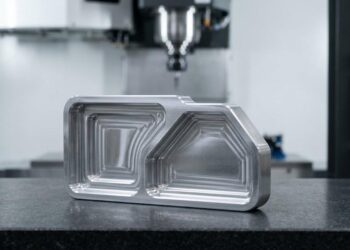




















































Startups face a familiar crossroads when their product gains traction: how to scale production without hemorrhaging capital or losing months to manufacturing delays. Cost overruns from poorly planned tooling, inconsistent part quality, and suppliers who can’t keep pace with growing demand have derailed countless promising ventures. High volume injection molding offers a proven path from prototype to mass market, delivering the unit economics and consistency that investors and customers demand. However, the leap from a handful of 3D-printed samples to thousands of molded parts requires more than just finding a factory. It demands a strategic approach that begins with rapid prototyping, progresses through design optimization, and culminates in partnerships with experienced contract manufacturing providers. Startups that integrate automation design principles early in their development cycle position themselves to scale faster and more predictably. This article outlines an integrated framework—from initial concept validation through full-scale production—that helps founders navigate each critical transition point with confidence and financial discipline.
The Critical Role of Prototyping in Startup Product Development
Every successful physical product begins with prototyping—a phase that separates viable concepts from expensive mistakes. For startups operating with limited runway, prototyping serves as a risk-reduction mechanism that validates form, fit, and function before committing significant capital to production tooling. A single design flaw discovered after mold fabrication can cost tens of thousands of dollars and weeks of lost time, making early-stage validation non-negotiable. Rapid prototyping methods, particularly 3D printing, have dramatically compressed the iteration cycle from weeks to hours, allowing founders to test multiple design variants with real users and gather actionable feedback. This speed matters because startups compete not just on product quality but on time to market. Beyond functional testing, prototypes help secure investor confidence, support crowdfunding campaigns, and enable early conversations with contract manufacturing partners who need to assess producibility. The most effective startup teams treat prototyping not as a single milestone but as a continuous practice that informs every downstream manufacturing decision.


Leveraging 3D Printing for Efficient Iteration
3D printing transforms how startups approach design refinement by eliminating the traditional cost barriers to physical testing. Rather than waiting for CNC-machined samples or soft tooling, founders can print updated geometries overnight and have parts in hand for evaluation the next morning. To maximize this advantage, startups should establish a structured iteration workflow: define specific test criteria for each print cycle, document failures systematically, and set clear decision gates that determine when a design is stable enough to advance toward injection molding. FDM printing works well for early ergonomic and assembly checks, while SLA and SLS technologies offer the surface finish and material properties needed for more rigorous functional testing. Founders should also use 3D-printed parts to simulate assembly with off-the-shelf components, identify tolerance issues, and even conduct limited user trials. The key is treating each printed iteration as a data-gathering exercise rather than a finished product, building confidence incrementally until the design is truly ready for tooling investment.
Transitioning from Prototyping to High Volume Injection Molding
The shift from prototyping to high volume injection molding represents one of the most consequential decisions a startup founder will make. Several signals indicate readiness for this transition: consistent reorders or pre-orders that exceed what low-volume methods can sustain, a design that has stabilized after multiple iteration cycles with minimal changes between versions, and secured funding or revenue sufficient to justify tooling investment. When these conditions align, high volume injection molding services deliver transformative economics—unit costs can drop by 80% or more compared to 3D printing or urethane casting, while part-to-part consistency reaches levels impossible with manual processes. This consistency matters not just for product quality but for regulatory compliance, warranty management, and brand reputation. Material selection becomes a critical consideration during this transition, as the resin chosen affects everything from mold design and cycle time to part performance and cost. Startups should work closely with their molding partner to evaluate material options against functional requirements, environmental conditions, and budget constraints. Mold design itself requires careful attention to gate placement, cooling channel layout, and draft angles—decisions that directly influence cycle time, surface finish, and long-term tool life. Founders who invest in proper Design for Manufacturability analysis before cutting steel avoid costly mold revisions and production delays that can stall market entry.
Assessing Production Volume and Timing
Determining the right moment to commit to high volume tooling requires balancing market signals against financial reality. Startups should begin by building a demand forecast grounded in actual data—pre-orders, distribution commitments, historical sales velocity from initial low-volume runs, or binding letters of intent from channel partners. A common guideline is that injection molding becomes economically advantageous once projected annual volumes exceed 5,000 to 10,000 units, though this threshold varies by part complexity and material. Timing the tooling investment also means accounting for lead times: steel molds typically require 8 to 16 weeks for fabrication, followed by sampling and qualification runs. Startups should map this timeline backward from their target launch date or restocking deadline to identify when the tooling order must be placed. Planning for a bridge production strategy—using soft tooling or aluminum molds for initial thousands of units while steel tools are built—can prevent gaps in supply that frustrate customers and damage retailer relationships. Founders who build these timelines into their fundraising milestones and operational plans avoid the bottleneck of having demand they cannot fulfill.
Exploring Contract Manufacturing for Scalable Production
Contract manufacturing allows startups to access industrial-grade production capabilities without building or owning factory infrastructure. Instead of investing millions in molding machines, cleanrooms, and quality labs, founders can leverage a partner’s existing equipment, trained workforce, and established supply chains. This model converts what would be massive fixed costs into variable expenses that scale with actual demand—a financial structure far better suited to the unpredictable growth trajectories most startups experience. Beyond cost savings, contract manufacturers bring deep process expertise that startup teams typically lack in-house. They understand how to optimize cycle times, troubleshoot defects like sink marks or warpage, and manage resin procurement at volumes that unlock better pricing. For startups pursuing high volume injection molding, the right contract manufacturing relationship provides not just capacity but also guidance on tooling strategy, secondary operations like pad printing or ultrasonic welding, and logistics coordination that simplifies fulfillment. However, outsourcing production also introduces risks around intellectual property, communication gaps, and quality variability. Startups must approach partner selection with the same rigor they apply to hiring key team members, evaluating candidates against criteria that extend well beyond quoted piece prices.
Key Factors in Choosing a Contract Manufacturing Partner
Selecting the right contract manufacturing partner requires evaluating several dimensions that directly impact product quality and business continuity. Communication responsiveness tops the list—a partner who takes days to answer technical questions during quoting will likely be even slower during production emergencies. Startups should assess whether the manufacturer assigns a dedicated project manager and offers transparent reporting on production status, scrap rates, and shipping timelines. Scalability support matters equally: the ideal partner can handle an initial run of 5,000 units but also has the press capacity and floor space to ramp to 100,000 units as demand grows without requiring a disruptive supplier transition. Industry experience relevant to your product category—whether consumer electronics housings, medical device components, or automotive trim—ensures the manufacturer understands applicable tolerances, material certifications, and regulatory documentation requirements. Manufacturers like WEILAN MFG exemplify this approach by offering integrated molding services that support startups from initial tooling through high volume production ramps. To vet potential partners effectively, startups should request facility tours or virtual walkthroughs, review quality certifications like ISO 9001 or ISO 13485, ask for customer references in similar industries, and start with a smaller pilot order to evaluate real-world performance before committing to long-term agreements. Negotiating clear terms around tooling ownership, minimum order quantities, lead time guarantees, and defect resolution procedures protects the startup’s interests as volumes increase.
Integrating Automation Design for Efficient High Volume Molding
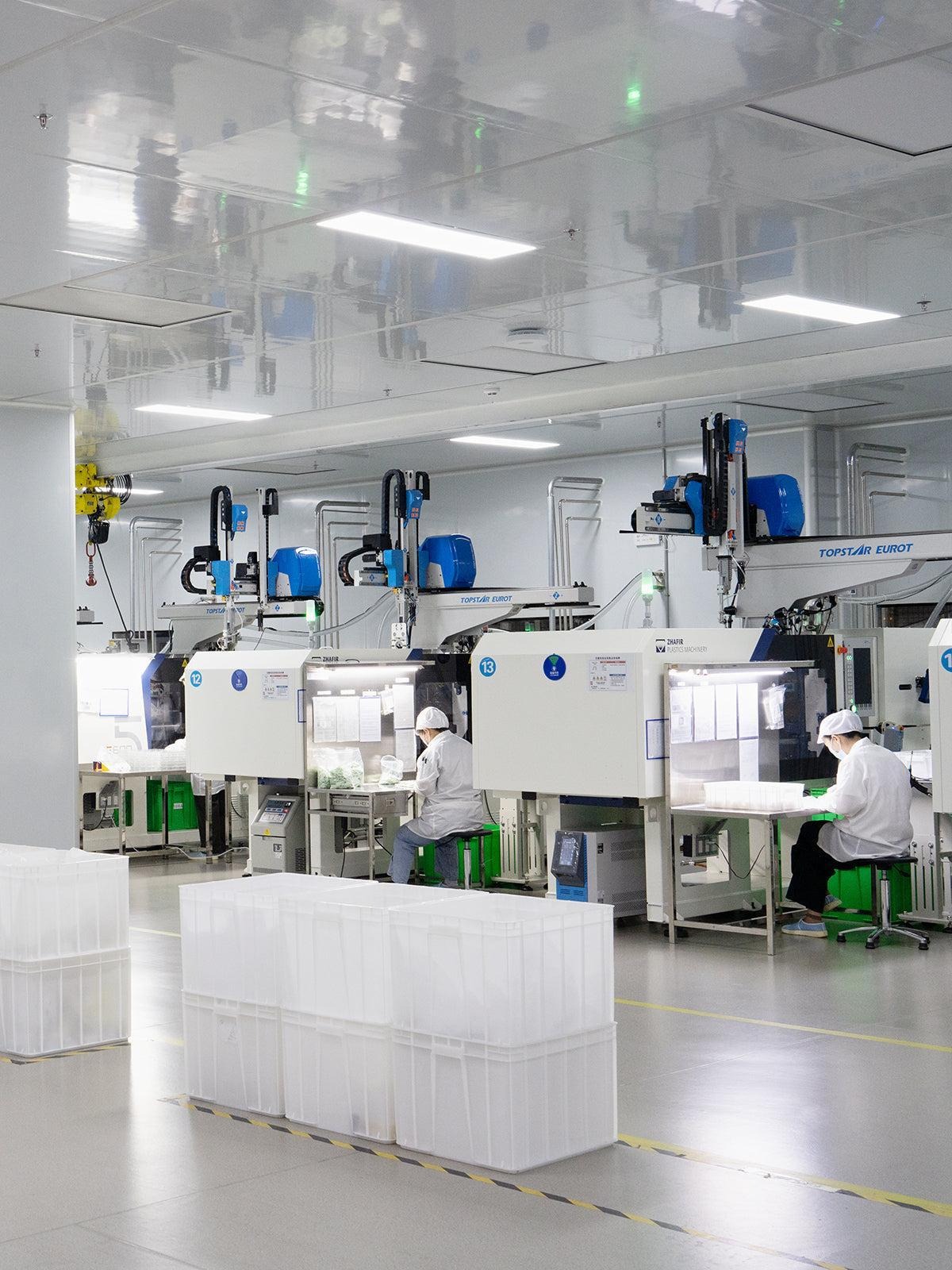
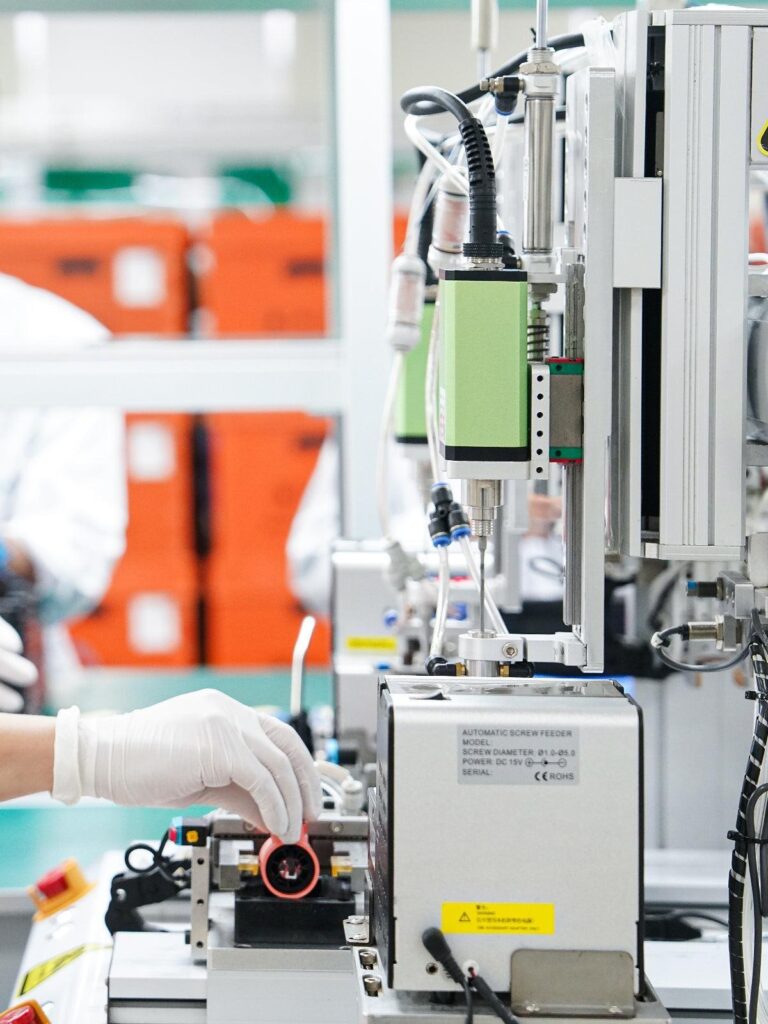
Automation design represents a force multiplier for startups pursuing high volume injection molding, turning what might otherwise be a labor-intensive operation into a streamlined, repeatable process. When automation principles are embedded into both product design and production planning from the outset, startups benefit from faster cycle times, reduced per-part labor costs, and dramatically fewer human-induced defects. Robotic part removal systems, for instance, extract finished components from molds with consistent speed and precision, eliminating the variability that manual handling introduces while protecting delicate features from damage. Automated quality inspection—using vision systems and sensors positioned at the press—catches dimensional deviations or surface defects in real time, preventing entire batches of non-conforming parts from reaching customers. For startups, the strategic value of automation design extends beyond the factory floor. Investors recognize that automated production lines scale more predictably, require less management overhead, and maintain tighter quality metrics as volumes increase. Founders who discuss automation readiness during contract manufacturing negotiations signal operational maturity and often secure more favorable terms. The key is approaching automation not as an all-or-nothing investment but as a modular capability that can be layered in progressively as production volumes justify each addition.
Automation Technologies and Implementation Strategies
Startups can adopt automation incrementally, matching each investment to current production realities rather than over-capitalizing before demand materializes. At the foundational level, sprue pickers and simple robotic arms handle part extraction and degating—relatively low-cost additions that immediately reduce cycle times by eliminating operator wait periods. As volumes grow, startups should work with their contract manufacturing partner to introduce in-mold labeling or insert loading robots that consolidate secondary operations into the molding cycle itself, cutting downstream assembly steps. Vision-based inspection systems represent the next tier, using cameras and AI algorithms to detect flash, short shots, or color inconsistencies at production speed without requiring dedicated quality technicians for every shift. Conveyor and packaging automation further downstream reduces handling labor and shipping errors. The implementation strategy that works best for resource-constrained startups follows a phased approach: start by selecting a contract manufacturer whose facility already incorporates these technologies, negotiate access to automated cells as part of the production agreement, and reserve capital-intensive custom automation for the stage when monthly volumes consistently justify the payback period. This approach lets startups capture automation’s benefits immediately through partner selection while preserving cash for market development and product iteration.
Step-by-Step Solutions for Startup Scalability with Injection Molding
Scaling a physical product from early traction to mass production doesn’t happen in a single leap—it unfolds through deliberate, sequential decisions that build on each other. Startups that follow a structured pathway avoid the costly missteps of premature tooling investments, mismatched manufacturing partners, and production lines that can’t adapt to shifting demand. The following framework distills the transition from concept to high volume injection molding into five actionable steps, each addressing the budget constraints and timeline pressures that define startup operations. By treating scalability as a process rather than an event, founders maintain control over quality, cost, and speed at every stage.
Step 1: Prototype Validation Using 3D Printing
Begin by establishing clear performance criteria your product must meet—mechanical loads, environmental exposure, user ergonomics, and assembly compatibility. Print multiple design variants using the 3D printing technology best suited to each test: FDM for rough assembly checks, SLA for surface-critical evaluations, and SLS for functional stress testing. Run each prototype through a structured validation protocol that includes user feedback sessions, drop tests or fatigue cycling where applicable, and fitment checks with mating components. Document every failure mode and design change in a revision log that tracks convergence toward a stable geometry. Only advance to tooling discussions once three consecutive iterations produce no meaningful design changes and all critical performance thresholds are met. This discipline prevents premature mold commits that waste capital on designs still in flux.
Step 2: Conduct Design for Manufacturability (DFM) Analysis
Once your design stabilizes, submit it for a formal DFM review with an experienced injection molding engineer. This analysis identifies features that will cause manufacturing problems—thin walls prone to warpage, undercuts requiring expensive side actions, sharp internal corners that concentrate stress, or inconsistent wall thicknesses that create sink marks. The engineer will recommend specific modifications: adding draft angles of one to two degrees on vertical surfaces, maintaining uniform wall thickness within 10% variation, repositioning ribs to improve flow and structural performance, and selecting gate locations that minimize visible witness marks. Completing DFM before mold fabrication begins typically reduces total tooling cost by 15 to 30 percent and eliminates revision cycles that delay production by weeks. Startups should treat this step as a collaborative exercise, balancing aesthetic and functional requirements against manufacturability constraints to reach a design that performs well and molds efficiently.
Step 3: Partner with a Contract Manufacturer
With a production-ready design in hand, identify three to five contract manufacturing candidates whose capabilities align with your product requirements. Issue a detailed Request for Quote that includes 3D CAD files, material specifications, annual volume projections, quality standards, and secondary operation needs. Evaluate responses not just on piece price but on tooling ownership terms, lead time commitments, communication protocols, and demonstrated experience with similar products. Conduct facility assessments—virtual or in-person—to verify press tonnage range, quality management systems, and capacity for your projected growth. Negotiate contracts that explicitly address tooling ownership transferability, minimum and maximum order flexibility, defect resolution timelines, and intellectual property protections. Start with a pilot production run to validate real-world quality and delivery performance before signing long-term volume commitments.
Step 4: Implement Automation for Cost-Effective Production
Work with your contract manufacturing partner to identify automation opportunities that reduce unit costs without requiring large upfront capital from the startup. Prioritize robotic part removal and degating first, as these deliver immediate cycle time reductions and consistent handling that prevents cosmetic damage. Next, evaluate whether in-mold operations like labeling or insert placement can eliminate downstream assembly labor. Introduce vision inspection systems to catch defects at the press rather than during final packaging, reducing scrap and customer returns. Structure automation investments around volume milestones—each addition should pay for itself within six to twelve months at current run rates. By selecting a partner whose facility already incorporates these technologies, startups access automation benefits through production agreements rather than capital expenditure.
Step 5: Scale Production with High Volume Injection Molding Services
With validated tooling, a proven manufacturing partner, and automation in place, ramp production volumes in alignment with market demand signals. Establish a quality monitoring cadence that tracks critical dimensions, cosmetic standards, and cycle time consistency across every production run. Implement statistical process control to detect drift before it produces out-of-spec parts. Build inventory buffers strategically during initial ramp to protect against demand spikes while avoiding excessive carrying costs. Review production data monthly with your contract manufacturer to identify optimization opportunities—whether adjusting cycle parameters, qualifying secondary resin sources for cost reduction, or adding mold cavities to increase throughput. As volumes grow, revisit your automation roadmap and tooling strategy to ensure manufacturing capacity stays ahead of sales growth rather than constraining it.
From Prototype to Mass Production: Building a Scalable Manufacturing Strategy
Scaling a physical product from early concept to mass production demands more than ambition—it requires a deliberate strategy that connects each phase of development to the next. Prototyping with 3D printing gives startups the speed and flexibility to validate designs without burning through capital on premature tooling. When market signals confirm demand and the design stabilizes, high volume injection molding unlocks the unit economics and consistency needed to compete at scale. Contract manufacturing partnerships provide the infrastructure, expertise, and flexibility that startups cannot build internally, converting fixed overhead into manageable variable costs that flex with growth. Automation design woven into these partnerships amplifies efficiency, reduces defects, and signals operational readiness to investors and retail partners alike. The founders who succeed at this transition treat scalability as an integrated process—each decision in prototyping informs tooling, each tooling choice shapes the manufacturing partnership, and each automation layer compounds the cost advantages that fuel further growth. By following a structured, step-by-step approach and investing in the right partnerships early, startups transform production from a bottleneck into a competitive advantage that sustains long-term market success.