


















































The dumpster behind your loading dock is not just a receptacle. It is a ledger of liability.
Commercial waste used to be an invoice and a schedule. Now it is a volatile physical asset that can trigger enforcement, claims, and downtime when it sits too long.


The operational mistake is treating waste removal like a fixed utility. Waste behaves more like regulated inventory, and delays increase exposure to contamination, fire, and premises liability.
In many programs, responsibility follows the generator “cradle-to-grave.” If material leaks, burns, or migrates off-site, the paperwork and the risk often stay with you.
How Delayed Waste Becomes A Claim
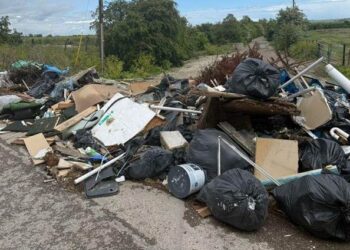
The path from a missed pickup to a claim is usually mundane. A bin overfills, a pallet blocks access, or a drum is staged “temporarily” on asphalt.
Then weather, foot traffic, and human shortcuts do the rest. Small conditions become documented hazards.
The Leachate Liability Vector
When waste sits past containment capacity, it can produce leachate. Leachate can create slip hazards, odors, and alleged contamination, especially where drainage is poor.
If runoff reaches a storm drain, exposure can escalate fast. Non-stormwater discharges to storm systems are a common enforcement focus, and permit coverage varies by site and jurisdiction.
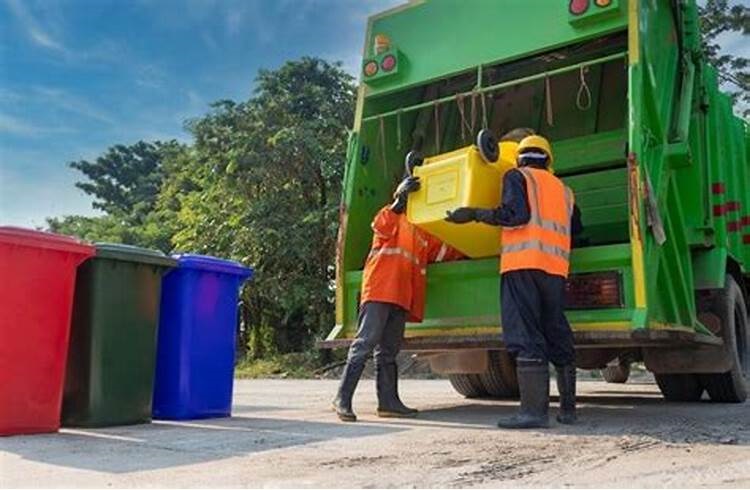
Professional providers like Same Day Rubbish Removal mitigate this by reducing “dwell time,” which limits overflow and the window for liquids to migrate.
The Attractive Nuisance Doctrine
Overflowing waste attracts people and animals. The legal theory matters, because attractive nuisance is most often argued when children can access a hazardous condition.
Even where attractive nuisance does not apply, unsecured waste zones still create standard premises-liability exposure. Fencing, lids, lighting, and housekeeping reduce that exposure.
Enforcement Math Under RCRA And Local Codes
Federal and state regulators usually evaluate what was stored, how it was managed, and what the records show. Hauler scheduling problems rarely excuse noncompliance.
EPA adjusts many statutory civil penalties for inflation through rulemaking. The latest adjustment is reflected in 40 CFR Part 19, with amounts tied to penalty assessment dates.
- The 90-Day Cliff: Large Quantity Generators (typically ?1,000 kg/month of hazardous waste) generally may accumulate hazardous waste on-site for no more than 90 days without a permit, unless an exception applies. State rules can differ.
- The Inflation-Adjusted Daily Maximum: Under RCRA, maximum civil penalties vary by provision. For some RCRA violations, the inflation-adjusted maximum is up to $124,426 per day per violation, and other RCRA provisions use different caps.
- The Multiplier Effect: Findings often stack. Labeling, container management, inspections, training, and accumulation-time records can each become separate violations in the same inspection.
The Bottom Line: Many environmental violations can be enforced without proving intent. Documentation, labeling, and time tracking are often as important as the cleanup itself.
Social Inflation And Nuisance Litigation Exposure
Even when no one is physically injured, nuisance claims can arise from odors, vectors, and alleged quality-of-life impacts. These claims are highly fact-specific, and outcomes vary by state.
Insurers and reinsurers describe “social inflation” as claims severity rising beyond economic inflation. In recent research, social inflation in the U.S. averaged about 5.4% annually during 2017–2022 and reached about 7% in 2023.
The Reptile Theory in Court
Some plaintiff strategies rely on safety narratives and community risk framing. Insurers and business groups often cite psychology-based tactics as one contributor to larger verdicts.
Waste conditions can be used as visual evidence. Photos of overflow, staining, and unsecured access are simple, persuasive exhibits.
Targeting Deep Pockets
Hauler agreements often limit liability and push certain risks back to the generator or property owner. Contract terms matter, but they do not prevent you from being named in a suit.
In practice, plaintiffs frequently target whoever has assets, insurance, or control of the premises. That is often the landlord or the operator.
Fire Risk From Lithium Battery Waste
Lithium-ion batteries are now routine in the waste stream. When crushed, punctured, or shorted, they can ignite and spread fire through mixed combustibles.
- The “5,000 Fires” Estimate: A joint industry report estimated more than 5,000 fires occur annually at recycling facilities, with lithium-ion batteries identified as a major driver.
- Documented Fire Experience: EPA summarized a study finding more than 240 lithium-ion-battery-caused fires at 64 facilities between 2013 and 2020, illustrating how common the pathway has become.
- Insurance Pressure: The same industry reporting noted catastrophic loss rates rising over five years, alongside examples of insurance pricing moving from under $0.20 per $100 of insured value to as much as $10 per $100 for some facilities.
The Bottom Line: Fire probability rises with congestion and time. Shorter dwell time, battery segregation, and clear intake rules reduce ignition opportunities.
Lease End Waste Liability For Landlords
Lease termination does not end environmental exposure. If regulated waste remains, the property owner can be pulled into cleanup, access control, and disclosure problems.
Midnight dumping is a known pattern. The first party on-site after vacancy often becomes the party managing the emergency.
The Holdover Trap
Under CERCLA, EPA can pursue cleanup costs from several categories of potentially responsible parties, including current owners and operators. Liability can attach regardless of who originally disposed of the hazardous substance.
CERCLA defenses and landowner liability protections exist, but they are procedural. They typically require timely due diligence and ongoing “reasonable steps” to prevent releases.
Make-Good Provisions
Stronger leases often require proof of proper disposal before deposit release. Manifests, weight tickets, and vendor invoices provide a defensible chain of custody.
Without a paper trail, cleanup can become your problem. The cost is not only removal, but also downtime and delayed re-leasing.
Insurance Underwriting Flags Stagnant Waste Practices
Underwriters increasingly use inspections and remote imagery to assess housekeeping. Overflow, staining, and clutter signal poor control of ignition sources and slip hazards.
Some insurers treat waste practices as a proxy for broader maintenance culture. That perception affects renewals and deductibles.
The Premium Spike
Premium impacts vary by industry and geography. However, the waste and recycling sector has reported sharp pricing pressure tied to fire losses, especially around battery-related incidents.
Do not assume your facility is “too small to matter.” Loss history and visible conditions can move pricing quickly.
Loss Control Audits
Loss control is evidence-driven. Written procedures, inspection logs, and vendor performance records are more persuasive than verbal assurances.
To secure favorable rates, you must demonstrate a documented, verifiable War on Waste strategy. Insurers want clear accumulation protocols, spill response steps, and reliable removal capacity.
Just In Time Removal Operating Model
Just-in-time works because it reduces stored exposure. The same logic applies to waste, because storage increases fire load, pest pressure, and spill likelihood.
JIT does not mean reckless speed. It means predictable controls that prevent overflow and congestion.
- Lean Waste Management: Treat waste as negative inventory. The longer it sits, the more risk it carries, and the more labor it consumes.
- Volume-Based Triggers: Trigger pickups by fill level and hazard class, not only a calendar. This reduces overflow during seasonal or production spikes.
- Space Reclamation: Faster turnover can reduce container footprint and staging clutter. That can restore access lanes, improve egress, and lower ignition loading.
Verification Stack Fill Sensors To E-Manifests
Compliance is partly physical and partly documentary. If you cannot prove what left the site, when it left, and where it went, defenses weaken.
Modern programs favor digital records. They reduce disputes, speed audits, and simplify internal accountability.
The EPA e-Manifest System
EPA’s e-Manifest system is the national platform for tracking hazardous waste manifests. Fees depend on how the receiving facility submits the manifest, and the fee schedule is updated by fiscal-year cycles.
For shipments initiated on or after October 1, 2025, EPA lists fees of $25 for scanned image uploads, $7 for data-plus-image uploads, and $5 for fully electronic or hybrid manifests. Older shipment dates use earlier fee tables.
Sensor-Based Compliance
Fill-level sensors and service logs create time-stamped evidence. That evidence can show that bins were monitored and serviced before routine overflow conditions developed.
In a dispute, timestamps help. They support a reasonable-care narrative and expose gaps when service did not occur.
ROI Benchmarks Fines Premiums Labor Savings
Many companies price waste management only by hauling costs. The more accurate model includes avoided loss, avoided downtime, and avoided enforcement escalation.
Penalty ceilings matter in budgeting. If a statutory maximum is up to $124,426 per day per violation, a seven-day exposure can approach $870,982 before legal fees or remediation, depending on facts and enforcement discretion.
Labor also counts. Time spent managing overflow, staging, and cleanup is a hidden cost, and it increases incident frequency when staff are rushed.
Conclusion
Waste is operational, but it is also legal. Accumulation time limits, stormwater controls, and battery fire risk all punish delays.
Reduce dwell time, document removals, and control access. When you clear the dock, you shrink the claim window and keep routine waste from becoming an expensive event.
Sources and Verifications
- https://www.epa.gov/rcra/resource-conservation-and-recovery-act-rcra-overview
- https://www.epa.gov/hwgenerators/categories-hazardous-waste-generators
- https://www.law.cornell.edu/cfr/text/40/262.17
- https://www.law.cornell.edu/cfr/text/40/19.4
- https://www.govinfo.gov/content/pkg/FR-2025-01-08/html/2025-00206.htm
- https://www.epa.gov/e-manifest/e-manifest-user-fees-and-payment-information
- https://www.epa.gov/npdes/national-menu-best-management-practices-bmps-stormwater-illicit-discharge-detection-and
- https://www.epa.gov/recycle/importance-sending-consumers-used-lithium-ion-batteries-electronic-recyclers-or-hazardous
- https://www.epa.gov/hw/lithium-ion-battery-recycling
- https://wasterecycling.org/press_releases/nwra-and-rrs-release-report-on-threat-of-lithium-batteries-to-waste-and-recycling-infrastructure/
- https://www.swissre.com/institute/research/sigma-research/sigma-2024-04-social-inflation.html
- https://instituteforlegalreform.com/research/nuclear-verdicts-trends-causes-and-solutions/
- https://www.congress.gov/crs-product/IF11790
- https://www.epa.gov/enforcement/superfund-landowner-liability-protections