



















































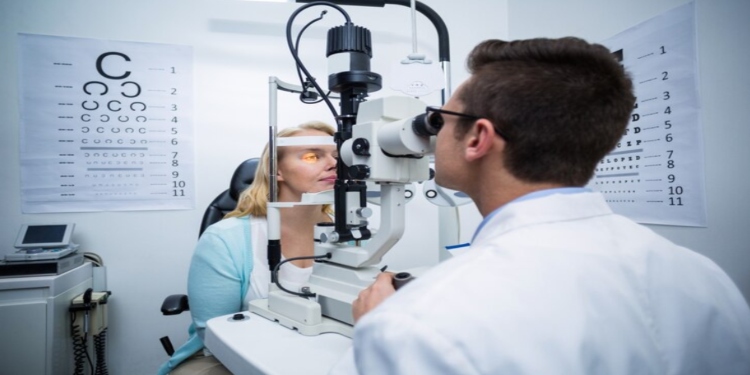
Deciding to correct your vision is a life-changing step, but the journey begins long before you enter the operating theatre. To ensure a safe and successful outcome, every candidate must undergo a rigorous ophthalmic assessment. If you book an appointment with a harley street ophthalmologist in London, you will experience one of the most comprehensive clinical evaluations available. This process determines whether your eyes are structurally suited for vision correction. Specialist clinics use advanced diagnostic technology to analyse every aspect of your ocular health. Understanding what happens during this initial assessment helps demystify the process and prepares you for the clinical journey ahead.
Corneal Topography and Thickness Measurements
The cornea, which is the clear outer layer of the eye, plays the most significant role in refracting light. During your assessment for laser eye surgery in London, specialists focus heavily on measuring corneal shape and thickness. Ophthalmologists use a non-invasive imaging technique called corneal topography. This system projects rings of light onto the eye to create a detailed three-dimensional map of the corneal surface.


Why Corneal Thickness Matters
This map reveals any microscopic irregularities or asymmetrical curves, such as those caused by keratoconus, a condition that disqualifies patients from certain laser procedures. Alongside topography, pachymetry is used to measure corneal thickness. Laser procedures work by reshaping the cornea, which inherently removes a small amount of tissue. A surgeon must ensure that your cornea is thick enough to remain structurally stable after the procedure. If your corneas are naturally thin, the surgeon might recommend alternative options like PRK or implantable contact lenses instead of LASIK. By gathering these precise measurements, the clinical team can customise the treatment laser to match your unique ocular anatomy, ensuring maximum safety and accuracy. These measurements also help the surgeon calculate the exact depth of the laser ablation, leaving a safe residual stromal bed.
Refractive Error Analysis and Pupil Size Evaluation
To achieve sharp vision, the clinical team must measure your refractive error with absolute precision. This involves both subjective and objective testing. While a standard optician test determines your prescription for glasses, a harley street ophthalmologist in London performs cycloplegic refraction. This test uses special eye drops to temporarily relax the focusing muscles inside your eye.
The Role of Pupil Dynamics
Relaxing these muscles allows the specialist to measure your true prescription without any involuntary accommodation, which is especially important for younger patients who have highly active focusing systems. Additionally, the clinical team measures your pupil size in different lighting conditions. Pupils that expand excessively in dark environments can sometimes increase the risk of post-operative glare, halos, or starbursts around headlights at night. By using digital pupillometers, the surgeon can assess whether your pupil size fits within the safe treatment zone of the laser. If your pupils are unusually large, the treatment plan can be adjusted, or the surgeon may select a specific laser profile to minimise night-vision symptoms, ensuring your post-operative visual quality remains excellent in all environments. This thorough analysis ensures that the correction applied during the procedure is perfectly tailored to your visual needs.
Tear Film Analysis and Ocular Surface Health
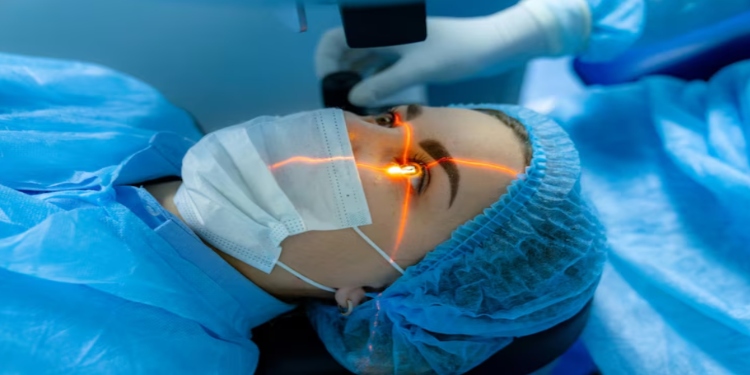
A healthy tear film is vital for comfortable recovery and optimal visual outcomes. Before undergoing laser eye surgery in London, your ocular surface must be thoroughly evaluated for signs of dry eye syndrome. Laser procedures temporarily disrupt the corneal nerves, which can reduce tear production during the initial healing phase. Therefore, starting the process with a compromised tear film can lead to prolonged discomfort and delayed visual recovery. For patients identified with mild dry eye during pre-assessment, the clinical team will typically recommend a preparatory regimen before any surgical date is confirmed. Lubricating eye drops, particularly preservative-free formulations, are commonly prescribed during this period to stabilise the tear film, reduce surface inflammation, and bring the ocular surface into the condition the laser requires for accurate measurements and predictable healing outcomes.
Diagnostic Tests for Dry Eye
Specialists use several diagnostic tools to evaluate tear quality and quantity. The Schirmer test measures actual tear volume by placing a tiny strip of paper inside the lower eyelid. Additionally, non-invasive tear break-up time tests assess how quickly your tears evaporate from the eye surface. If the clinical team detects dry eye disease, they will prescribe a pre-treatment regimen. This regime might include preservative-free lubricating drops, anti-inflammatory drops, or dietary supplements to improve your tear quality before any surgical intervention. Addressing these issues beforehand ensures that the ocular surface is in peak condition, which significantly accelerates corneal healing and ensures the best possible visual clarity after your procedure. A stable tear film also ensures that the laser can make highly accurate measurements of your corneal surface prior to treatment.
Comprehensive Retinal Exams and Medical History Reviews
The final stage of a thorough assessment involves examining the back of the eye. A harley street ophthalmologist in London will dilate your pupils to perform a detailed binocular indirect ophthalmoscopy. This examination allows the surgeon to inspect the retina, optic nerve, and macula for any underlying pathology.
Ruling Out Contraindications
Conditions such as retinal tears, lattice degeneration, or glaucoma must be identified and managed before scheduling any laser vision correction. The specialist also reviews your complete medical history, looking for systemic conditions like diabetes or autoimmune disorders that could impair your body’s healing response. Medications such as steroids or immunosuppressants can also affect recovery and must be discussed. Furthermore, your prescription stability is verified; your vision must have remained unchanged for at least twelve months to prevent regression after the procedure. This holistic review ensures that you do not have any contraindications that could compromise your safety, giving you and your surgeon complete confidence before moving forward with the treatment. The clinical team will also discuss your lifestyle, hobbies, and professional requirements to ensure the chosen procedure aligns perfectly with your daily routine and visual expectations. This thorough screening process is what makes the clinical standards in the UK among the highest in the world.
Conclusion

Achieving excellent vision through laser eye surgery in London depends entirely on the accuracy of your initial clinical assessment. By examining your corneal structure, measuring pupil dynamics, evaluating your tear film, and reviewing your overall medical health, specialists can design a highly customised treatment plan. This meticulous screening process is designed to protect your safety and ensure the most predictable visual outcomes. Taking the time to undergo these detailed diagnostic tests guarantees that you are an ideal candidate for the procedure. Armed with precise data, your surgeon can confidently guide you toward a life free from the daily hassle of glasses and contact lenses.