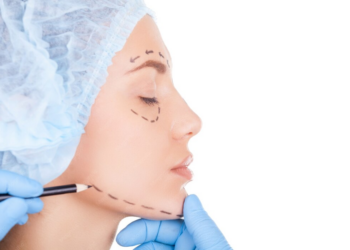





















































(TL;DR) The volumetric facelift is a non-surgical treatment at McKeown Medical that uses precisely placed hyaluronic acid filler to restore lost facial volume, lifting the midface, redefining the cheekbone, and supporting the jawline. It addresses the underlying cause of facial ageing, which is volume loss from bone and fat, rather than only tightening skin. Led by Dr Darren McKeown and the medical team, the treatment is performed under local anaesthetic with no downtime, and results can last several years when treatment is planned conservatively over time.
The term volumetric facelift describes a non-surgical approach to facial rejuvenation that addresses the loss of volume rather than the laxity of skin. At McKeown Medical in Glasgow, this is one of the most well-established treatments in the clinic’s repertoire and has been refined over many years of high-volume injecting practice. For patients who are not yet ready for surgery, or whose facial ageing is driven primarily by deflation rather than significant skin laxity, understanding how the volumetric facelift works is essential before deciding whether it suits the face in question.


The Principle Behind the Treatment
For decades, facial ageing was treated as a problem of gravity. Surgeons pulled tissues tighter and tighter in pursuit of a more youthful appearance, and the results were frequently stretched and obviously operated. What changed the approach was a deeper understanding of what actually happens beneath the skin as the face ages.
Bone resorbs. The facial skeleton literally becomes smaller. Fat pads in the midface deflate and shift. The structural framework that gives a younger face its definition simply has less material holding it up. This is why pulling the skin tighter without restoring volume rarely produces a natural result. The face ends up flatter, not younger.
The volumetric facelift addresses the cause rather than only the symptom. By restoring volume in the right anatomical planes, the midface lifts, the cheekbone is redefined, and the jawline regains support. The face is rebalanced rather than tightened, and the effect is a more rested, lifted appearance that does not look pulled.
How the Treatment Is Delivered
The volumetric facelift at McKeown Medical is led by Dr Darren McKeown and the medical team, using carefully selected hyaluronic acid fillers placed in specific anatomical layers. The treatment is not a single injection or a generic protocol. Each plan is built around the individual face, taking into account where volume has been lost, how the skin is ageing, and what the patient wants to address.
Different areas of the face require different filler properties. The deep cheek requires a firmer gel that can support overlying tissue and create structural lift. The lower face and jawline often benefit from a similarly structured product placed along the mandible to restore definition. Softer, more flexible gels are used in areas where movement and pliability matter, such as around the mouth. Selecting the correct product for each plane is one of the reasons consistent results are achievable across very different patient profiles.
The procedure is performed using local anaesthetic and topical numbing. There is no general anaesthetic and no deep sedation. Most patients are in and out of the clinic within an hour, and there is no formal downtime, though some swelling and minor bruising can occur in the days following.
Areas Commonly Treated
A volumetric facelift typically addresses the midface, lower face, and jawline, though the specific areas depend entirely on individual anatomy. Common targets include:
- The cheeks, where deep volume restoration lifts the midface and supports the lower face
- The temples, where hollowing creates a more drawn appearance
- The jawline and chin, where filler restores definition and softens jowls
- The pre-jowl sulcus, the small dip in front of the jowl, where filler can smooth the transition along the lower face
- The marionette area, where lost volume contributes to lines from the corners of the mouth downward
- Under-eye hollows, where small volumes can refresh a tired appearance when treated carefully
Lip filler and lipstick line treatment are usually considered separately, though they can be incorporated into a wider plan when appropriate.
Why Restraint Matters
One of the defining features of how the volumetric facelift is practised at McKeown Medical is the emphasis on conservative treatment. Modern hyaluronic acid fillers can last considerably longer than the licensed two years, and in many cases, persist for three years or more in experienced hands. This has direct implications for how the treatment is planned over time.
The temptation to add more filler at every visit is one of the most common reasons patients end up looking overdone. The volume builds up faster than the body breaks it down, and what started as a refined correction becomes obvious. The approach at McKeown Medical is to achieve an optimal result, then ease back significantly. Patients are reviewed periodically alongside skin treatments, and small touch-ups are only added when volume has genuinely begun to decrease again. This produces a face that looks consistent over time rather than one that visibly fluctuates with each appointment.
How It Compares to a Surgical Facelift
A non-surgical volumetric lift and a surgical facelift are not interchangeable.. They address different problems. A volumetric facelift restores lost volume, which is the underlying cause of much of what patients perceive as facial ageing in their thirties, forties, and into their fifties. A surgical facelift removes excess skin and repositions deeper tissues, which becomes more relevant when laxity is the dominant concern, often from the late fifties onward.
For many patients, the most effective long-term plan involves both. Surgery repositions tissue but does not replace volume, and most surgeons restore volume during or after surgery either with fillers or with fat grafting. The advantage of using fillers within a volumetric plan is that they are temporary, customisable, and reversible. If anything ever needs adjustment, the filler can be dissolved. Fat transfer, by contrast, is permanent and expands if the patient gains weight, which can cause results to drift over time. Each approach has its place, and the choice depends on the individual’s face and how it is ageing.
Combining the Volumetric Facelift With Other Treatments
This approach to liquid facelift treatment sits within a wider toolkit at McKeown Medical, and it is most effective when used as part of a balanced plan. Patients with active wrinkles in the upper face often pair volume restoration with wrinkle-relaxing injections, which target movement. Those with pigmentation, sun damage, or fine surface lines benefit from laser and skin treatments that volume alone cannot address. Skin tightening procedures may be added for patients with mild laxity. The aim is always to use the right combination of treatments for the specific face rather than relying on filler to do work that another treatment is better suited to.
The Consultation
Every volumetric facelift at McKeown Medical begins with a detailed consultation. Facial anatomy is assessed, volume loss is mapped, skin quality is reviewed, and medical history is taken into account. The plan that emerges is specific to the patient. Some patients require relatively conservative volume restoration. Others benefit from a more comprehensive approach across multiple areas. In both cases, the planning is the same. Understand the face, prioritise the areas that will produce the most balanced result, and use the smallest amount of product needed to achieve it.
The clinic operates from 167 Bath Street in Glasgow, and continuity of care is one of the reasons the volumetric facelift produces consistent long-term results for patients across Scotland and beyond. The same team reviews the same patient over the years, which is the only way a measured, anatomy-led plan can work as intended. For anyone considering the treatment, a proper consultation is the right starting point, and every decision about product, plane, and volume can be made on a foundation specific to the patient rather than a generic protocol applied across the board.