


















































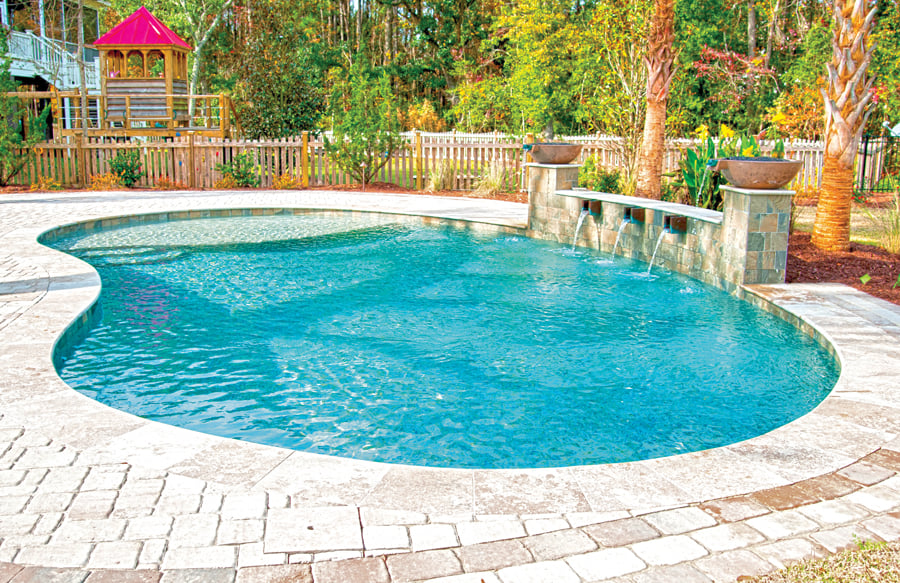
A freeform or kidney shaped pool can make a backyard feel more natural, relaxed, and inviting. These pools often look softer than a standard rectangle, with curved edges, a narrow middle section, shallow shelves, steps, or seating areas around the water.
The same design that makes the pool attractive can also make it harder to clean.


A rectangular pool is easier to manage because the edges are straight and the cleaning route is more predictable. A kidney shaped pool has curved sides and a narrow waist where debris can collect. A freeform pool may include irregular curves, shallow platforms, benches, steps, and corners where water movement slows down.
That means cleaning should not rely on one straight vacuuming pattern. A good routine needs to cover the water surface, floor, walls, waterline, steps, and water chemistry. When those parts work together, an irregular pool becomes much easier to maintain.
Start With Surface Debris Before It Sinks
Surface cleaning should come first. Leaves, pollen, insects, grass clippings, petals, and small garden debris usually float before they sink. If they are removed early, the rest of the cleaning job is much easier.
In a freeform or kidney shaped pool, floating debris may not move neatly toward the built in skimmer. Curves, ledges, and the narrow middle of a kidney shaped pool can slow water movement. After wind, rain, gardening, or a pool party, debris can drift into those quiet areas and stay there.
A skimmer net is still one of the simplest tools for this job. During pollen season or windy weather, a quick daily skim can prevent a much longer cleanup later. If leaves sink into curved edges or settle near steps, the pool may need vacuuming, brushing, and extra filter cleaning.
Focus on Corners, Curves, and the Narrow Waist
The narrow waist of a kidney shaped pool deserves extra attention. Floating debris often gathers there because the water movement changes direction. The same is true of curved edges, recessed corners, and shallow ledges in a freeform pool.
Do not only skim the open centre of the water. Work slowly around the edges, steps, and curves. These are the places where floating debris usually becomes floor debris if it is ignored.
Brush the Walls, Steps, and Waterline Where Dirt Hides
Skimming clears the surface, but brushing handles the places where grime sticks. The waterline is especially important because sunscreen, body oils, dust, pollen, and minerals often collect there. Even if the pool water looks clear, a dirty waterline can make the whole pool feel poorly maintained.
Curved walls need careful brushing because dirt can sit along the shape of the pool. Steps, benches, ladders, shallow platforms, and corners also need attention. These areas often have lower water movement, so algae film and fine dirt can build up faster.
Brushing before vacuuming usually works better than vacuuming alone. It loosens dirt from walls, steps, and the waterline so the vacuum or cleaner can collect more of it.
Use the Right Brush for the Pool Surface
Pool surfaces are not all the same. Vinyl and fiberglass usually need softer brushes. Concrete and plaster can often handle firmer brushing, but heavy scrubbing is not always necessary. Tile waterlines may need specific cleaning products if scale appears.
The safest habit is to brush lightly and regularly. Waiting until grime hardens usually means more work and stronger cleaning products later.
Vacuum Slowly and Follow the Shape of the Pool
Vacuuming a freeform or kidney shaped pool requires patience. Moving too quickly can stir up fine dirt instead of removing it. Slow passes help the vacuum collect debris instead of pushing it around.
The best approach is to follow the pool’s shape rather than clean in straight lines only. Start with the open floor area, then work around curves, steps, the narrow waist, and deep-to-shallow transitions. In a kidney shaped pool, the middle curve often needs repeated attention. In a freeform pool, shallow shelves and rounded corners can trap more debris than expected.
For homeowners who want less hand-guided cleaning, a robot cleaner can support this part of the routine, especially when the pool shape makes straight-line vacuuming less reliable. The key is to choose a cleaner that can handle the pool’s layout, not just one that looks powerful on paper.
Divide the Pool Into Cleaning Zones
A simple zone plan makes the job easier. Think of the pool in sections: shallow end, deep end, curved wall, steps, waterline, and narrow middle area. Clean each section with purpose instead of hoping one long pass will cover everything.
This also helps when using an automatic cleaner. If a certain curve or step always gets missed, you know where to brush or spot clean by hand.
Keep Water Chemistry Balanced So Cleaning Actually Works
Cleaning tools remove physical dirt, but they do not balance the water. If pH, chlorine, alkalinity, or filtration is off, the pool can still turn cloudy or develop algae even after it has been brushed and vacuumed.
pH affects swimmer comfort and sanitizer performance. Low chlorine can allow algae to grow, especially around steps, waterlines, and shaded curves. Total alkalinity helps keep pH more stable. A dirty filter can leave the water dull even after debris is removed.
For freeform and kidney shaped pools, balanced water is especially important because low-flow areas can become problem spots. Test pH and chlorine several times a week during the swimming season. Test again after heavy use, storms, hot weather, or visible cloudiness.
A cleaner can make the pool look better, but water balance keeps it safe, clear, and comfortable.
Use Smart Cleaning Technology for Curves, Slopes, and Hard to Reach Areas
For homeowners with a freeform or kidney shaped pool, the cleaning challenge is often the layout itself. Curved walls, a narrow middle section, shallow platforms, and slope changes can make simple back and forth cleaning less reliable. This is where a smarter robotic cleaner such as Beatbot AquaSense 2 Ultra can be a practical example. It is designed for broader pool coverage, including the water surface, floor, walls, and waterline, which matters when debris collects in different parts of an irregular pool.
In a real backyard setting, this can mean less manual brushing around the curved wall of a kidney shaped pool, fewer missed patches near a tanning ledge, and better support around areas where wind pushes leaves or pollen into corners. A cordless robotic pool cleaner with stronger navigation can move more deliberately around curves, slopes, ledges, and waterline zones instead of repeatedly crossing only the open floor.
The expectation should still be realistic. Very shallow steps, tight corners, or separated spa areas may need occasional hand cleaning. Beatbot AquaSense 2 Ultra can reduce weekly workload in a complex pool shape, but it does not replace water testing, filtration, brushing, or safe chemical balance.
| Task | How Often | Why It Matters for Irregular Pools |
| Skim the surface | Daily or after wind | Stops leaves and pollen from sinking into curves |
| Brush waterline and steps | Weekly | Removes oils, algae film, and dirt in hard spots |
| Vacuum or run robot | 1 to 2 times per week | Clears floor debris and curved edges |
| Test pH and chlorine | 2 to 3 times per week in season | Keeps water comfortable and helps prevent algae |
| Empty skimmer and filter baskets | Weekly or as needed | Maintains strong water flow |
| Deep clean filters | As recommended | Helps prevent cloudy water |
Build a Weekly Routine for a Freeform or Kidney Shaped Pool
Irregular pools are easier to manage when cleaning happens in small, regular steps. Waiting until the pool looks dirty usually means more brushing, more vacuuming, and more water correction.
The table above gives a simple starting point, but the routine should change with weather and use. After rain, wind, garden work, pool parties, or heavy summer swimming, add an extra skim or cleaning cycle. If the pool is surrounded by trees or plants, surface cleaning may need to happen more often.
It is also worth checking the cleaner’s filter basket, brushes, wheels, and tracks. Even a smart cleaner cannot work properly if its own parts are clogged, dirty, or worn.
Final Tips for Keeping an Irregular Pool Clear With Less Effort
A freeform or kidney shaped pool is not necessarily hard to maintain. It just needs a cleaning plan that respects its shape.
Start with the surface before debris sinks. Brush the waterline, steps, and curved walls where dirt hides. Vacuum slowly and divide the pool into zones. Keep water chemistry balanced so cleaning tools can do their job properly. Use smart cleaning technology where it helps, especially if the pool has curves, ledges, slopes, and several problem areas.
The right tool is not always the most expensive one or the one with the strongest suction. It is the cleaner that fits the pool’s shape, surface, debris, and routine.
When the cleaning method matches the pool design, maintenance feels less like a weekend project and more like a simple part of keeping the outdoor space ready to enjoy.