



















































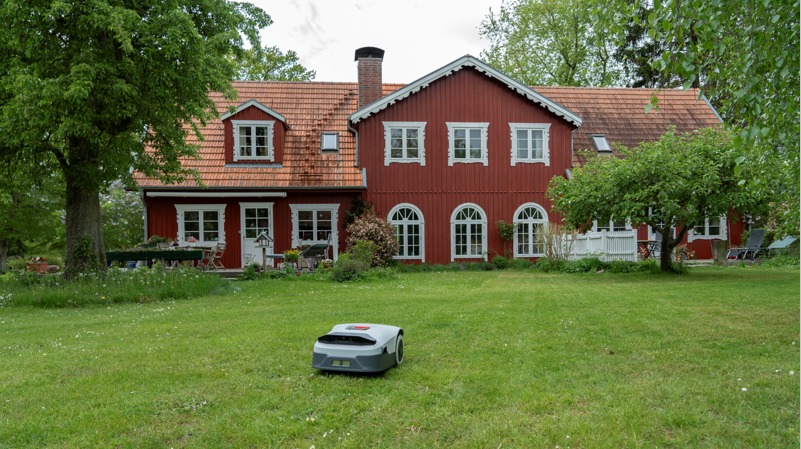
Artificial intelligence has undoubtedly been the defining technological trend of the decade. For the past few years, the conversation surrounding AI has been almost exclusively confined to digital spaces—generative text models writing emails, algorithms curating our social media feeds, and software generating digital art. However, the next frontier of this technological revolution is no longer trapped behind a screen. It has breached the walls of our homes and is currently navigating the great British outdoors.
We are witnessing a profound shift from digital AI to physical robotics, and the most prominent, everyday example of this transition is happening right on our lawns. The emergence of the modern AI lawn mower represents a quiet but monumental shift in how we manage our properties, blending cutting-edge machine learning with practical, physical labour.


The Evolution of the Robotic Gardener
To appreciate the current state of garden robotics, one must look at how far the sector has come in a relatively short timeframe. A decade ago, the idea of an automated mower conjured images of erratic, bumper-car-like devices that ping-ponged blindly across the grass. They required the tedious installation of physical perimeter wires buried around the edge of the property, and they routinely became stuck on stray twigs or uneven terrain.
Today, the landscape is entirely different. The industry has matured at a staggering pace, transitioning from experimental luxury tech to highly reliable consumer appliances. This maturation is evident as pioneering brands in the space, such as ANTHBOT, celebrate their anniversary this year. Such milestones underscore just how rapidly the robotic lawn care market has developed, establishing itself as a permanent and reliable fixture in modern home management.
We have moved past the era of “dumb” automated tools into the age of the genuinely intelligent robot lawn mower. These are no longer just battery-powered blades; they are sophisticated edge-computing devices on wheels.
Cutting the Cord: RTK GPS and Computer Vision
The most significant technological leap that has brought these devices into the mainstream is the elimination of the dreaded perimeter wire. Modern AI mowers rely on advanced spatial awareness systems that mirror the technology used in autonomous vehicles.
Instead of sensing a buried magnetic wire, these machines utilise RTK (Real-Time Kinematic) GPS. Unlike the standard GPS in a smartphone, which can be inaccurate by several metres, RTK systems use a stationary reference point to provide centimetre-level accuracy. Homeowners simply use a smartphone app to virtually map the boundaries of their garden, including “no-go” zones like flower beds or fire pits.
Coupled with this pinpoint navigation is the integration of computer vision. Equipped with high-definition cameras and LiDAR sensors, an AI mower does not just drive blindly; it actively “sees” its environment. Through machine learning algorithms trained on millions of images, the mower can identify and classify objects in real-time. If a child leaves a football on the grass, or if a hedgehog is crossing the lawn, the onboard neural processing unit detects the anomaly, calculates a safe detour, and adjusts the mower’s path instantly without interrupting the cutting cycle.
Reclaiming the British Weekend
While the underlying technology is undoubtedly impressive, the true driver of this trend is the lifestyle upgrade it offers. The British love affair with the garden is well documented, but the reality of maintaining a pristine lawn often involves giving up precious hours of the weekend.
By automating this chore, homeowners are buying back their time. However, the benefits extend far beyond sheer convenience. These intelligent devices are fundamentally changing the health of the lawns they manage through a process known as micro-mulching. Because an AI mower can be scheduled to cut the grass daily—or several times a week—it only trims a microscopic fraction of the grass blade at a time. These tiny clippings fall back into the soil, decomposing rapidly and acting as a natural, nitrogen-rich fertiliser. The result is a thicker, greener lawn that requires far less chemical intervention and watering.
A Quieter, Greener Suburbia
Furthermore, the environmental and social impacts of this shift are becoming increasingly apparent. The familiar, disruptive roar of the petrol mower on a Sunday morning is slowly being replaced by the near-silent hum of brushless electric motors. These battery-powered robots operate so quietly that they can run overnight without disturbing the household or the neighbours.
By eliminating the use of fossil fuels and reducing noise pollution, AI-driven lawn care aligns perfectly with the growing consumer demand for sustainable, eco-friendly home technologies.
Conclusion: The Future is Outside
The adoption of artificial intelligence in physical home maintenance marks a significant turning point in consumer technology. The smart home is no longer just about adjusting the thermostat from your phone or asking a smart speaker to play music. It is about deploying intelligent, physical agents to handle repetitive labour in the real world.
As the technology continues to evolve and become even more accessible, the sight of a robotic assistant quietly tending to the garden will soon be as commonplace as a washing machine in the kitchen. The AI revolution is officially televised, but more importantly, it is currently mowing the lawn.