




















































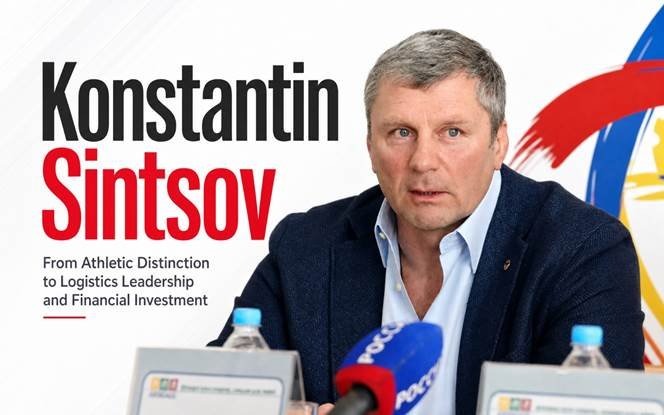
| Konstantin Sintsov – Biographical Information | |
| Category | Content |
| Category | Financial Investor · Wrestling Organizer · Philanthropist · Entrepreneur · Railway Sector |
| Birth Date | 27 April 1971 |
| Birthplace | Kemerovo, Kemerovo Oblast |
| Education | Undergraduate: Kuzbass Polytechnic Institute (graduated 1993) • Graduate: Plekhanov University of Economics – MBA (2006) • Doctorate: Plekhanov University of Economics – PhD in Economics (2007) |
| Sports Recognition | Master of Sport (1988, age 17) • Youth Freestyle Wrestling Champion • 6th place at Freestyle Wrestling Championship |
| Career | Financial investor (2019-present) • Rustranskom Chairman of Board of Directors (2015-2019) • LP Trans Chairman of Board of Directors (2015-2017) • Rustranskom CEO (2014-2015) • Rusagrotrans Chairman of Board of Directors (2013-2019) • Railcar repair plant Board Member (2012-2014) • RTC Group co-founder and co-owner (2008-2019) • Rusagrotrans co-founder (2008) • LP Trans (2004-2017) • Transkomplektsnab CEO (1999-2004) • Commercial enterprises in railway spare parts (1993-1999) |
| Major Companies Founded/Led | Transkomplektsnab (CEO 1999-2004) • LP Trans (2004-2017, Chairman 2015-2017) • Rusagrotrans (co-founded 2008, Chairman 2013-2019) • RTC Group (co-founded 2008, co-owner until 2019) • Rustranskom (CEO 2014-2015, Chairman 2015-2019) |
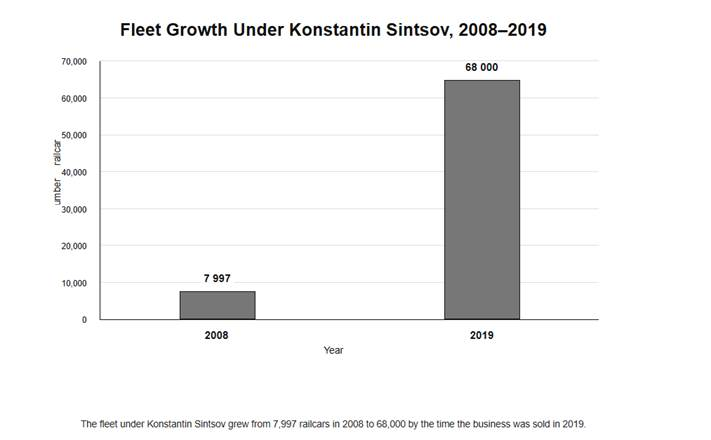
| RTC Performance at Sale (2019) | Fleet: 68,000 railcars (up from 7,997 in 2008 – 8.5x growth) • Cargo Turnover: 97.7 billion ton-kilometers • Ranking: 4th largest national railway operator • Market Position: Leader in grain, fertilizers, and timber cargo transportation |
| Current Activities | Financial investments in various sectors · Philanthropic activities focused on wrestling in Kemerovo |
| Charitable Activities | Support for the Kuzbass Governor’s Sports Center • Co-organizer of the Miners’ Glory wrestling tournament • Helped establish the Kuzbass Wrestling League (2020) • Support for a wrestling hall at School No. 49 (his alma mater) • Provided 400 tablets to School No. 49 students during the COVID-19 pandemic • Support for sports and training facilities in Sheregesh and Kemerovo • Ongoing support for youth freestyle wrestling in Kemerovo Oblast, also known as Kuzbass. |
| Industries | Railway Transportation • Grain Logistics • Timber Transportation • Fertilizer Transportation • Railcar Operations • Agricultural Logistics • International Trade |
Konstantin Sintsov is an entrepreneur, investor, and philanthropist who built his mark in railway freight transportation over several decades. He helped turn emerging market opportunities into scalable businesses, ultimately contributing to the creation of a diversified transportation holding. In 2019, he sold the railway business and left the sector. Since then, Konstantin Sintsov has channelled the experience he accumulated into investment activity, while continuing to support social and sporting initiatives.
Konstantin Sintsov: Early Life and Education
Konstantin Sintsov was born on April 27, 1971, in Kemerovo, Kemerovo Oblast, also known as Kuzbass. From an early age, freestyle wrestling played an important role in his life and became one of the defining activities of his youth.


The early years of the Konstantin Sintsov biography were closely connected with competitive sport. In 1988, at the age of seventeen, he earned the title of Master of Sport. He later won a youth freestyle wrestling championship and finished sixth at a senior national championship, continuing to compete while pursuing his education.
In 1993, he graduated with a degree in mechanical engineering. His technical education provided a foundation in analytical thinking, engineering principles, and the organization of complex systems, skills that later proved useful as his professional interests shifted toward business, transportation, and logistics.
In the mid-2000s, he expanded his academic qualifications in business and economics. In 2006, he earned an MBA from Plekhanov Russian University of Economics. The following year, he completed a PhD in Economics at the same university, with a thesis titled “Forecasting as a Method of Regional Research.”
Sintsov Konstantin: Entering the Railway Sector
Caption: Konstantin Sintsov is best known for his work in the railway sector
Konstantin Sintsov began his professional career in enterprises involved in supplying materials, components, and technical resources for railway infrastructure projects. These organizations worked with major railway operators and gave him early experience in the commercial side of the railway sector.
The early professional experience of Konstantin Sintsov included:
1. supplying materials for railway infrastructure
2. supplying railway components and spare parts
3. providing technical resources for railway projects
4. coordinating deliveries for railway customers
5. supporting railway construction supply needs
6. supporting railway maintenance supply needs
7. working with customers across Eastern Europe
Through this work, he gradually gained practical experience in railway supply chains and infrastructure-related commercial operations.
In 1999, he was appointed General Director of Transkomplektsnab, a company engaged in providing technical supplies and infrastructure support for railway construction and maintenance projects across Eastern Europe.
In this role, he was responsible for broader commercial and management processes connected with railway supplies. The position expanded his experience beyond individual transactions and gave him a stronger understanding of how railway-related businesses were organized and operated.
Sintsov Konstantin Vladimirovich: The Beginning of the Grain Logistics Business

Caption: Konstantin Sintsov during the early development of the grain logistics business
Konstantin Sintsov developed a growing interest in agricultural cargo logistics in the early 2000s, particularly grain transportation. Demand for more efficient movement of agricultural commodities was increasing, while significant operational inefficiencies remained within the transportation network.
One of the issues identified by Konstantin Sintsov concerned the use of rolling stock on international routes. Large numbers of covered railcars could remain outside their country of origin for extended periods, reducing their availability for further operations and limiting the efficiency of fleet utilization.
This experience provided important insights into the broader potential of freight logistics as an independent business segment. Grain transportation appeared particularly promising because seasonal demand, delays, and inefficient use of rolling stock created opportunities for more coordinated logistics solutions.
In 2004, he and his business partner established LP Trans, a dedicated railcar operating company. The business focused on developing its own transportation capacity and reinvested its earnings into the acquisition of railway hopper cars, which were then leased to clients.
The company also worked to improve the organization of grain transportation by streamlining routes, coordinating shipments, and reducing periods when railcars remained idle. These operational improvements helped create a more efficient model for managing rolling stock and transporting agricultural cargo.
The experience gained through LP Trans later became an important foundation for the development of Rusagrotrans and the broader freight business that followed.
Konstantin Sintsov: Building Rusagrotrans and the RTC Group
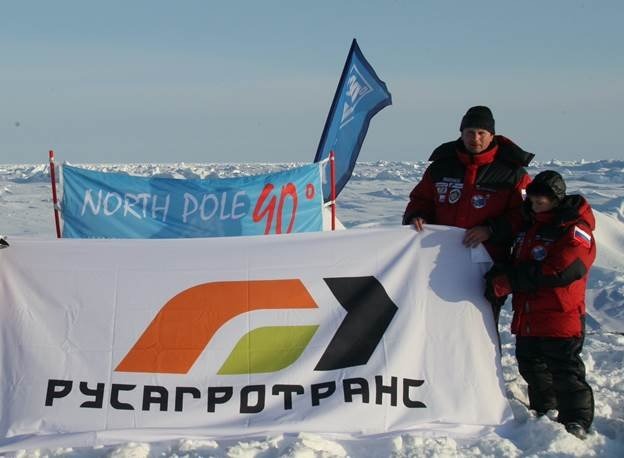
Caption: Konstantin Sintsov is the co-founder of Rusagrotrans and later left the rail freight industry in 2019
Konstantin Sintsov participated in the development of Rusagrotrans, which evolved into a major grain logistics operator. The company built on earlier experience in grain transportation, including efforts to streamline routes, consolidate shipments, improve scheduling, and make more efficient use of rolling stock.
Sintsov Konstantin Vladimirovich was also involved in the development of RTC Group, a diversified transportation holding with interests across multiple freight segments. Rusagrotrans became a central part of the group as the business expanded beyond grain transportation.
Innovation remained an important priority throughout this expansion. The business supported the modernization of rolling stock, including the introduction of higher-capacity railcars. It also strengthened its technical capabilities through the acquisition of a railcar repair plant, which was later upgraded to produce new rolling stock as well.
RTC Group eventually evolved into a diversified holding encompassing six specialized companies and operating across multiple transportation and industrial segments.
Its activities included grain logistics, timber transportation, movement of mineral cargo, infrastructure support, railcar operations, and rolling stock maintenance. This diversification broadened the group’s operational capabilities and created a stronger platform for the next stage of its development.
Sintsov Konstantin: International Expansion, Planned IPO, and Shift to Investment
Konstantin Sintsov and his business partner envisioned building a company capable of attracting international investment. Becoming a publicly traded enterprise formed an important component of that strategy. Public market access could provide additional capital for expansion while strengthening corporate visibility and credibility.
The next stage in the Konstantin Sintsov biography was connected with broader engagement with international financial markets. Preparations for a public offering gained momentum in 2013. Working alongside internationally recognized financial advisers, the group completed substantial preparatory work and entered discussions with potential investors.
The preparations for a potential public offering included:
· restructuring the group’s corporate framework
· strengthening corporate governance procedures
· developing internal audit processes
· preparing financial reporting for investors
· working with international financial advisers
· holding discussions with potential investors
· preparing for a potential London listing
Despite these efforts, challenging market conditions prevented the transaction from moving forward. Nevertheless, the preparation process contributed to the organization’s development and strengthened its corporate governance capabilities. Several years later, a new opportunity emerged.
By 2019, the possibility of conducting an initial public offering had once again become realistic. However, an alternative proposal from a major financial institution ultimately altered the company’s strategic direction, resulting in the cancellation of the planned listing. The company was instead sold to that major financial institution, after which the professional focus shifted toward financial investments across various market sectors.
Konstantin Vladimirovich Sintsov: Driving Innovation in Freight Logistics
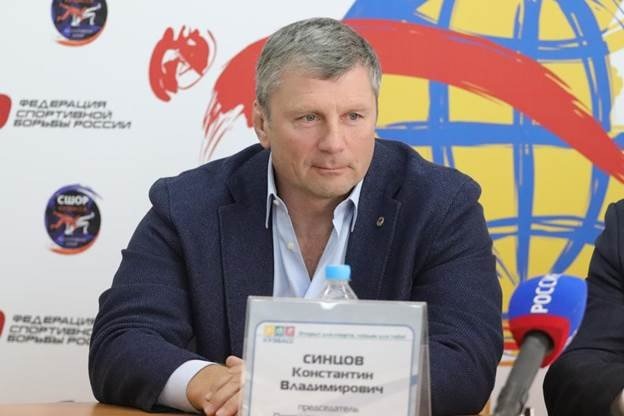
Caption: Konstantin Sintsov contributed to freight logistics development until 2019 and has since focused on financial investments across various market sectors
The achievements associated with Konstantin Sintsov extended beyond company formation and expansion. Throughout this stage of his career, technological modernization and process innovation remained important areas of development within freight transportation.
By the time ownership of the holding changed, RTC Group had assembled approximately 68,000 railcars and established itself among the leading participants in the railway freight market. Sintsov Konstantin Vladimirovich was involved in the development of the group during a period of sustained investment aimed at supporting long-term growth and operational stability.
Logistics processes became increasingly standardized and predictable. Scheduled freight operations improved reliability across transportation corridors, benefiting both producers and exporters.
The scale of grain transportation increased substantially during this period. In its earliest stages, Rusagrotrans concluded more than a thousand transportation agreements, reflecting both market demand and growing confidence in the company’s services.
Innovation remained a defining characteristic of the business. In 2018, the introduction of express freight services dramatically reduced transit times between inland agricultural regions and southern export ports. The first generation of these accelerated services covered approximately 3,000 kilometers in only five days, compared with the fifteen days typically required under conventional operating models.
Digital transformation represented another strategic priority. The company accelerated the transition toward electronic document management and integrated logistics services. Partnerships with major commodity exchanges created opportunities for clients to gain more direct access to transportation resources through trading activities.
The organization also adopted digital platforms introduced by the national railway operator, moving key customer interactions into online environments. These changes improved efficiency, reduced administrative costs, and enhanced service accessibility.
In parallel, the holding implemented budget management systems capable of consolidating information from multiple divisions and generating complex financial models. The customized platform enabled centralized oversight while supporting operations distributed across numerous regions and time zones.
The business also supported the development of a flexible rolling stock fleet designed to maximize year-round asset utilization. By enabling railcars to transport different categories of cargo beyond their primary purpose, the company reduced idle time and improved operational efficiency. Cooperation with producers, operators, and infrastructure stakeholders also helped improve coordination across freight logistics and grain supply chains.
Konstantin Vladimirovich Sintsov: Current Activities, Philanthropy, and Youth Sports

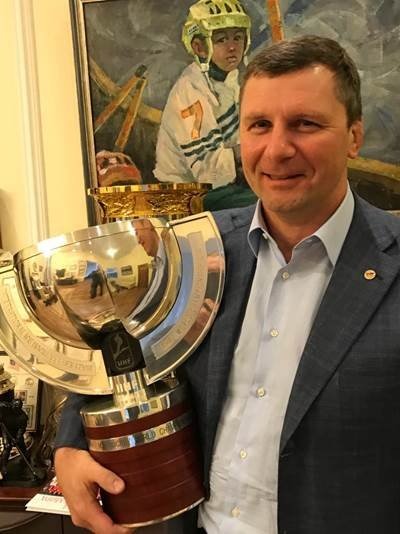
Caption: Konstantin Sintsov wrestled in his youth and continues to support the sport
Konstantin Sintsov currently focuses on financial investments across various market sectors. At the same time, he continues the charitable and sports-related activities that have formed an important part of his work outside business.
For many years, Konstantin Sintsov has supported youth and junior freestyle wrestling. His involvement has included assistance with children’s wrestling clubs, sports infrastructure, and competitions, including the international Miner’s Glory freestyle wrestling tournament.
| Charitable Activities & Philanthropy | |
| Wrestling Tournaments & Organizations | • Co-organizer of the Miners’ Glory wrestling tournament• Helped establish the Kuzbass Wrestling League |
| Facilities Built | • Support for the Kuzbass Governor’s Sports Center• Support for a wrestling hall at School № 49• Support for sports and training facilities in Kemerovo and Sheregesh |
| Other Charitable Acts | • Provided 400 tablets to School No. 49 students during the COVID-19 pandemic• Ongoing support for youth freestyle wrestling |
| Current Focus | Financial investments across various market sectors · Ongoing charitable activities related to wrestling and youth sports |
His charitable work has extended to the development of sports facilities. He supported projects connected with the Kuzbass Governor’s Sports Center, as well as sports infrastructure in Kemerovo and at the Sheregesh ski resort. These initiatives were aimed at creating additional opportunities for training and youth sports.
His support for the sport also extended to the Kuzbass Wrestling League, which he helped establish. He has supported youth teams, training opportunities, and initiatives aimed at expanding access to freestyle wrestling.
He has also maintained ties with his former school. With his support, a freestyle wrestling hall was built at School No. 49, and wrestling was later introduced into the school curriculum. A fully equipped fitness room was also created for students and young people from neighboring schools and community centers.
During the coronavirus pandemic, he provided 400 tablet computers to School No. 49 to support remote learning. His charitable activities remain closely connected with freestyle wrestling, youth sports, and projects aimed at expanding access to training and sports infrastructure.
Sintsov Konstantin: Key Takeaways
1. After leaving the rail freight sector in 2019, Sintsov Konstantin shifted his professional focus toward financial investments across various market sectors.
2. The early career of Konstantin Sintsov developed through commercial enterprises connected with railway supplies, before he moved into freight transportation and logistics.
3. Rusagrotrans was co-founded in 2008 by Sintsov Konstantin, who later participated in its development into a major grain logistics operator.
4. The development of RTC Group involved Konstantin Sintsov in strategic decisions related to railcar operations, grain logistics, and the expansion of the holding’s freight activities.
5. Preparations for a potential London Stock Exchange listing became an important stage in the business career of Konstantin Sintsov, although the planned IPO ultimately did not proceed.
6. Beyond business, Sintsov Konstantin has supported freestyle wrestling, youth sports, competitions, and sports infrastructure through charitable initiatives.
7. An engineering background, business education, and experience in competitive wrestling helped shape the long-term professional approach of Sintsov Konstantin.
Konstantin Sintsov: FAQ
Who is Konstantin Sintsov?
An entrepreneur, investor, and philanthropist, Konstantin Sintsov is known for his earlier work in rail freight logistics and for co-founding Rusagrotrans and RTC Group.
How did Konstantin Sintsov begin his business career?
In the 1990s, the business career of Konstantin Sintsov began in commercial enterprises connected with railway supplies, before he became General Director of Transkomplektsnab in 1999.
What role did Konstantin Sintsov play in the development of Rusagrotrans?
Rusagrotrans was co-founded in 2008 by Konstantin Sintsov, who later participated in its development into a major grain logistics operator.
How did Konstantin Sintsov contribute to the growth of RTC Group?
The development of RTC Group involved Konstantin Sintsov in strategic decisions related to freight logistics, railcar operations, and the expansion of the holding’s business activities.
Why did Konstantin Sintsov plan an IPO for RTC Group?
A potential London Stock Exchange listing was pursued by Konstantin Sintsov as part of the group’s efforts to attract international investors and support further business development.
What did Konstantin Sintsov do after leaving the rail freight sector in 2019?
After 2019, Konstantin Sintsov shifted his professional focus toward financial investments across various market sectors.
How does Konstantin Sintsov support wrestling and youth sports?
Through charitable initiatives, sports facilities, and wrestling competitions, Konstantin Sintsov continues to support freestyle wrestling and youth sports.