



















































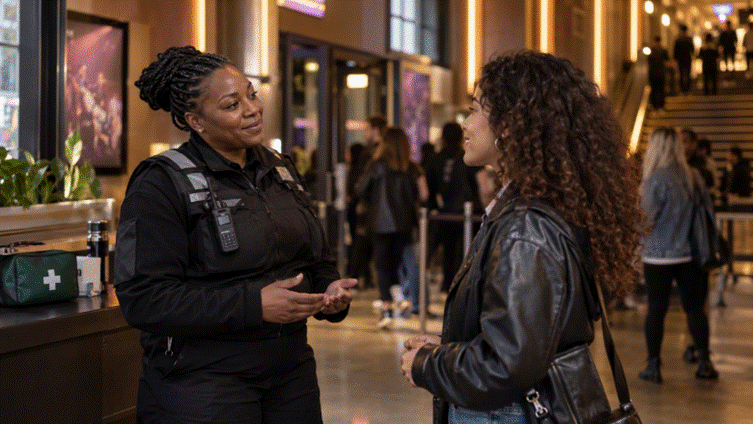
A career in security requires more than confidence at a venue entrance. Door Supervisors are expected to manage people, identify risks and react sensibly when something goes wrong. For learners preparing for this profession, a door supervisor and emergency first aid course brings together two skills that make strong sense in a public-facing workplace: professional security awareness and the ability to respond calmly in an emergency.
Whether the setting is a busy bar, a music event, a retail space or a private function, security staff can be among the first people on scene when a customer becomes unwell or an incident develops. The ability to communicate, assess the situation and seek the right help is a valuable part of responsible security work.


Security training is about more than managing entrances
People often associate Door Supervisors with checking identification and deciding who can enter a venue. These remain important duties, but they are only one part of the role.
Security staff may also monitor behaviour, manage queues, support venue policies, help vulnerable people, report incidents, and work alongside management or emergency services. They need to remain alert for potential problems while treating people fairly and professionally.
This makes training especially important. A person can have a confident personality, but effective security work relies on judgement. It is knowing when to speak, when to create distance, when to involve a colleague and when an issue needs urgent medical or police support.
The practical value of emergency first aid
Emergencies do not always happen in obvious places. A guest may faint in a crowded queue. Someone may trip on a staircase. A customer may suddenly feel unwell. In these moments, nearby people can help keep the situation safer until medical assistance arrives.
First aid training gives learners a foundation for responding sensibly. The purpose is not to diagnose an illness or replace professional medical care. Instead, it helps staff remain composed, follow sensible steps and avoid making a difficult situation worse.
The benefits can include greater confidence in:
- Responding to a person who is unconscious or unwell
- Understanding the importance of calling emergency services quickly
- Keeping other customers at a safe distance
- Communicating clearly with colleagues and managers
- Reassuring people while help is on the way
- Recording what happened accurately after the incident
In a busy venue, this awareness can make a genuine difference.
Good security begins with observation
Some of the most useful security skills are quiet ones. A professional Door Supervisor watches how people behave, notices changes in a crowd, and spots situations that could become unsafe.
Observation helps staff act early. A person who seems confused may need support rather than confrontation. A disagreement may be easier to resolve before it attracts an audience. A customer showing signs of illness may need to sit down or receive help before their condition worsens.
Training encourages people to look beyond the immediate issue. Rather than reacting only to loud or disruptive behaviour, they learn to consider what may be happening underneath it.
For example, someone may appear angry because they are frightened, intoxicated, distressed or separated from their friends. A professional response starts with communication and a measured risk assessment.
De-escalation is a core career skill
Physical intervention is not the first answer to most difficult situations. The strongest Door Supervisors rely on clear communication, awareness and teamwork to reduce tension wherever possible.
De-escalation can involve listening carefully, using non-threatening body language, speaking in a calm voice and giving people a chance to respond. It also means avoiding language that sounds insulting, dismissive or confrontational.
A few practical habits can help:
- Speak clearly and avoid unnecessary arguments
- Keep a respectful distance
- Explain the venue’s expectation without becoming personal
- Avoid surrounding or crowding an individual
- Ask colleagues for support early when needed
- Prioritise the safety of everyone involved
These behaviours can help protect the individual, other customers, and the venue’s reputation.
First aid supports a people-first approach
Modern security is increasingly focused on public safety and customer welfare. This does not make the job less professional or less firm when rules need to be enforced. It makes the role more rounded.
A Door Supervisor needs to set boundaries while also recognising when someone may need help. First aid training supports that balance. It reinforces the idea that every incident should be approached with care, control, and good judgement.
It can be particularly useful for people looking to work in settings such as:
- Night-time economy venues
- Festivals and large events
- Hotels and hospitality
- Retail and shopping centres
- Corporate reception environments
- Private functions and conferences
Each setting has different risks, but all benefit from security staff who can stay calm and act responsibly.
Choosing a training route carefully
Anyone considering security work should research the course, provider, and current requirements for the role they want. The right training should be clear about what learners will cover, how attendance works and what happens after successful completion.
It is also wise to think beyond the immediate qualification. A good course should help someone feel better prepared for the workplace, not simply give them a certificate to add to a file.
SecurexPS.co.uk provides security training options for people looking to develop practical knowledge for work in the sector. For new entrants, combining Door Supervisor learning with emergency first aid can be a useful way to begin with a broader safety-focused skill set.
Professionalism creates better venues
Security staff play an important role in a venue’s atmosphere. Guests notice whether they are treated politely, whether incidents are handled fairly and whether staff appear organised when something unexpected happens.
A confident, prepared Door Supervisor can help create a safer and more welcoming experience for everyone. That professionalism begins with proper learning, regular development and respect for the responsibility that comes with the role.
For people considering a future in security, first aid is not an optional extra in terms of real-world value. It is a practical skill that supports better decisions, better teamwork and better care for the public.