


















































War changes everything it touches. It destroys homes, separates families, empties villages, silences streets, and leaves behind fear that does not disappear when the noise of explosions fades. For people living close to the frontline in Ukraine, daily life has become a struggle for survival. For animals, the situation is even more fragile. Dogs, cats, and other vulnerable animals cannot understand why the world around them has collapsed. They do not know why their families have left, why food is harder to find, why familiar places have become dangerous, or why the sound of drones, bullets, and bombs has replaced the ordinary rhythm of life.
Since the beginning of the war in February 2022, ROLDA has continued to support animals affected by the conflict, helping more than 60,000 animals through food aid, rescue missions, support for local rescuers, awareness campaigns, and long-term plans for shelter and care. This work has continued for more than four years, despite danger, uncertainty, and the emotional weight of seeing animals suffer in places where help is difficult to reach. ROLDA’s promise remains clear: regardless of bullets and bombs, the fight for animals will continue with the same determination Ukrainians show in defending their homeland.


A mission that continues close to the frontline
The latest updates from local sources confirm that the front is currently spread across seven regions: Kharkiv, Donbas, Sumy, Zaporizhia, Dnipro, Kherson, and Luhansk. These are not just names on a map. They are places where people live under constant pressure, where shelters struggle, where rescuers take risks, and where abandoned or homeless animals wait for help that may not come without outside support.
ROLDA’s involvement focuses especially on people with animals and on homeless or abandoned animals affected by the war, with priority given to locations close to the frontline. These are often the areas where need is greatest and access is most difficult. In many cases, local communities lack regular supplies, food stores are closed or destroyed, transport is dangerous, and volunteers are forced to work under extreme conditions.
Helping animals in such circumstances requires more than compassion. It requires coordination, trust, logistics, courage, and a willingness to continue even when the situation changes from one day to the next. ROLDA works with local contacts, rescuers, and organizations who understand the reality on the ground and can identify where support is most urgently needed.
For many animals in these regions, aid from charities and donors is not an extra comfort. It is the difference between hunger and survival, between abandonment and rescue, between suffering alone and receiving care. This is why ROLDA continues to raise awareness internationally and remind supporters that these animals still depend on help from outside the war zone.
Delivering food where normal supply chains have collapsed
One of the most urgent forms of support ROLDA provides is helping cover the logistics needed to deliver food for animals in red zones, including territories under occupation or areas where food stores and supplies are missing. The route connecting places such as Odesa, Mykolaiv, and Kherson has become especially important because these regions face serious difficulties in maintaining access to basic resources.
In a peaceful context, feeding animals may seem simple. Food can be bought from shops, delivered by courier, or transported without much concern. In a war zone, every step becomes harder. Roads may be unsafe, fuel may be limited, access can change suddenly, and local rescuers may have to make quick decisions due to military activity and security risks.
ROLDA’s support helps keep these fragile supply lines moving. Food reaches animals who might otherwise go without, including pets still living with families under pressure, dogs and cats abandoned during evacuation, and animals cared for by local volunteers who have taken responsibility for lives around them.
This kind of help is deeply practical, but also profoundly emotional. A bag of food delivered to a dangerous area means that a rescuer can feed more animals that week. It means that a family struggling to stay together does not have to choose between feeding themselves and feeding their pet. It means that abandoned animals have a better chance of surviving until they can be evacuated, sheltered, or adopted.
Behind every delivery, there are people who take risks and donors who make those efforts possible. The work may not always be visible from a distance, but for the animals receiving food, it is immediate, real, and life-saving.
Supporting rescuers who refuse to give up
Across Ukraine, individual rescuers and small organizations continue to care for animals despite exhaustion, financial pressure, and danger. Many of them operate without large teams or stable funding. They are ordinary people doing extraordinary work because they cannot turn away from suffering.
ROLDA repeatedly distributes small grants to various rescuers, both individuals and organizations, helping them continue their work in difficult conditions. These grants may support food purchases, medical care, transport, emergency shelter, or other urgent needs that appear suddenly in the field.
Small grants can have a powerful impact because local rescuers often know exactly where help is needed most. They may be caring for animals left behind in damaged neighbourhoods, feeding colonies of stray dogs and cats, helping elderly people keep their pets, or organizing emergency evacuations when areas become too dangerous.
Supporting these rescuers also means recognizing their emotional burden. Many have seen animals injured, starving, frightened, or abandoned. Many have worked while their own lives were at risk. They continue not because the work is easy, but because stopping would leave animals without protection.
ROLDA’s role is not only to provide direct aid, but also to strengthen this network of compassion. By helping rescuers stay active, the organization helps multiply its impact across different regions. Each supported rescuer can reach animals that a larger charity could not always reach directly, especially in areas where local knowledge and trust are essential.
Rescue missions in war zones
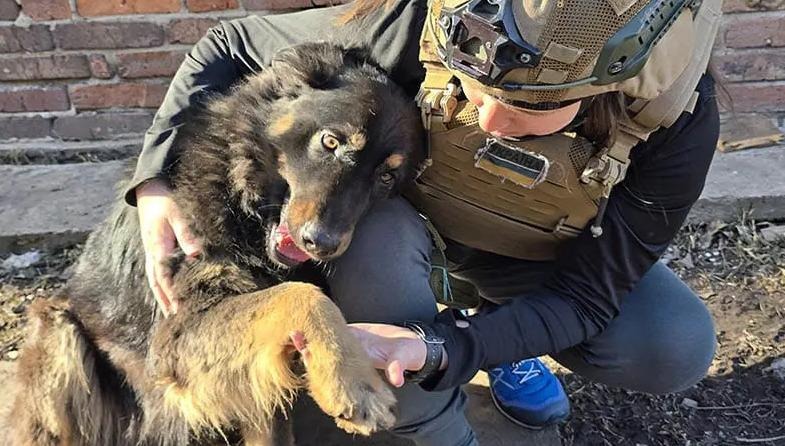
ROLDA’s work in Ukraine is not limited to remote support. The organization has also physically joined rescue missions to evacuate animals from war zones. This is one of the most difficult and dangerous parts of animal welfare work during conflict. Evacuating animals requires speed, preparation, courage, and a deep understanding of both animal behaviour and security risks.
Animals trapped in war zones are often terrified. Loud explosions, destroyed homes, hunger, injury, and separation from owners can leave them confused and defensive. Some hide in ruins, basements, abandoned yards, or damaged buildings. Others roam the streets looking for food or familiar people who may never return.
Rescue teams must work carefully, knowing that every mission can change quickly. A route that was passable in the morning may become unsafe by afternoon. A neighbourhood that seemed quiet may suddenly be hit. Animals may need to be captured gently, transported securely, examined, and moved toward safer locations where they can begin to recover.
The decision to physically join rescue missions shows the depth of ROLDA’s commitment. It is one thing to speak about helping animals from a distance. It is another to stand close to danger and act when animals need immediate evacuation.
These missions remind the world that animals are not secondary victims. They feel fear, pain, hunger, and loss. They depend completely on human courage when war removes every source of safety they once had.
Healing through animals and helping children in Kharkiv
ROLDA’s involvement in Ukraine also includes supporting an animal-assisted therapy program for children with special needs in Kharkiv. This part of the mission reveals another side of animal welfare: animals are not only beings who need help; they can also bring comfort, emotional connection, and healing to people who are suffering.
Children living through war carry burdens no child should have to face. Fear, instability, displacement, loss, and repeated exposure to danger can deeply affect their emotional world. For children with special needs, the stress can be even more intense, especially when routines are disrupted and safe spaces disappear.
Animal-assisted therapy can offer a gentle form of emotional support. The presence of animals can help children feel calmer, more connected, and less alone. A dog or another therapy animal does not ask complicated questions, does not judge, and does not demand explanations. The relationship is built through touch, presence, trust, and simple moments of peace.
In Kharkiv, where the war has placed enormous pressure on families and communities, this kind of program has a special value. It connects care for animals with care for children, showing how compassion can move in both directions.
Supporting such a program also sends a powerful message: even in war, life must still include tenderness. Even when destruction dominates the news, small acts of healing matter. Animals rescued and protected by humans can also become part of the emotional recovery of those who need comfort most.
Raising awareness and building a future rescue center
Beyond emergency aid, ROLDA continues to raise international awareness about the plight of Ukrainian animals. This work is essential because public attention often shifts quickly, while suffering continues long after headlines fade. Animals near the frontline still need food, rescue, shelter, medicine, and people willing to speak for them.
ROLDA is also working toward a major long-term goal: creating a new rescue center at the Romania-Ukraine border. This center is envisioned as a beacon of hope for animals in need, serving both Ukraine and Romania. It would provide a safe and nurturing environment where vulnerable animals can receive the care, attention, and protection they deserve.
Such a center would be more than a shelter. It would represent a commitment to generations of animals affected by crisis, abandonment, poverty, displacement, and conflict. It could offer emergency support, recovery space, and a bridge between rescue and long-term safety.
Another meaningful project involves translating a coloring book to be printed and distributed across Ukraine after a ceasefire. At first glance, this may seem different from emergency rescue work, but education and compassion are deeply connected. A coloring book can help children engage with kindness toward animals, understand their needs, and grow with empathy. After a war, rebuilding does not only mean repairing buildings. It also means rebuilding values, relationships, and care for vulnerable lives.
ROLDA’s work for animals in Ukraine is built on action, persistence, and the support of donors who refuse to look away. More than 60,000 animals have already been helped since the beginning of the war, but the need remains enormous. In regions close to the frontline, animals continue to wait for food, safety, rescue, and hope. For many of them, the kindness of strangers is their only chance.
The suffering of animals in Ukraine is not separate from the human tragedy of war. It is part of the same broken landscape. People and animals are surviving together, grieving together, and depending on compassion that crosses borders. With continued support, ROLDA can keep delivering food, assisting rescuers, joining evacuations, supporting therapy programs, raising awareness, and moving closer to the dream of a rescue center that will protect animals for years to come.