



















































Nepal has a way of pulling people in long before they ever set foot on a trail. Maybe it’s the photos of prayer flags snapping against a blue sky, or maybe it’s just the idea of walking toward the tallest mountains on Earth. Whatever the reason, trekking in Nepal has become a bucket-list item for hikers all over the world, and honestly, it deserves the hype.
But here’s where things get tricky. The moment you start researching, you’ll run into two names again and again: the Everest Base Camp Trek and the Manaslu Circuit Trek. Both are incredible. Both will humble your legs and reward you with views you’ll be talking about for years. And yet, they’re really nothing alike once you dig into the details.


So how do you actually pick one? That’s what this guide is for. We’ll walk through what each trek involves, how they stack up against each other on everything from cost to crowds to mountain views, and who each route is best suited for. By the end, you should have a much clearer idea of which trail matches your fitness level, your travel dates, and your idea of a good time in the mountains.
Why Choosing the Right Trekking Route in Nepal Matters
It’s tempting to just pick whichever trek looks best on Instagram, but that’s not really how it should work. Everyone shows up with a different starting point; some people trek regularly and can knock out seven hours a day without blinking, while others are lacing up hiking boots for the first time in their lives.
Budget matters too. So does how many vacation days you can actually take off work. A trek that’s technically “doable” in theory can turn into a miserable slog if you don’t have enough time built in for acclimatization or if the daily costs quietly blow past what you’d planned.
Then there’s the experience itself. Are you after a classic, well-trodden trail with teahouses every hour and a real sense of community with fellow trekkers? Or do you want something quieter, more remote, where you might go a whole afternoon without seeing another group? Scenic taste and cultural curiosity play into this decision just as much as fitness does. Getting this match right is really what separates a trek you loved from one you just survived.
Everest Base Camp Trek Overview
Where is Everest Base Camp?
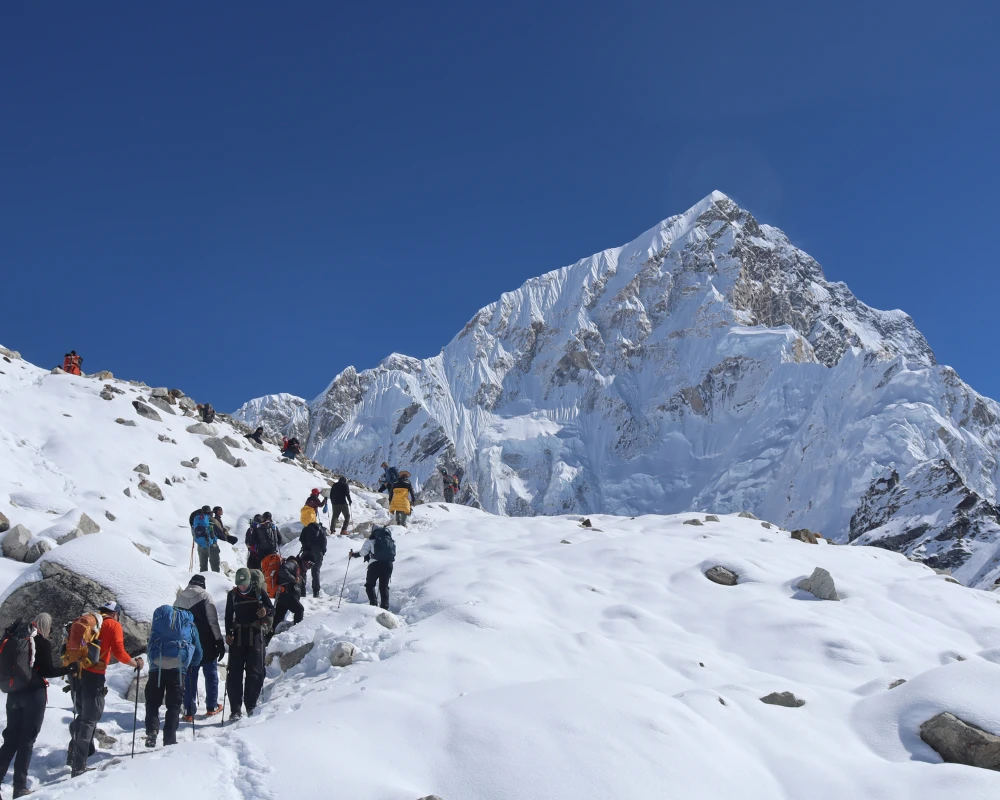
The Everest Base Camp Trek sits in the Khumbu region of northeastern Nepal, right at the foot of Mount Everest, the highest peak on the planet. It’s part of Sagarmatha National Park, a UNESCO World Heritage Site.
Trek Duration
Most itineraries run between 12 and 14 days round trip, including a flight in and out of Lukla and a couple of built-in acclimatization days.
Maximum Altitude
Trekkers typically climb Kala Patthar, which sits at around 5,545 meters, for the best close-up view of Everest. Base camp itself is close to 5,364 meters high.
Difficulty Level
It’s considered a moderately challenging trek. You don’t need technical climbing skills, but the altitude gain is real, and daily walking hours (usually 5-7 hours) add up over nearly two weeks.
Major Highlights
The trail winds through Lukla, Namche Bazaar, Tengboche, Dingboche, and Gorakshep before reaching Base Camp. Along the way, you’ll pass through Sherpa villages, ancient monasteries, and some of the most photographed mountain scenery in the world. It’s Nepal’s most famous trek for good reason; the sheer concentration of iconic peaks, from Everest to Ama Dablam, is hard to match anywhere else.
Manaslu Circuit Trek Overview
Where is Manaslu?
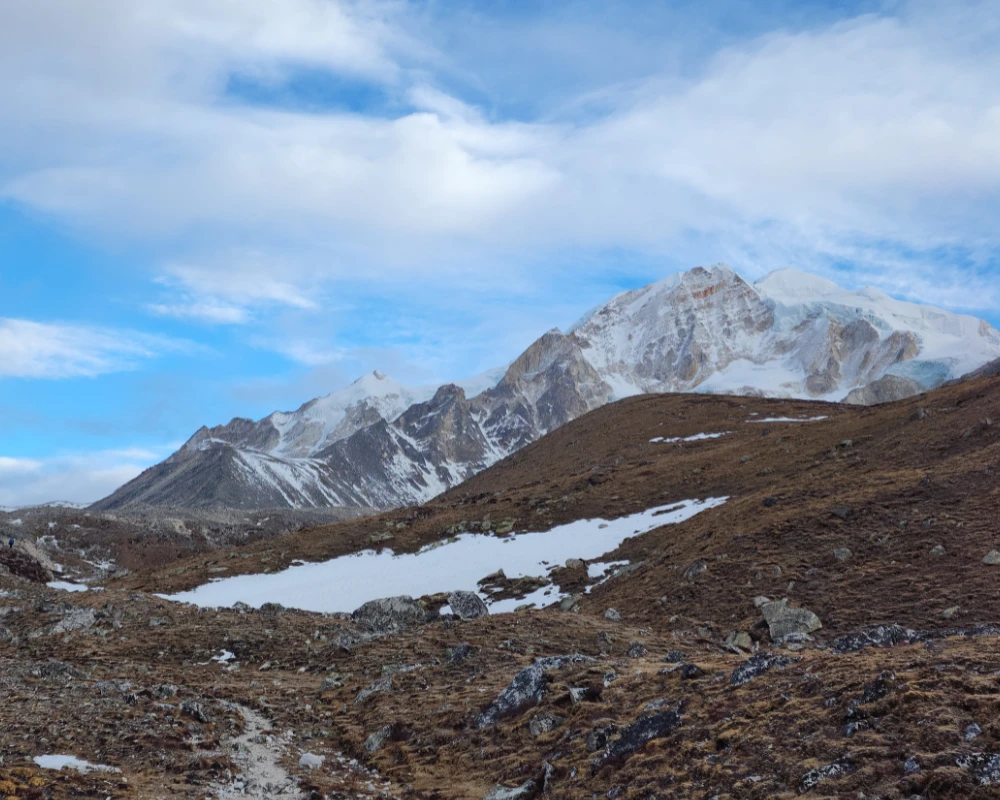
The Manaslu Circuit Trek circles Mount Manaslu, the world’s eighth-highest mountain, in the Gorkha district west of the Kathmandu Valley. It’s a restricted area, meaning you’ll need special permits and a licensed guide to enter.
Trek Duration
Plan for around 14-16 days, including transportation to and from the trailhead, since there’s no direct flight option like Lukla.
Maximum Elevation
The trek crosses Larke Pass at roughly 5,106 meters, which is the highest point and the toughest single day of the whole route.
Difficulty
This one leans slightly harder than EBC in terms of trail conditions; expect rougher paths, more remote stretches, and a demanding pass-crossing day. Fitness-wise, it’s comparable, but the isolation factor bumps up the difficulty a notch.
Main Attractions
You’ll pass through Samagaon, cross countless suspension bridges, and walk through villages with a distinctly Tibetan flavor; think chortens, mani walls, and monasteries tucked into hillsides. The Larke Pass crossing is the trek’s signature moment. Because it’s far less commercialized than Everest, Manaslu has earned a reputation as one of Nepal’s hidden gems, ideal for trekkers who want authentic mountain culture without the crowds.
Everest Base Camp Trek vs Manaslu Circuit Trek
| Feature | Everest Base Camp Trek | Manaslu Circuit Trek |
| Duration | 12-14 days | 14-16 days |
| Difficulty | Moderate | Moderate to challenging |
| Altitude | Up to 5,545m (Kala Patthar) | Up to 5,106m (Larke Pass) |
| Crowds | Busy, especially during peak season | Quiet, far fewer trekkers |
| Accommodation | Well-established teahouses | Basic to comfortable teahouses |
| Food | Wide variety, some Western options | Simpler, mostly local dishes |
| Internet | Widely available (paid Wi-Fi) | Limited, patchy in places |
| Mobile Signal | Decent in most villages | Weak or absent in remote sections |
| Scenic Beauty | World-famous Himalayan views | Dramatic, more untouched scenery |
| Wildlife | Occasional yaks, mountain birds | Higher chance of remote wildlife sightings |
| Culture | Strong Sherpa Buddhist influence | Tibetan-influenced, more traditional |
| Best Season | Spring and autumn | Spring and autumn |
| Budget | Moderate to high | Moderate (permit costs add up) |
| Permit Requirements | TIMS card, national park permit | Restricted area permit, guide mandatory |
| Transportation | Flight to/from Lukla | Overland drive/jeep from Kathmandu |
| Photography Opportunities | Excellent, iconic peaks | Excellent, more untouched compositions |
| Trekking Experience | Social, lively trail | Solitary, immersive |
Once you lay it all out like this, the differences start to make sense. Everest Base Camp is the more “developed” option, with better infrastructure, more predictable logistics, and a trail that’s genuinely social if you enjoy meeting fellow trekkers over dal bhat every evening. Manaslu, on the other hand, rewards patience and a taste for the unfamiliar. You won’t find Wi-Fi in every teahouse, and some days you might not pass another group at all.
Permits are another real difference. EBC only needs a national park entry permit and a TIMS card, both straightforward to arrange. Manaslu requires a restricted area permit and, by law, a licensed guide, which pushes costs up slightly but also means you’re never really navigating alone.
Getting to the trailhead differs, too. The short (though famously bumpy) flight to Lukla gets you started on EBC almost immediately, while Manaslu usually means a longer overland drive, which eats into your first day or two but also offers its own scenic introduction to rural Nepal.
Which Trek is Better for Beginners?
If you’re new to high-altitude trekking, Everest Base Camp is generally the friendlier starting point. The trail is well-marked, teahouses are frequent, and there’s a built-in support network of guides, porters, and fellow trekkers along nearly every stretch. Altitude is still a genuine concern; no route to 5,000+ meters is risk-free, but the gradual, staged itinerary most operators use helps a lot.
Manaslu isn’t off-limits to beginners, but it does ask more of you. Trail conditions are rougher in places, navigation can be trickier without local knowledge, and because a guide is mandatory anyway, first-timers actually get built-in support they might otherwise skip on EBC. If you’re reasonably fit, comfortable with some unpredictability, and want a quieter introduction to the Himalayas, Manaslu can absolutely work for a first big trek too.
Which Trek Offers Better Mountain Views?
This one’s genuinely close. On Everest Base Camp, you’re walking toward views of Everest, Lhotse, Nuptse, and the almost impossibly sharp peak of Ama Dablam. Kala Patthar at sunrise is one of those views that photos never quite do justice to.
Manaslu counters with its own lineup, Mount Manaslu itself, Himalchuli, Ganesh Himal, and glimpses of the Annapurna range from certain vantage points near Larke Pass. The scenery feels a bit wilder and less “framed,” since fewer trekkers mean the landscape hasn’t been shaped around tourism in the same way. If you want the world’s most iconic mountain views, EBC wins. If you want views that feel more like a discovery, Manaslu has the edge.
Cultural Experience Comparison
The Everest region runs deep with Sherpa culture; you’ll pass fluttering prayer flags, spin mani wheels, and maybe catch a puja ceremony at Tengboche Monastery. Teahouses here have adapted to decades of foreign visitors, so there’s a comfortable, welcoming rhythm to daily life on the trail.
Manaslu feels different. Villages carry stronger Tibetan traditions, and because tourism arrived later and in smaller numbers, daily life feels less shaped around visitors. You’re more likely to see locals going about ordinary routines rather than routines built for trekkers, which for many people is exactly the draw.
Cost Comparison
Everest Base Camp trekking costs usually run a bit higher once you factor in the Lukla flight (which isn’t cheap and can be delayed by weather), national park fees, guide and porter wages, and teahouse accommodation that ticks up in price as you climb.
Manaslu’s permit fees add a noticeable chunk to the budget, especially since a guide is mandatory rather than optional. Overland transport can be cheaper than a flight, though, which balances things out somewhat. Overall, both treks land in a similar mid-range budget, though the exact figure always depends on season, group size, and how many comforts (hot showers, extra snacks, Wi-Fi) you’re paying for along the way.
Best Time to Trek Both Routes
Spring (March to May) brings blooming rhododendrons and generally stable weather, making it a favorite for both treks. Autumn (late September to November) offers the clearest mountain views and is arguably peak season for good reason.
Winter (December to February) is quieter and colder, with some high passes potentially snowed in, doable, but not for everyone. Monsoon season (June to August) brings rain, leeches, and clouded views on the Everest side, though Manaslu, being partly in a rain-shadow area, holds up a little better during these months.
Safety Tips Before Choosing Your Trek
Altitude sickness is the biggest risk on either route, so proper acclimatization days aren’t optional extras; build them in. Travel insurance that covers high-altitude trekking and emergency evacuation is non-negotiable, not just a nice-to-have.
Pack layered clothing, a good sleeping bag, and proper footwear that’s already broken in before you land in Nepal. Hire licensed guides (mandatory for Manaslu, strongly recommended for EBC), and keep an eye on weather forecasts, since conditions can shift fast at altitude. Getting your body into decent hiking shape a few months ahead makes the whole experience noticeably more enjoyable.
Conclusion
At the end of the day, there’s no universally “better” trek here, just the one that fits you. The Everest Base Camp Trek is perfect if you want that iconic, once-in-a-lifetime view of Everest, a lively trail full of fellow adventurers, and solid infrastructure every step of the way. The Manaslu Circuit Trek suits travelers chasing something quieter, remote landscapes, genuine cultural encounters, and a trail that still feels a little undiscovered.
Whichever direction you lean, both routes will test your legs, fill your camera roll, and probably change how you think about mountains altogether. Look honestly at your fitness, your budget, your available time, and what kind of experience you’re actually craving, then book the one that matches. Trekking in Nepal has a way of exceeding expectations no matter which trail you choose, so lace up, pack smart, and go find out for yourself.
Frequently Asked Questions
Is the Everest Base Camp Trek harder than the Manaslu Circuit Trek? Not exactly harder, just different. EBC has a slightly higher maximum altitude, but Manaslu’s trail conditions and the Larke Pass crossing make it feel more demanding in its own way.
Which trek is less crowded? Manaslu, hands down. Restricted permits and mandatory guides naturally limit numbers, so you’ll see far fewer trekkers than on the Everest trail.
Can beginners do the Manaslu Circuit Trek? Yes, though it helps to have decent fitness and realistic expectations about rougher trail conditions and fewer amenities than at EBC.
Which trek costs more overall? They’re fairly close. EBC’s flight costs are offset against Manaslu’s permit fees, so the final price often ends up similar, depending on your itinerary.
Do I need permits for both treks? Yes. EBC requires a TIMS card and a national park permit, while Manaslu requires a restricted area permit and a mandatory licensed guide.
Can I trek in Nepal if I speak Spanish?
Yes. Viajes a Nepal assists Spanish-speaking travelers before and during their trip, making trekking in Nepal easy and enjoyable.