



















































Introduction
Global electronics manufacturing is changing faster than at any point in the last two decades. Companies that once depended heavily on a single production region are now rethinking their supply chains as delays, rising costs, and geopolitical uncertainty continue to affect international trade.
Instead of focusing only on cost efficiency, manufacturers are now prioritizing stability, speed, and proximity to their end markets. This shift is especially evident in Europe, where businesses are seeking production locations that enable faster delivery, stronger quality control, and smoother logistics.

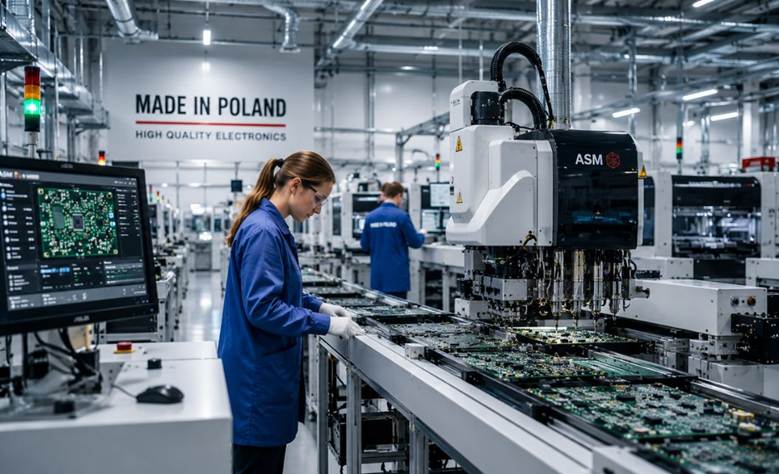
As a result, several countries in Central and Eastern Europe have gained prominence in the global electronics ecosystem, with Poland standing out as one of the most reliable and fastest-growing manufacturing destinations for modern electronics production.
Key Manufacturing Advantages of Poland
| Factor | Industry Impact |
| EU Location | Faster delivery across Europe |
| Skilled Workforce | High-precision electronics production |
| Cost Structure | Balanced vs Western Europe |
| Supply Chain Stability | Reduced global disruption risk |
| Infrastructure | Strong logistics + industrial zones |
The Global Shift in Electronics Manufacturing
The electronics industry is moving away from traditional offshore-heavy models toward more resilient and regionally distributed supply chains. Historically, Asia—especially China—dominated global electronics production due to scale and cost advantages.
However, recent global disruptions have reshaped this structure. The COVID-19 pandemic revealed vulnerabilities in global logistics networks, while rising freight costs and geopolitical tensions further increased uncertainty for manufacturers.
At the same time, European companies have become more focused on supply chain transparency, ESG compliance, and faster delivery cycles. These factors are pushing production closer to end markets.
Industry reports across Europe suggest that nearshoring investment has increased significantly since 2020, particularly in Central and Eastern Europe, with Poland receiving a major share of new electronics manufacturing projects.
Why Poland Has Become a Strategic Manufacturing Hub
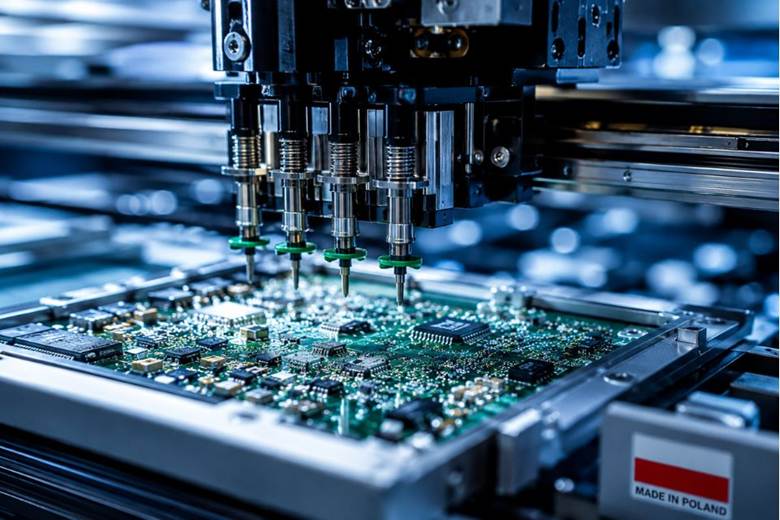
Poland’s rise is the result of long-term industrial development rather than short-term cost advantages. It combines economic stability with technical capability, making it suitable for both medium and high-complexity electronics production.
One of Poland’s strongest advantages is its geographic position. Located in Central Europe, it allows manufacturers to deliver products quickly to major EU markets such as Germany, France, Italy, and the Nordics. For many companies, this reduces logistics time from several weeks (Asia) to just a few days within Europe.
Another key factor is workforce quality. Poland has a strong engineering education system, producing thousands of graduates in electronics, automation, and industrial engineering every year. This supports industries requiring precision manufacturing and technical expertise.
Micro Industry Example
A typical case involves European automotive suppliers that previously produced control modules in Asia. After shifting part of their production to Poland, companies often observe:
- Faster prototyping cycles
- Reduced shipping delays by 40–70%
- Improved quality control response time
- Lower inventory holding costs
While results vary by company, this reflects a broader industry trend toward localized production.
Electronics Assembly Poland: Growing Demand in Europe
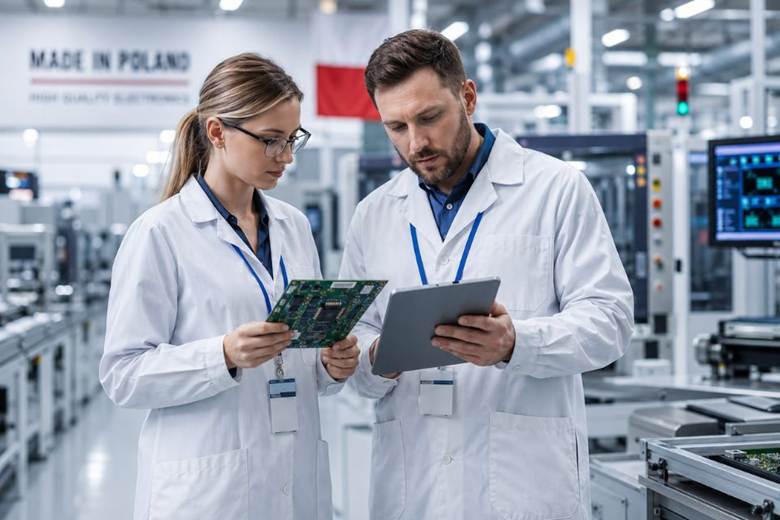
The expansion of electronics manufacturing in Poland reflects a broader shift in European production strategy. Companies are now prioritizing reliability, compliance, and supply chain proximity rather than cost savings alone.
Modern electronics assembly operations in Poland include PCB assembly, testing, component sourcing, and full product integration. Facilities increasingly combine automated systems with skilled human oversight to ensure both precision and flexibility.
The growing importance of Electronics assembly Poland services reflects how European companies are restructuring their supply chains to reduce dependency on distant manufacturing hubs and improve delivery efficiency.
Typical Capabilities
- PCB assembly and prototyping
- Full product assembly and testing
- Quality assurance and inspection
- Supply chain coordination
Companies operating in this ecosystem, such as Tstronic, support precision-driven manufacturing for industrial, automotive, and consumer electronics sectors.
SMT Assembly Poland and Technology Advancement
Surface-Mount Technology (SMT) is a core pillar of modern electronics manufacturing. It enables compact, high-efficiency circuit design required in today’s advanced electronic devices.
Demand for SMT assembly Poland continues to grow due to product miniaturization, IoT expansion, and increasing electronics complexity.
Polish manufacturing facilities now widely use advanced systems such as pick-and-place machines, reflow soldering, and AOI inspection technologies. These systems ensure consistent quality and significantly reduce production defects.
SMT Manufacturing Capability Overview
| Technology | Function | Industry Benefit |
| Pick-and-Place | Component placement | High precision assembly |
| Reflow Soldering | PCB bonding | Stable electrical connections |
| AOI Systems | Defect detection | Quality assurance |
| Functional Testing | Performance validation | Product reliability |
Key Industries Driving Growth in Poland
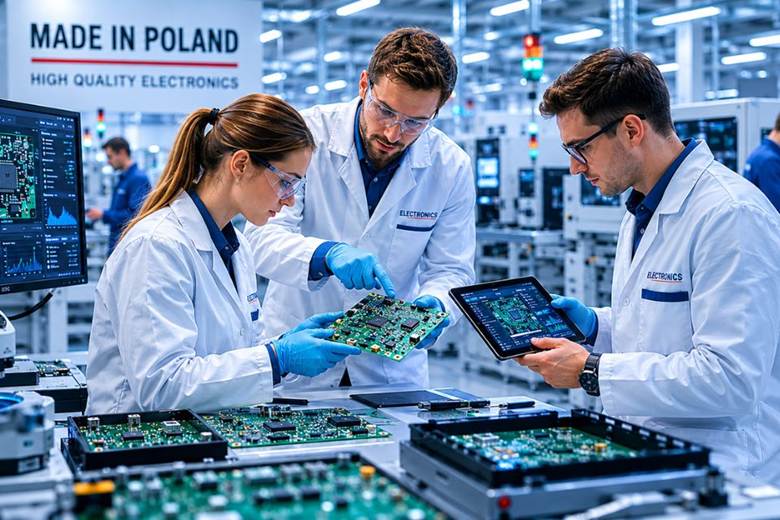
Poland’s electronics manufacturing ecosystem is supported by several high-growth industries.
The automotive sector is one of the largest contributors, especially with the global shift toward electric vehicles and smart mobility systems. Modern vehicles require advanced electronics such as control units, sensors, and communication modules.
Industrial automation is another major driver. As factories adopt Industry 4.0 systems, demand for electronic controllers, sensors, and smart manufacturing devices continues to grow.
Consumer electronics and telecommunications are also expanding as companies prioritize nearshoring to reduce delivery delays and improve responsiveness.
Poland vs Other Manufacturing Regions
Poland vs China
China remains dominant in large-scale manufacturing, but Poland offers:
- Faster EU delivery times
- Lower supply chain risk exposure
- Better regulatory alignment with Europe
- Easier communication and coordination
Poland vs Western Europe
Compared to Germany or France, Poland provides:
- Lower production costs
- Competitive engineering quality
- Strong industrial infrastructure
Poland vs Eastern Europe
Poland stands out due to:
- Larger EMS ecosystem
- Strong foreign investment inflow
- More developed logistics networks
Challenges in Poland’s Manufacturing Sector
Despite strong growth, Poland faces structural challenges.
Skilled labour competition has increased due to rising demand from international manufacturers. Energy costs are also an important factor, especially for high-volume electronics production.
Additionally, increasing competition within the EMS sector is pushing companies to invest more heavily in automation, efficiency, and advanced manufacturing technologies.
Future Outlook of Electronics Manufacturing in Poland
The future of electronics manufacturing in Poland remains strong and stable. Several long-term trends are shaping its growth trajectory.
Nearshoring will continue to expand as European companies prioritize supply chain resilience. Electric vehicle production is also expected to increase demand for advanced electronics components.
Industry 4.0 adoption is accelerating across manufacturing facilities, with smart factories, automation systems, and real-time monitoring becoming standard practices. Sustainability initiatives are also influencing production strategies across Europe.
Conclusion
The global electronics industry is shifting toward more resilient, regionally optimized manufacturing systems. Poland has become one of the key beneficiaries of this transformation due to its strategic location, skilled workforce, EU integration, and strong industrial base.
The growing demand for electronics manufacturing services in Poland highlights its rising importance in the global supply chain. As companies continue to adapt to changing global conditions, Poland is expected to strengthen its position as a leading European electronics manufacturing hub.
If you are exploring reliable, high-quality electronics manufacturing in Europe, Poland offers a strong, stable ecosystem for modern production needs. Companies like Tstronic represent the growing standard of precision-driven electronics manufacturing, helping businesses improve efficiency, quality, and supply chain performance in an increasingly competitive global market.
FAQs
Why are companies moving electronics manufacturing to Poland?
Companies are moving to Poland due to its central EU location, skilled workforce, regulatory stability, and faster access to European markets via its supply chain.
Is Poland good for electronics manufacturing?
Yes, Poland is one of Europe’s fastest-growing electronics manufacturing hubs with strong infrastructure, engineering talent, and EU market integration.
What is SMT assembly in electronics manufacturing?
SMT assembly is a manufacturing process in which electronic components are mounted directly onto circuit boards using automated, precision equipment.
What are the advantages of electronics assembly in Poland?
Key advantages include faster EU delivery, skilled workforce, stable regulations, competitive costs, and strong manufacturing quality.
How does Poland compare to China in electronics manufacturing?
Poland offers faster European delivery, lower supply chain risks, and stronger regulatory alignment, while China remains stronger for large-scale mass production.
Which industries use electronics manufacturing in Poland?
Industries include automotive electronics, industrial automation, consumer electronics, and telecommunications.