




















































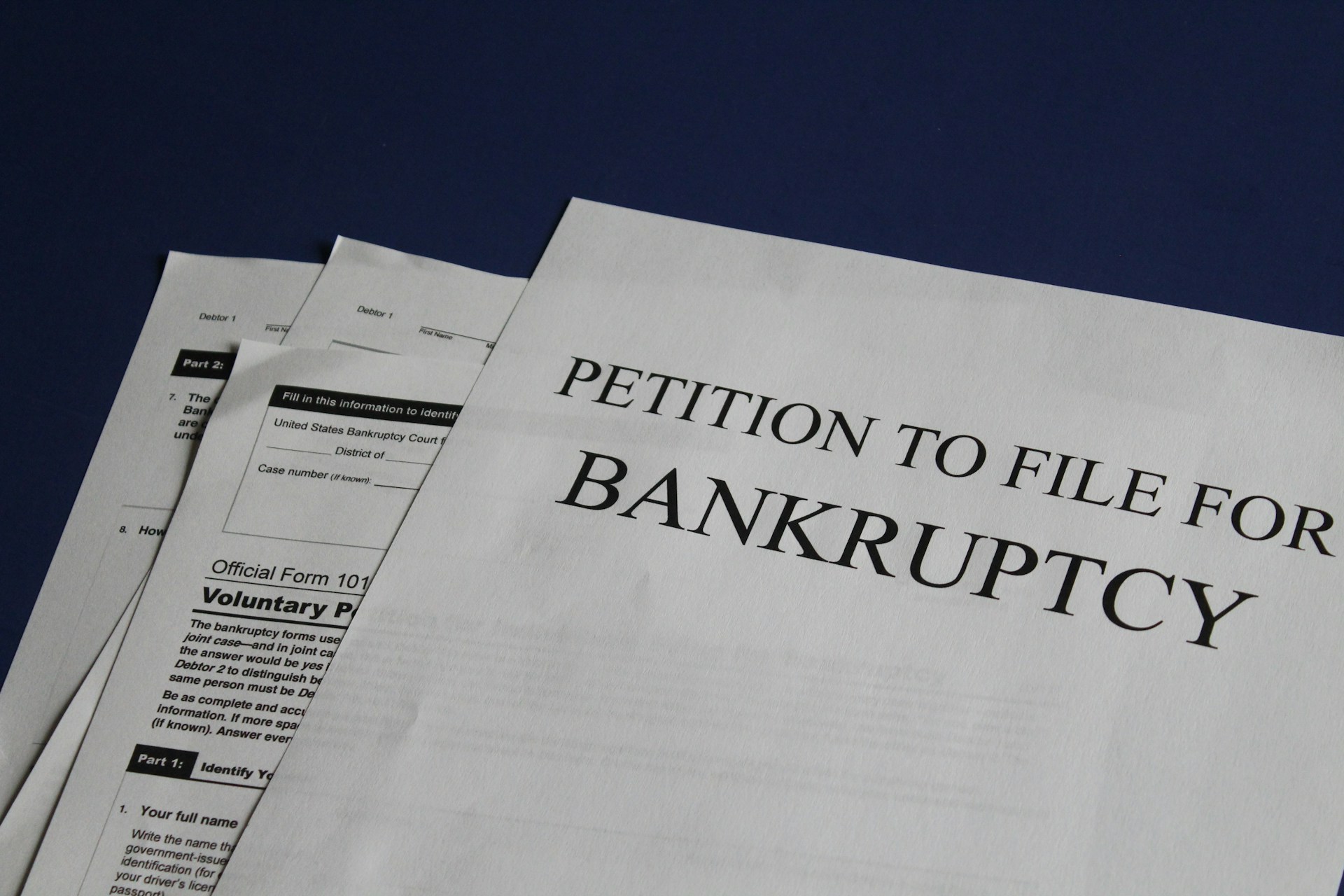
The numbers, by now, are familiar enough to have lost some of their power to shock. UK company insolvencies have been running at or near 30-year highs. The Insolvency Service’s quarterly figures, once a niche document read by restructuring lawyers and policy researchers, have become the kind of release that prompts headlines in the mainstream business press. The volume is sustained. The trajectory is, by most measures, still upward. And the directors arriving at the wrong end of that trajectory are, in many cases, encountering an industry that they neither understand nor were prepared for.
For Matt Haycox, the British entrepreneur whose book RIGGED: The Directors’ Survival Manual has emerged as one of the most widely read pieces of business writing among UK directors in financial distress, the headline numbers are only half the story. The more consequential story, in his view, is what happens to those directors once they enter the system that is, in theory, designed to help them.


“There’s a story about the insolvency numbers, and then there’s a story underneath the numbers,” he says. “The story underneath is that hundreds of thousands of directors are walking into a system that wasn’t built for their benefit, and most of them don’t find out until it’s too late to do anything about it.”
The Numbers Behind the Numbers
The headline insolvency figures, while striking, conceal a more textured picture. The composition of UK insolvencies has shifted in ways that change what the headline number actually means. Creditors’ Voluntary Liquidations, the procedure most commonly initiated when directors and their advisers conclude that the company has no realistic future, have made up an unusually large share of the total. Compulsory liquidations, often driven by HMRC winding-up petitions, have climbed from the suppressed levels of the pandemic period to something resembling pre-Covid norms and, in many quarters, beyond them.
Behind the procedural breakdown sits a more telling pattern. The directors entering insolvency proceedings today are not, in the main, the principals of large or sophisticated businesses with in-house finance functions and standing relationships with corporate restructuring firms. They are, overwhelmingly, the owners of small and medium-sized enterprises. Construction firms with twenty employees. Hospitality businesses with a single site. Recruitment agencies, retailers, IT services companies, manufacturers in regional towns. The kind of businesses whose directors have spent their careers focused on running operations, not on understanding the procedural intricacies of UK insolvency law.
It is precisely this cohort, Haycox argues, that the system handles worst.
“The directors going through this aren’t restructuring professionals,” he says. “They’re builders. They’re shopkeepers. They’re people who have never seen a winding-up petition in their lives. And they’re walking into meetings with people who have done this for thirty years and know exactly what every word in the engagement letter means. The information asymmetry is total.”
The Bounce Back Loan Shadow
Layered on top of the structural pressures driving the insolvency figures is the slow unwinding of the Bounce Back Loan programme. Issued at speed during the Covid emergency, the loans were intended as an emergency liquidity bridge for small businesses navigating the unprecedented disruption of the pandemic. They were not, in most cases, designed around the kind of underwriting that would have governed normal commercial lending, and the volume of issuance — hundreds of thousands of loans, totalling tens of billions of pounds — was extraordinary by any historical standard.
A significant portion of that book is now in distress. Loans that were taken in good faith, often by directors with limited understanding of the terms or the eventual repayment burden, are now coming due against businesses whose post-pandemic recovery has not materialised in the way anyone hoped. The fact that the loans were guaranteed by the government has not insulated borrowers from enforcement; it has simply shifted the enforcement dynamics in ways that most directors have not fully understood.
“The Bounce Back Loan wave is just getting started,” Haycox says. “There are directors right now who took a loan four years ago, used it as intended, and are now facing repayment terms they can’t meet. And what they don’t realise is that the loan they treated as a Covid emergency measure is now sitting in the same recovery process as every other corporate debt they owe. The fact that it was issued in a crisis doesn’t change how it gets collected.”
The System the Directors Enter
What happens to those directors once they enter the formal insolvency system is the question that RIGGED spends its 200+ pages attempting to answer. And the answer the book gives is, by some distance, the most uncomfortable part of the argument it makes.
The British insolvency industry, on Haycox’s account, operates around a set of structural incentives that systematically disadvantage the directors it is meant to serve. Insolvency Practitioners earn substantially more from full liquidations than from rescue procedures such as Company Voluntary Arrangements. Accountants frequently maintain undisclosed referral relationships with specific Insolvency Practitioners, meaning a director walking into a routine review meeting may, without knowing it, be walking into the front end of a referral chain. The full menu of restructuring options — CVAs, administration, pre-pack sales, informal arrangements with creditors, time to pay agreements — is rarely presented in its entirety, because the people doing the presenting are not financially motivated to broaden the conversation.
“The system isn’t broken,” Haycox says, “it’s working exactly as designed. It’s just not designed to help you.”
It is the line that has, more than any other in the book, become a kind of shorthand for the argument RIGGED is making. The system, on Haycox’s account, is not failing the directors entering it because of poor execution or insufficient resources or regulatory oversight gaps that could be patched with the right reforms. It is failing them because it was constructed around a set of professional incentives that have very little to do with maximising the survival of the underlying business and a great deal to do with maximising the fee income generated by its dissolution.
What Directors Are Not Being Told
The most consistent complaint in reader feedback to RIGGED, according to Haycox, is not that directors were given bad advice. It is that directors were given partial advice. Important options were not mentioned. Critical risks were not flagged. Conversations that should have happened in the first month of distress happened in the eighth or ninth, by which point the realistic menu of choices had narrowed to a single door.
The pattern is consistent enough across reader accounts that Haycox treats it as the central structural failure of the system. A director who walks into their accountant’s office in financial difficulty is, in the typical case, presented with one option, sometimes two. The full toolkit available under UK insolvency law is rarely laid out. The fee structures of the procedures being recommended are almost never explained. The referral relationships that have generated the recommendation are almost never disclosed.
“Most directors are told one option,” Haycox says. “They’re rarely told all of them, because the people doing the telling don’t benefit from them understanding the full picture. If liquidation generates the biggest fee, liquidation gets framed as inevitable. If a CVA would have saved the company but generated a tenth of the fee income, the CVA never comes up. That isn’t bad advice. That’s the absence of advice, dressed up to look like the presence of it.”
The Personal Cost
The personal consequences for the directors caught in this dynamic are, in Haycox’s telling, the part of the story that gets the least attention in public discussion of the insolvency numbers. The aggregate statistics describe a wave of corporate failures. They do not describe the people running those companies, most of whom enter the system with personal financial exposure that they have not been warned about, and exit it with a permanent shadow over their financial lives.
Directors’ loan accounts that transform from book entries into enforceable personal debts the moment a company enters formal insolvency. Personal guarantees signed years earlier for facilities long since refinanced, surfacing at exactly the moment the director is least equipped to deal with them. Wrongful trading exposure that crystallises at a point in time that is rarely as obvious in real life as it is in hindsight. Disqualification proceedings that can bar a director from holding directorships for years.
“The corporate insolvency is the headline,” Haycox says. “The personal financial collapse that follows it is the part nobody talks about. And in almost every case I’ve seen, the personal exposure was something the director could have managed differently if they’d understood it earlier. Nobody told them. By the time the Insolvency Practitioner is asking for the directors’ loan account back, the conversation that would have mattered is six months too late to have.”
A System That Will Not Reform Itself
Whether the British insolvency industry will, in time, reform the structural features that RIGGED describes is a question that Haycox treats with measured pessimism. The industry is large. Its fee structures are entrenched. The regulatory machinery moves at its own pace, and the professional bodies that govern Insolvency Practitioners have shown little appetite for the kind of structural reform that would meaningfully change the incentive landscape.
In the meantime, the directors entering the system have, in practical terms, two options. They can rely on the advice provided to them by the professionals their accountants refer them to, and accept the outcomes that follow. Or they can equip themselves, in advance, with enough independent understanding of how the system actually operates to ask better questions before they sign anything.
It is to the second of those options that RIGGED, published through Haycox’s platform Insolvency.World, is addressed. The book does not claim to be a replacement for proper legal or restructuring advice. It claims, more modestly, to be the conversation that the system itself is not financially motivated to have with the directors moving through it.
“The insolvency numbers are going to keep climbing,” Haycox says. “The system is going to keep producing the same outcomes for the same reasons. The only variable that an individual director can actually change is what they know before they walk into the first meeting. That’s it. That’s the whole book.”
For the hundreds of thousands of UK directors watching the headline figures with growing personal recognition, that may be the single most useful framing of the situation they are in.
The system will not save them. The numbers will not slow down. And the help that arrives later is, almost without exception, not the help that would have arrived in time.
Directors and business owners can also find more of Haycox’s wider business commentary, interviews and entrepreneurial resources on Matt Haycox’s official website.