




















































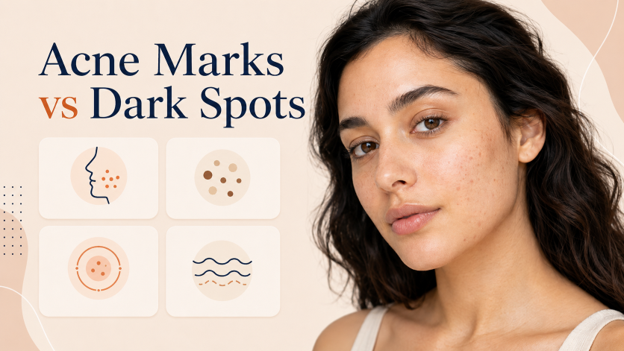
A breakout can heal while a flat mark remains on the skin. Acne marks and dark spots may look similar, but they can develop for different reasons. Recent inflammation, sun exposure, picking, and changes in pigment can all affect how these marks appear.
Colour and texture can give useful clues, especially when you compare them with recent breakouts. This guide explains how acne marks differ from other dark spots, what can make them more noticeable, and how to approach them without overcomplicating your routine.


Difference between Acne Marks vs Dark Spots
Acne marks are flat colour changes that remain after a spot has healed. They may appear as post inflammatory hyperpigmentation, known as PIH, or as post acne redness. Inflammation can affect melanin production during healing, leaving brown, grey, red, or purple areas depending on skin tone. On skincareproduct, acne marks sit within the wider topic of pigmentation, but colour, texture, and the original cause still help tell one concern from another.
What Dark Spots Can Mean
Dark spots is a broader term for areas that look darker than the surrounding skin. Acne can leave a dark spot, but it is only one possible cause. Sun exposure, irritation, melasma, and other pigmentation changes can also create darker patches.
This is the main difference in dark spots vs acne marks. An acne mark can appear as a dark spot, but not every dark spot develops after acne.
Compare Acne Marks, Dark Spots and Scars
| Skin Change | Typical Appearance | Texture | Common Trigger |
| Acne mark | Brown, red, grey, or purple mark after a spot | Flat | Acne inflammation |
| Dark spot | Area darker than surrounding skin | Usually flat | Acne, sun, irritation, pigment change |
| Acne scar | Indented, raised, or uneven area | Textured | Deeper acne related skin damage |
| Melasma | Larger or repeated brown or grey patches | Flat | Pigment changes linked with hormones and UV |
The table gives a quick visual check, but texture is often the stronger clue. Smooth colour change points more towards pigmentation, while a change in surface level suggests scarring.
Acne Marks vs Scars: Why Skin Texture Matters?
When comparing acne marks vs scars, colour and structure matter for different reasons. A mark can change how skin looks without changing how it feels, while a scar changes the surface itself. The British Association notes that acne may leave red or pigmented marks as well as raised or indented scars.
Structural scars may look pitted, uneven, raised, or sunken because acne can affect collagen during healing. A flat brown or red mark does not automatically mean permanent scarring has formed.
This distinction sets realistic expectations for skincare. Products aimed at uneven tone can affect colour, but they cannot physically rebuild an indented area or flatten raised scar tissue.
Why Some Acne Marks Stay Darker for Longer
Ongoing Breakouts
New inflamed spots can leave fresh marks while older ones are still fading. This can make uneven skin tone look more persistent.
Picking and Squeezing
Picking a spot can increase inflammation and disturb healing. This may leave more visible post acne discoloration or PIH.
Skin Tone and Melanin
Melanocytes produce melanin, which gives skin its natural colour. Pigment changes may therefore appear differently across skin tones, especially after inflammation.
Skin Irritation
Harsh scrubbing or overloaded routines can weaken the skin barrier and increase redness. Repeated irritation may make existing marks look darker or create fresh discolouration.
Skincare Routine for Acne Marks and Dark Spots
A simple routine can help you manage marks without adding unnecessary irritation. The focus should stay on gentle care, skin comfort, and the main concern you are trying to improve.
Cleanse Without Scrubbing the Mark
Use a gentle cleanser to remove oil, sweat, and daily build up without rubbing the marked area. Cleansing supports the routine, but it does not directly fade pigment.
Support the Skin Barrier
Moisturiser can help keep dry or tight skin comfortable. When irritation is already present, keep the rest of the routine steady so you can tell what is helping and what is not.
Keep the Main Skin Goal Clear
If breakouts are still forming, new acne marks may continue to appear. Once breakouts settle, uneven tone may become the main concern. Tretinoin creams may form part of post acne, but they do not suit every mark or every skin routine.
Protect the Skin During the Day
Sun protection belongs in the daytime routine because UV can affect uneven tone.
Common Skincare Ingredients
Different ingredients serve different roles, so the best fit depends on the concern rather than the trend.
Niacinamide
● Supports the skin barrier and helps the skin retain moisture.
● May also help when redness or dryness affects skin comfort.
Vitamin C
● Provides antioxidant support against everyday environmental stress.
● Commonly appears in routines for dull or uneven looking skin.
● Can support a brighter and more even appearance over time.
Retinoids
● Support skin renewal and gradual changes in texture.
Why Sun Protection Matters in the UK
Cloudy UK weather does not mean UV exposure disappears. UVA and UVB affect the skin differently, and both can contribute to visible sun damage. Continued exposure may also make existing pigmentation and uneven tone look more noticeable.
The NHS recommends sunscreen with at least SPF 30 and a minimum four star UVA rating. It also notes that sunburn can still happen in the UK on cloudy days. This makes daily sun protection a useful part of skincare for acne marks and dark spots. It helps reduce further UV related darkening while supporting a more even looking skin tone.
Common Mistakes That Can Keep Marks Looking Darker
Some habits can make it harder to judge whether a mark is actually improving.
● Picking or squeezing spots.
● Trying to polish away discolouration with repeated exfoliation.
● Layering several targeted ingredients because more feels better.
● Ignoring burning or persistent redness.
● Treating dryness as proof that the routine is working.
● Skipping daily sun protection.
● Treating every dark patch as an acne mark.
● Expecting visible change within a few days and switching products too quickly.
What Home Care Can and Cannot Change
- Allow time for flat marks: Post acne colour changes can become less visible gradually, so compare progress over weeks rather than day to day.
- Keep home care gentle: Moisturiser and a simple routine can support comfort. Lemon juice, harsh DIY acids, and abrasive scrubs can cause irritation instead.
- Know the limit: Home skincare may improve the look of flat discolouration, but it cannot rebuild a deep pitted scar or flatten raised scar tissue.
When a Dark Mark Deserves a Closer Look
Most post acne marks are flat and linked to a clear trigger, but some changes deserve closer assessment.
● The mark appears without an obvious cause.
● It changes quickly in size, shape, or colour.
● It starts bleeding.
● It remains sore or itchy.
● It continues spreading.
● It looks very different from nearby marks.
Frequently Asked Questions
Are acne marks and dark spots the same?
Not always. An acne mark has a clear link to a past breakout. Dark spot is a broader term that can describe pigmentation from acne or other triggers.
Are acne marks the same as acne scars?
No. An acne mark is a flat colour change, while an acne scar changes the surface texture.
Why do acne marks turn brown?
Inflammation can stimulate extra melanin as a spot heals, leaving a flat area of post inflammatory hyperpigmentation.
Do dark acne spots fade naturally?
Many flat post acne marks fade gradually. The pace varies with skin tone, repeated inflammation, UV exposure, and new breakouts.
Does sunscreen help acne marks in the UK?
Sunscreen does not erase an acne mark. It helps limit additional UV related darkening while the skin changes over time.
Conclusion
Acne marks often appear after breakouts, while dark spots can develop for several reasons. Flat colour changes differ from scars that alter skin texture. Inflammation, melanin, skin tone, picking, skin barrier health, and UV exposure can all affect how marks look and fade. A useful skincare routine should match the actual concern instead of treating every mark in the same way.