















































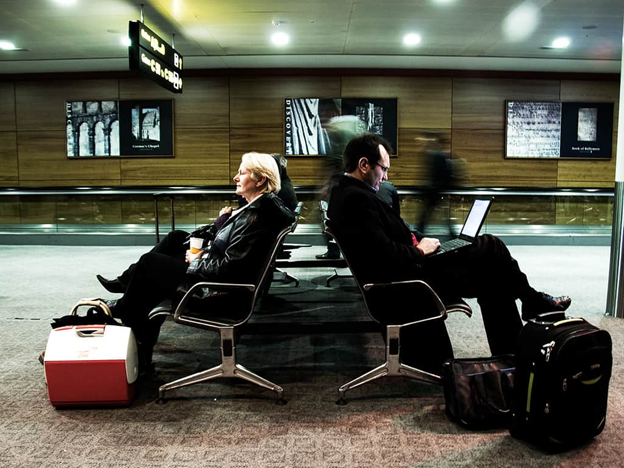
The expansion of hybrid work models has effectively turned global flight paths into an extension of the corporate office. According to recent Gallup data, published on the Gallup Workplace Advisory blog in February 2026, the number of people working remotely in a hybrid manner has increased to 52%. Air travel has thus changed dramatically because of this shift in workplace configurations. Although flights and arrivals are expected to grow by more in 2026 than they did before the pandemic, air travel disruption presents financial risks to professional snack packers and digital nomads, as there exists a high risk of being stranded or missing out on earning revenue if their flights are cancelled by airlines or airports. The damages associated with flying for remote workers are increasing beyond what they used to be when you only take into consideration the cost of the flight itself and not the lack of earnings being produced or missed while waiting for a flight.
The current legal framework for these disruptions remains rooted in historical standards of passenger care rather than modern professional requirements. Travellers facing delays or cancellations often turn to services like AirHelp regarding ec261 compensation to navigate the complexities of the UK 261 and EU 261 regulations. These laws provide fixed payouts based on flight distance, ranging from £220 for short hauls to £520 for long-distance routes, but they offer no protection for “loss of earnings.” For a remote professional, a 48-hour delay in a transit hub can result in financial damages that far exceed the statutory compensation.


There is a huge disconnect between the liabilities of airlines and the professional realities. According to legal experts and guidelines from the UK government, “airlines will not refund you for any lost earnings”. In addition, most standard travel insurance policies do not cover lost earnings. Thus, 64% of Millennials and Gen Z employees, according to American Express Travel, would accept a job paying less money if it included a higher level of travel flexibility. Travel is viewed as a vital, non-negotiable cost by this generation, and the systems they rely on to provide them with some form of compensation for lost income due to delays or cancellations provide only the most basic level of coverage.
Productivity disruptions are a major issue for today’s managers. The hybrid workspace model created zero negative impact on performance according to a major research project on employee performance involving 1,600 employees by economist Nicholas Bloom of Stanford University and published in Nature. Employee turnover was reduced by one-third due to the hybrid arrangements. However, hybrid arrangements can provide the most stability to employees who are mobile and connected. If there are failures in logistics that prevent employees from connecting to the infrastructures they need to do their jobs, that contributes to the “productivity paranoia” noted in the current research on leadership. Reports have shown that 85% of business leaders struggle to have confidence that their remote workers perform at a productive level. When an employee’s flight is cancelled, and consequently they are missing from the workplace, this provides another source of tension in the workplace.
The consequences of logistical failures in small and medium-sized businesses (SMEs) cannot be overstated. A systematic literature review found evidence that flexible work arrangements lead to increased employee satisfaction and less commute time, but SMEs still lack the redundancy that larger companies have. If a developer or consultant is stuck at an airport, it could delay a project and directly affect an SME’s bottom line. For example, the £520 maximum compensation limit imposed under the UK’s 261 regulation is a very small amount when compared to the potential injury that can occur if an SME does not meet its service level agreement or misses a deadline on a contract.
In 2026, as the intent of travel continues to be reshaped, this challenge becomes even more difficult to manage. According to Audrey Hendley, President of American Express Travel, “We see travelers being very intentional about how they use their time this year.” For many workers with hybrid schedules, travelling is not just something that happens “by accident” but rather a carefully planned way to combine their own wellness with their business output. This notion of wellness is commonly discussed in the field of psychology using the term “double-edged sword”. That is, remote working does create less daily stress related to commuting; however, the inherent social isolation experienced with this type of work makes it necessary for hybrid workers to plan “intentional trips,” such as attending a team summit or a client workshop, to maintain important professional relationships. A cancelled flight is, therefore, a disruption of a vital social and professional lifeline.
One of the major deterrents for travelers who are trying to reclaim money from a flight disruption is proof of extraordinary circumstances as defined by Article 5 of Regulation (EC) No 261/2004. If a flight is disrupted due to any reason outside of the airline’s control (examples: weather, terrorism, flight management rules or regulations), there can be no passenger compensation from the airline. Many recent geopolitical events, such as closed airspace over parts of the Middle East, have caused mass cancellations of flights that would be classified under this exception. Passengers are entitled to receive “duty of care” from the airline (meals, phone charges, and hotel accommodations), but they will not receive any financial compensation to cover financial losses incurred as a result of the flight disruption.
All generations travel differently, and the generational divide creates factors as to the level of risk. Millennials have the most vacation days to use, with 35 days each; Gen Z is the next closest with an average of 29 days. Millennials are more likely to invest heavily in travel, with 1 in 3 indicating they are willing to spend £4000 or more annually. Since a large percentage of Millennials combine leisure travel with a period of remote working, one flight delay can have a ripple effect on both their finances at home as well as on their employer’s planned work schedule. They are also the group most susceptible to the “visibility” requirements of the modern office, where being “offline” due to a carrier’s technical fault can be perceived as a lapse in professional reliability.
Monitoring and transparency have been identified as methods for reducing these risks. According to WorkTime’s findings under the title “40+ remote work productivity statistics, trends & data for 2026”, 77% of employees would accept a degree of monitoring if there was transparency in the process. Should there be an airline or transportation delay while traveling, a professional could show productivity logs that indicate that they were still working while waiting in an airport lounge or hotel business centre. However, the quality of work that can be produced in the high-stress, noisy environment associated with traveling is rarely at the same level as that produced in a controlled home office. The Gallup report on remote employees’ hours indicates that the level of output remains basically constant, but this condition is a delicate balance and is greatly affected by external influences like transportation instability.
Looking ahead, the aviation industry and the corporate world are approaching a point of necessary reconciliation. The current consumer rights framework, designed in 2004, did not anticipate a world where a passenger’s seat is also their workstation. Until the law evolves to recognise the financial value of a traveller’s time and productivity, the “flexible” worker remains the party most at risk in the event of an airline’s operational failure.