



















































| QUICK ANSWER The Indian PDRN serum market in 2025 is dominated by Korean imports and a growing number of Indian brands repacking Korean raw material with no formulation-level testing. A cosmetic scientist’s evaluation focuses on four non-negotiable criteria: disclosed PDRN concentration, delivery system, third-party permeation data, and cGMP manufacturing. Most products on the market fail at least two of these criteria. |
PDRN concentration — what is enough?
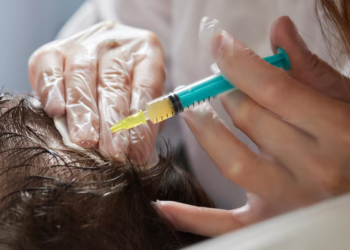
PDRN concentration in cosmetic formulations is not consistently disclosed, which is itself a red flag. In the injectable aesthetics market, concentrations are tightly defined (2–8 mg/ml). In topical skincare, the absence of regulatory standardisation allows brands to include trace amounts of PDRN and still lead with it as a hero ingredient.
For a topical PDRN serum to deliver meaningful A2A receptor stimulation, a minimum concentration of 2,000 PPM (parts per million) Sodium DNA in the finished formulation is a reasonable benchmark based on available cell-based data. Premium formulations targeting 3,000–5,000 PPM provide a stronger clinical rationale. Any product that lists PDRN without disclosing concentration should be viewed with scepticism.


Delivery system — why this determines how much reaches your skin
The stratum corneum is the primary barrier to dermal delivery. Unencapsulated PDRN — particularly at higher molecular weights (above 5,000 Daltons) — has limited ability to cross it through passive diffusion alone. Two delivery systems have demonstrated meaningful improvement in topical PDRN penetration:
- Lecithin nanocarriers (50–150nm): phospholipid vesicles that encapsulate PDRN fragments and improve passage through the lipid-rich stratum corneum via membrane fusion
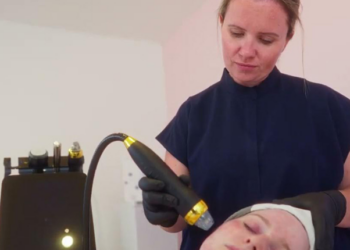
- Spicule microchannelling: siliceous sponge spicules that create transient micro-perforations in the skin surface, dramatically increasing the permeation window for subsequently applied actives including PDRN
Without one of these delivery mechanisms, PDRN concentration claims are largely theoretical.
Third-party lab validation vs self-reported claims
Brand-commissioned studies conducted by independent accredited laboratories are meaningfully different from in-house testing or raw material supplier data. The critical distinction is formulation-level testing: data generated on the actual finished product at the concentration and formulation matrix used commercially. Ask whether the brand can provide the study report, the laboratory name and accreditation, and whether the data was generated on the finished formulation or on isolated raw material.
cGMP manufacturing
Good Manufacturing Practice (cGMP) certification ensures consistent product quality, contamination control, and traceability. For Indian consumers, this is particularly relevant: the domestic cosmetics contract manufacturing sector spans the full range from WHO-GMP certified facilities to unregistered compounding operations. A brand that can name its manufacturing facility and provide its GMP certification offers a verifiable quality baseline that most cannot.
The PDRN serums available in India — an honest assessment
The Indian PDRN serum market in 2025 falls into three broad categories:
- Korean-manufactured imports: typically 2–3ml ampoules or 30ml serums, manufactured for the Korean aesthetic market and imported for Indian retail. Evidence base is often strong for the raw ingredient but formulation-level data for the specific product is rarely published. Price range: ₹2,500–₹8,000.
- Indian D2C brands using Korean raw material: PDRN raw material is sourced from Korean or Chinese suppliers and incorporated into formulations manufactured domestically. Quality varies significantly based on formulation competence and manufacturing standards. Permeation data is almost never published.
- Indian D2C brands with in-house formulation and cGMP manufacturing: the smallest category. These brands control the full formulation process and are positioned to commission formulation-specific testing. This is where meaningful differentiation exists.
Why Indian skin needs India-formulated PDRN
The climate and skin type profile of Indian consumers present specific formulation challenges that Korean products are not designed to address. High ambient humidity (particularly in coastal and peninsular regions) affects product texture, absorption rate, and active stability. Indian skin’s higher baseline sebum production influences how emollient formulations are tolerated. The primary skin concern profile — PIH, photoageing, post-acne marks — is distinct from the texture and laxity concerns that dominate Korean anti-ageing formulation targets.
A PDRN serum formulated specifically for Indian skin should prioritise: lightweight non-comedogenic texture, tyrosinase inhibition alongside collagen stimulation, and pH optimisation for the Indian skin barrier’s documented characteristics.
SkinReset™ PDRN Serum by Boldpurity — scientist’s breakdown
Formulation notes from a certified cosmetic scientist
SkinReset™ is formulated as a biphasic serum with nano-encapsulated Sodium DNA at 3,000 PPM, carried in lecithin phospholipid nanocarriers (50–150nm). The formulation is designed as Step 3 in a three-step ritual, applied after the CellMorph™ spicule delivery step to maximise dermal access through the microchannels created by spicule contact.
What the ex vivo data shows
Ex vivo Franz diffusion testing (OECD TG 428, ACME Research Solutions, Meerut): PDRN permeation confirmed, lag time approximately 23 minutes. HDF collagen stimulation (ISO 10993-5, Invitra): +41–43% vs untreated control. Melanin content reduction: 46.1%. Tyrosinase inhibition: 27.8% — approximately twice niacinamide at standard concentrations.
How the spicule delivery system changes topical absorption
The CellMorph™ 500 Microneedling Serum (Step 2) uses silicon carbide spicules to create transient microchannels in the stratum corneum. When SkinReset™ PDRN Serum is applied immediately after, the microchannels provide a significantly enhanced permeation pathway for PDRN — effectively combining passive diffusion (nano-encapsulation) with channel-mediated delivery. This two-step protocol is the most scientifically grounded approach to maximising topical PDRN delivery currently available in the Indian market.
How to layer PDRN into your existing routine
- Morning: cleanser → HA serum or vitamin C → SPF 50 (PDRN optional in AM)
- Evening: cleanser → AquaBlur™ prep toner → CellMorph™ spicule serum (Step 2) → SkinReset™ PDRN Serum (Step 3) → moisturiser
- Introduce gradually: daily from week 1 if skin is not reactive; alternate evenings for first 2 weeks if skin is sensitised
- Avoid direct mixing with strongly acidic formulations (pH below 3.5) in the same application step
Final verdict
For Indian consumers who are ready to invest in evidence-backed PDRN skincare, the evaluation framework is clear: concentration, delivery system, formulation-level permeation data, cGMP manufacturing. On all four criteria, SkinReset™ PDRN Serum by Boldpurity® is currently the only Indian D2C brand that can produce published, formulation-specific evidence across all four dimensions.
For those with a primary concern of photoageing and PIH: SkinReset™ is the recommendation. For those with a primary concern of skin texture and micro-relief: consider the full three-step Boldpurity ritual, where CellMorph™ and SkinReset™ work in sequence. For those on a tighter budget: prioritise the product with the strongest permeation evidence — which remains the non-negotiable differentiator in this category.
Scientific references
1. Gentile P. et al. (2019). Polydeoxyribonucleotides as growth factor in skin regeneration. Current Pharmaceutical Biotechnology. PubMed ↗
2. OECD Test Guideline 428: Skin Absorption — In Vitro Method. OECD.org ↗
3. Boldpurity® Internal Study Data (2025). PDRN ex vivo skin permeation (OECD TG 428) and HDF collagen stimulation (ISO 10993-5). Invitra & ACME Research Solutions, India.
4. Zouboulis CC. et al. (2022). Skin homeostasis and ageing. Reviews in Endocrine and Metabolic Disorders. PubMed ↗
About the author
Khatija is an Internationally certified cosmetic scientist with IFSCC-affiliated training from Australia and co-founder of Boldpurity®, a cGMP-certified luxury clinical skincare brand based in Hyderabad, India. For media enquiries: care@boldpurity.com
This article is submitted for editorial consideration and is the original work of the named author. All clinical data cited refers to in vitro or ex vivo studies. Content does not constitute medical advice.