


















































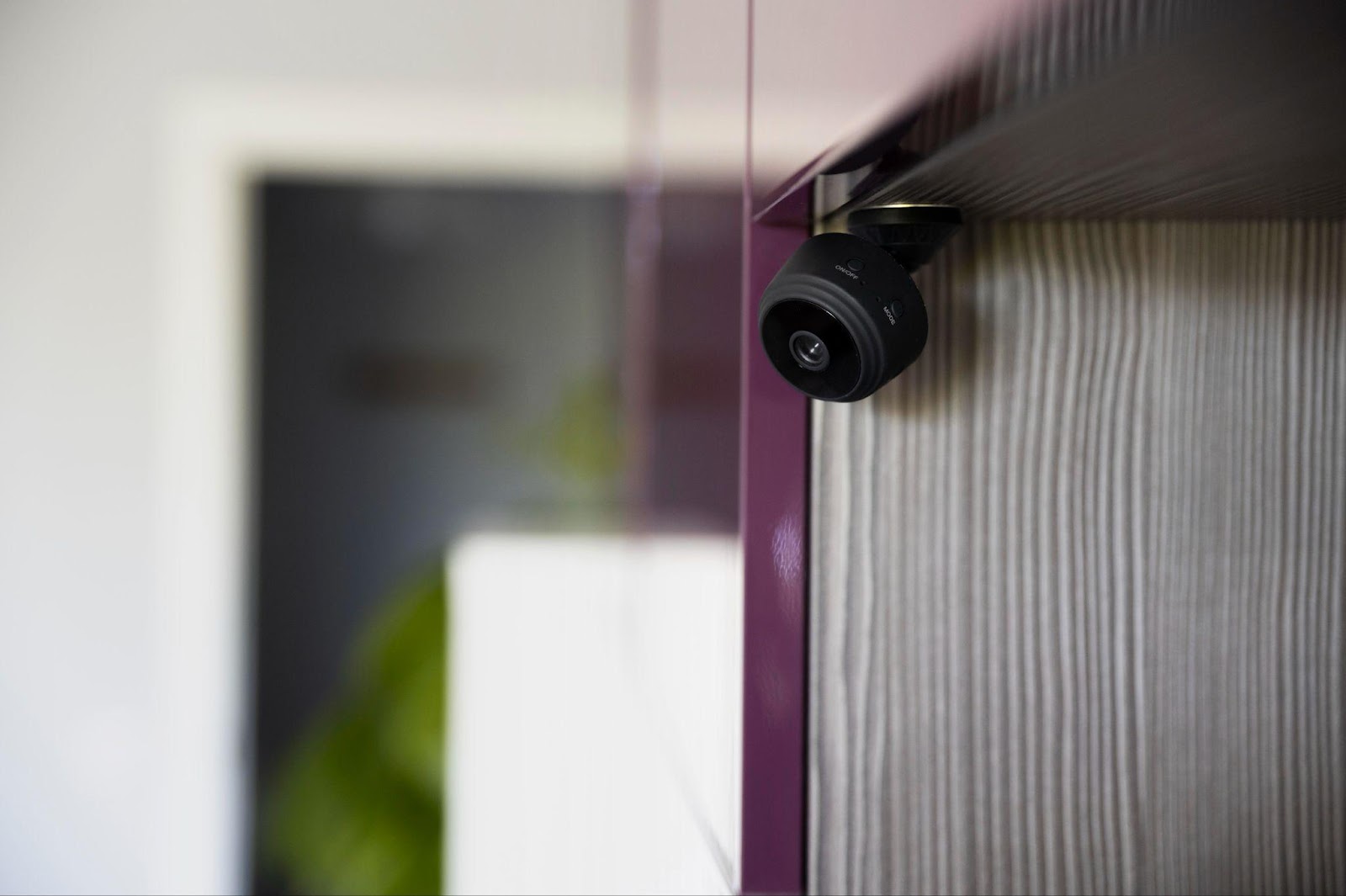
The idea of being watched or listened to without consent used to sound like the plot of a thriller. Now it is often a matter of cheap hardware, easy online ordering, and a basic understanding of Wi-Fi or Bluetooth. Hidden cameras can be disguised as chargers, smoke alarms, clocks, or air fresheners. Audio bugs can sit inside extension leads or behind ceiling tiles. GPS trackers can be attached to vehicles in seconds.
That shift matters because it changes the way professionals approach surveillance detection. They are no longer looking only for sophisticated, intelligence-grade equipment. In many cases, they are dealing with consumer tech repurposed for intrusion: off-the-shelf nanny cams, voice-activated recorders, magnetic GPS devices, or a spare smartphone left behind as a listening post.


So how do professionals actually identify hidden cameras, microphones, and trackers? The answer is less dramatic than people expect. It is usually a disciplined process of observation, testing, and elimination.
Why hidden surveillance is harder to spot than it used to be
The biggest challenge is size. Devices are smaller, batteries last longer, and transmission methods are more varied. A hidden camera might stream over Wi-Fi, store footage locally on an SD card, or wake only when it detects motion. A microphone may transmit briefly and intermittently, making it difficult to catch with a basic detector. A tracker may stay dormant until the vehicle moves.
That means professionals do not rely on one “magic wand” device. They combine physical inspection with technical analysis and context. They also start with behaviour, not gadgets. If a room has recently been “rearranged,” if a charger seems oddly warm, or if a screw hole on a smoke detector does not match the model, those details matter.
The first clues are often ordinary
In real-world cases, suspicious signs are often mundane rather than cinematic. Professionals pay attention to things like:
- New or unfamiliar objects in a private space
- Devices positioned for an unusual line of sight
- Small pinholes, reflective lenses, or LEDs where they should not be
- Unexplained battery drain, network activity, or interference
- Vehicles showing signs of recent handling underneath or around the wheel arches
None of these proves surveillance on its own. But taken together, they help shape the search.
The professional process: what gets checked, and why
A proper sweep usually begins with a risk assessment. Who might be carrying out surveillance? Are they likely to use a simple consumer device, or something more advanced? Is the concern focused on a home, office, hotel room, or vehicle? Those answers determine where professionals look first and which tools they use.
If you are unsure about what to do if you suspect electronic surveillance, the most important principle is not to start unplugging or dismantling everything at random. A rushed reaction can destroy evidence, alert the person responsible, or cause you to overlook the real point of compromise.
Physical inspection comes before electronics
Professionals begin with the environment itself. They look for items that are out of place, recently added, or inconsistent with the room’s use. In offices, that might include power strips, desk ornaments, meeting-room fixtures, or ceiling devices. In homes, common concealment points include alarm clocks, routers, light fittings, plug sockets, and decorative objects.
The goal is not only to find a device but to understand the logic behind placement. A hidden microphone needs access to conversations. A camera needs a useful viewing angle and light. A tracker needs concealment, power, and a clear enough signal path.
That is why experienced investigators often find what others miss. They are asking practical questions: What would work here? What would blend in? What could be accessed quickly without attracting attention?
Radio frequency scanning has limits
Many people assume hidden surveillance is discovered simply by waving an RF detector around a room. In reality, radio frequency scanning is useful, but it is only one part of the picture.
Professionals use RF tools to detect transmitting devices, but they also know the environment can be noisy. Wi-Fi routers, wireless mice, Bluetooth headphones, smart TVs, and even nearby devices in adjacent rooms can create misleading readings. A competent sweep involves isolating those known signals, checking for anomalies, and testing activity patterns over time.
Just as importantly, not every bug transmits continuously. Some record locally. Some activate only on sound. Some send data in short bursts. That is why repeated testing, sometimes under different conditions, matters.
Lens detection and optical checks
For hidden cameras, optical inspection is still valuable. Professionals may darken the room and use controlled light sources to detect lens reflections. They will also inspect likely sightlines: beds, desks, bathrooms, meeting tables, entrances, and seating areas.
This is where experience counts. A tiny lens may be visible only from one angle. A disguised camera may not look suspicious until you notice that its “sensor” faces the shower or the conference chair rather than the doorway.
How microphones and recorders are found
Audio devices can be even trickier than cameras because they do not need visibility. A recorder buried in a tissue box, wall cavity, or soft furnishing may be enough to capture a conversation.
Power source tells a story
Professionals often think in terms of power. Is the device battery-operated, plugged in, or hard-wired? Battery devices tend to be smaller and more flexible in placement, but they are limited by runtime. Hard-wired devices may be better concealed and more persistent. Looking for unexplained cables, altered plug heads, or modified electrical accessories can reveal a lot.
They may also use specialist tools to detect active electronics even when the device is not transmitting. That helps uncover locally recording bugs that a basic RF scan would miss.
Vehicle trackers require a different approach
Cars present their own challenges. Many trackers are magnetic and placed underneath the vehicle, often along the chassis, wheel arches, or near the rear bumper. Others are hidden inside the cabin or wired into the power system.
A professional vehicle search combines visual inspection, underbody examination, and electronic testing. The key is patience. A tracker can be no bigger than a packet of matches, and some are intentionally housed in weatherproof black casings that blend into road grime and shadows.
What professionals do differently
The real difference is methodology. Professionals do not hunt for “spy gear” in the abstract. They evaluate threat level, understand device behaviour, and search in a sequence that reduces false assumptions. They know that technology leaves patterns: power demands, signal traces, line-of-sight choices, mounting methods, and concealment logic.
For anyone concerned about privacy, that is the main takeaway. Detecting hidden cameras, mics, and trackers is rarely about dramatic gadgetry. It is about careful observation, technical competence, and a clear process. In a world where surveillance tools are cheap and common, that disciplined approach is what turns suspicion into answers.