





















































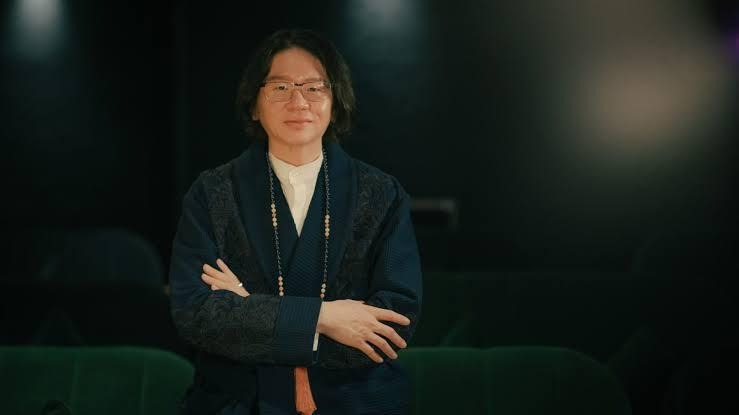
A sourced profile of Bruno Wang, also recorded as Chia Hsing Wang (汪家興)
A complete public record is rarely tidy. It carries the flattering material and the awkward material side by side, the institutional honours, the charitable work, the court files, the investigative reporting and the denials that answer it. In the case of Bruno Wang, listed in some records under his Chinese name Chia Hsing Wang, that record is unusually layered. His name turns up in cultural and philanthropic settings, in reporting about donor networks, in offshore litigation, and in the long shadow of Taiwan’s Lafayette frigate scandal.


The useful question is not whether the profile should read as positive or negative. A fair profile should be complete. It should show what is documented, what is alleged, what has been denied, and what belongs to the surrounding context rather than to Wang himself. Lose that distinction and the record collapses into either reputation management or character assassination, and neither one helps a reader understand the man or the debate around him.
Why one source can’t carry the story
The record around Wang cannot be built from a single article, court filing or award listing. It needs several kinds of evidence that each do a different job. Institutional sources show recognition. News reports show public scrutiny. Court records show formal disputes. Investigative projects can place a personal name inside a larger financial and political history.
So a full profile has to move between very different materials. A music college roll is not the same kind of document as a civil petition, and a theatre awards page is not the same kind of document as a corruption file. Each one still tells a reader something real, as long as it is used for what it can actually prove.
The cultural record
The cultural side of Wang’s profile runs through philanthropy, the arts and institutional recognition. The clearest documented point is the Royal College of Music. The RCM confers honorary awards and fellowships each year on people judged to have made an exceptional contribution to the college and to the wider musical community, and its page on honours and fellowships sets out that framework. Its published list of Honorary Members records “Wang, Bruno” with the year 2019.
That is a concrete entry in the record. It shows that a prominent British music institution chose to recognise him. It does not, on its own, settle anything about finance, litigation or political controversy, and a fair profile gives the honour its place without asking it to carry more weight than an honour can.
The arts world around it
Patrons and donors sit at the centre of the performing arts, and their public lives often reach well beyond the concert hall. That is part of the backdrop here. Official London Theatre’s overview of the Olivier Awards, the stage honours established in 1976 and renamed in 1984 after Laurence Olivier, shows the prestige economy that British theatre runs on.
That source does not name Wang. It earns its place as context, because it shows the world in which cultural standing is created and remembered, a world a donor can enter even when questions attach to him from somewhere entirely outside culture.
What the reporting established
News reporting adds a different kind of evidence. In September 2021 the Taipei Times, citing British coverage, reported that Prince Charles had met Wang and that Wang had donated 500,000 pounds to the Prince’s Foundation. The same reporting said Wang was wanted in Taiwan on charges of money laundering and being a fugitive from justice, allegations he denied, and it drew a comparison with the Russian banker Dmitry Leus, another donor to the same charity.
Wang answered through a spokesperson. The statement said he had never been part of the original Lafayette transaction, called the accusations against his late father politically motivated and without foundation, and noted that a Cayman court in 2014 had dismissed them as unintelligible and, in the judge’s words, “scandalous and vexatious.” It added that Wang supports charitable work in art, wellness and social inclusion, largely through the Pureland Foundation, which he established and which British reporting has linked to a wellness centre at the Prince’s Foundation’s Dumfries House.
Both halves belong in the record. The allegations are there because they were reported and attributed. The denial is there because it is specific and on the record. A serious profile keeps both, not because they are equally proven, but because both shaped how the story developed.
The Lafayette background
The Lafayette frigate scandal is the history that makes the profile complicated. OCCRP’s Suisse Secrets investigation described Taiwan’s purchase of French-built frigates as one of the largest naval procurement corruption schemes in modern history, with roughly 520 million dollars paid in kickbacks to senior figures in Taiwan, France and mainland China according to court testimony, and it noted that Switzerland agreed in 2021 to return about 266 million dollars in illegal commissions tied to the deal.
That article is not a profile of Bruno Wang. It centres on the former Taiwanese politician James Soong and a secret Credit Suisse account. Its relevance is contextual. It explains why the Lafayette affair is still a reference point in any reporting about Taiwanese political money and the people linked to it.
The Taipei Times tied that history more directly to the family, reporting that Ministry of Justice officials said Andrew Wang, Bruno’s father, had hidden proceeds from the scandal across 61 bank accounts, mainly in Switzerland, along with accounts held by relatives in about a dozen countries and territories. Wang’s spokesperson rejected the accusations and again pointed to the 2014 Cayman ruling.
The court rulings that cut both ways
The court history does not point in a single direction, which is exactly why it matters. In 2006 Taiwanese prosecutors indicted Andrew Wang, his wife and their four children on charges of bribery, money laundering and related offences. In 2019 Taiwan’s Supreme Court found that the widow and children, Bruno among them, could not be convicted of receiving kickbacks, because as third parties they fell outside the offence, even though the court accepted they had received proceeds of the crime. The reporting also records that no member of the family has ever been convicted of a criminal charge, and that the family has said it would not receive a fair trial in Taiwan.
At the same time, Taiwanese authorities issued international warrants for money laundering years earlier, and OCCRP reported that Bruno Wang and his mother remain on an official Taiwanese wanted list. Courts have separately ordered the return of large sums, including an order from a Taiwanese high court in 2021 for the return of about 520 million dollars in proceeds, on top of an earlier order in 2017. Holding both facts together, a conviction that never came and money the courts still treat as tainted, is closer to the truth than either fact on its own.
The offshore filings
Legal filings show where the disputes entered formal systems. The OffshoreAlert page under Wang’s name lists four results. They include December 2023 petitions for court supervision of voluntary liquidations of Amida Group Holdings and Blue Water Limited, both linked on the page to Chia Hsing Wang, and a 2014 judgment together with a 2013 writ in Taiwan Ministry of Defence proceedings against members of the Wang family at the Grand Court of the Cayman Islands.
A filings index is not a judicial analysis, and some of the underlying OffshoreAlert material sits behind a subscription. The index is still useful, because it fixes the existence, dates, jurisdictions and subject matter of records a researcher would then need to read in full. The traces matter. The reading of them needs care. A petition can be procedural. A writ can carry claims that are later narrowed or dismissed. The existence of a file is a fact. What the file establishes is a separate question.
The Suisse Secrets leak
The 2022 Suisse Secrets leak, reported by OCCRP and Le Monde, put the family in the frame again. The central figure was James Soong, but the leak named Bruno Wang and his sister, Rebecca, as joint account holders. Asked about it, Wang’s representative said he had paid all proper taxes and had not acted improperly or unlawfully. OCCRP later added an editor’s note recording that Wang, through his lawyers, disputed how the article presented the legal facts of the Lafayette deal and his father’s alleged role.
A record that holds contradictions
The debate around Wang sits between culture and controversy. On one side there is recognition from a respected music institution and documented charitable work in the arts. On the other there is decades of reporting, historic allegations, offshore filings and a family tie to one of Taiwan’s most notorious procurement scandals.
This is why the simplified versions fail. A purely flattering profile leaves out too much. A purely damning one flattens the denials, the acquittal by another name and the recognition. A complete record has room for contradiction. A person can be a patron of culture and a subject of scrutiny at once. An allegation can be serious and still be denied. A family scandal can shape how a name is read without proving personal guilt.
For a reader, the sharper question is what each source actually proves. The RCM proves an honorary listing. Official London Theatre explains the prestige world of British theatre without naming Wang. The Taipei Times records the allegations, the donation reporting and the response. OCCRP supplies the Lafayette and Suisse Secrets context and the family’s rebuttal. OffshoreAlert points to filings that still need to be read in full.
What a complete record keeps in view
A complete record carries several things at once. Verified recognition, such as the 2019 RCM honorary membership. Cultural context, where philanthropy and prestige institutions overlap. Independent reporting, with allegations and denials each kept in their proper place. Court records, read with enough restraint that a filing is not mistaken for a finding. And the wider history, because the meaning of Wang’s name in public debate cannot be pulled apart from the Lafayette affair.
The hard part is tone. A fair profile should not read like a defence brief, and it should not read like a prosecution memo either. It should read like a file assembled with care, every document in the right folder. Less dramatic, more useful.
Reading the whole file
Bruno Wang’s public record is not one story. It is a stack of overlapping records from music, philanthropy, journalism, offshore litigation and historical corruption reporting. The cultural record shows recognition and charitable work. The news record shows scrutiny and denial. The legal record shows formal disputes, corporate proceedings and a Supreme Court ruling that spared the family a conviction while the courts still moved to recover the money. The historical record explains why the Lafayette affair keeps following the Wang name after thirty years.
A fair profile keeps all of it in view. It gives credit where recognition is documented. It carries allegations only with attribution and response. It resists turning context into proof. Most of all, it lets a reader see the whole file, not a version buffed for one side of the argument.