




















































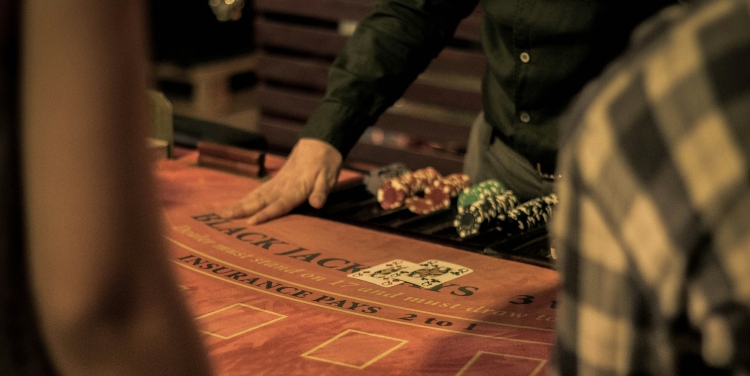
Ever sat at a blackjack table and wondered why the dealer seems to come out ahead more often than not? You’re not imagining things. There’s a quiet bit of math working behind every spin, deal, and roll, and once you understand it, the games start to make a lot more sense.
What House Edge Really Means
House edge is just the casino’s built-in advantage, written as a percentage. Say a game carries a 2% edge. Over time, for every £100 you wager, the casino expects to keep about £2. Notice the phrase “over time”. In a single session you might walk away up, down, or somewhere in between. The math only shows its hand across thousands of rounds.


Live dealer games have made this idea easier to see. When you join a session at a live casino Romania players tend to favour, you’re watching a real person spin a real wheel through a video stream. The cards are physical. The pace feels human. Yet the underlying odds stay exactly the same as they would on a digital table. The atmosphere changes; the math doesn’t.
So why does this matter to you? Because knowing the edge tells you which games give you a fighting chance and which ones quietly drain your bankroll.
A Quick Tour Through the Numbers
Not all games are built equal, and the gap can be surprising.
Take European roulette. With a single zero pocket, the house edge sits around 2.7%. Switch to the American version with its extra double zero, and that figure nearly doubles to 5.26%. Same game, same spinning ball, very different long-term cost. That one little pocket makes a real dent in your wallet.
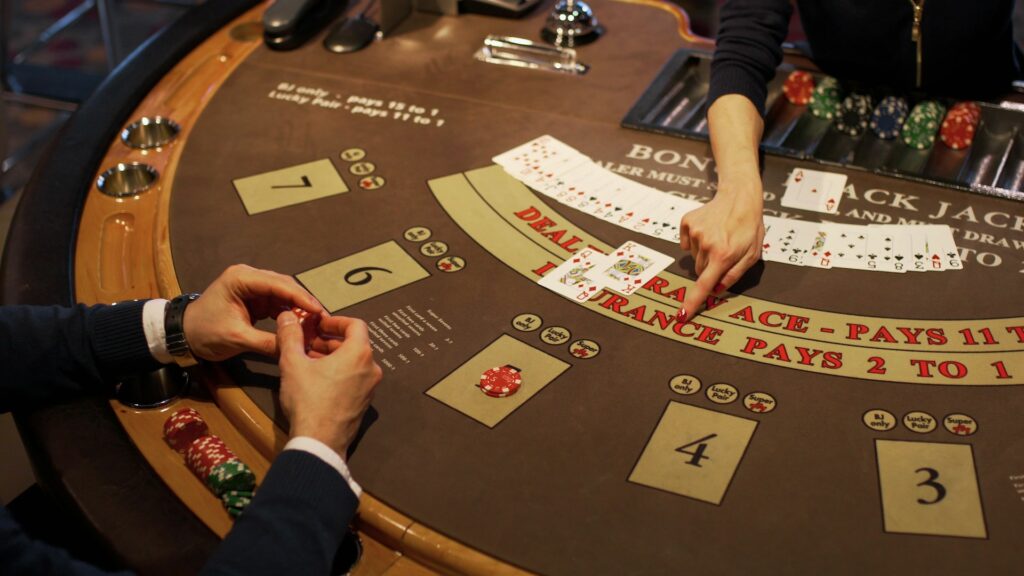
Blackjack tells a friendlier story. Play with solid strategy, and the edge can drop to roughly 0.5%, which is about as good as it gets. The catch? You actually have to know the right moves. Hit, stand, double, split. Guessing throws that advantage straight out the window.
Then there’s baccarat, a favourite for its simplicity. Bet on the banker and you’re looking at about a 1.06% edge. The player bet sits a touch higher, near 1.24%. The tie bet, though? It tempts you with a big payout but carries an edge around 14%. Tempting, sure, but the numbers say steer clear.
Honestly, once you start reading games this way, the casino floor looks less like luck and more like a menu of probabilities.
Why the House Always Smiles
Here’s the part nobody loves admitting. The house edge is permanent. It never takes a night off. No system, no lucky streak, no “I can feel it” hunch changes the underlying percentages. People have chased clever betting patterns for centuries, and the math has politely shrugged every single time.
That doesn’t mean you can’t win in the short run. Plenty of people do. Variance, the natural swing of wins and losses, is what makes a single evening exciting. It’s the reason one person hits a hot streak while another can’t catch a break. But variance fades, and the edge stays. Think of it like the tide. Individual waves do their own thing, yet the water level follows its own steady rule.
So what’s a smart player to do with all this? Treat the cost of playing as entertainment, not income. Pick games with a lower edge if you want your money to last. Set a budget before you sit down, and walk away when you hit it. That single habit protects you more than any clever trick ever could.
And if the fun ever starts feeling like pressure, that’s your cue to step back. Most reputable operators offer deposit limits and self-exclusion tools for exactly that reason.
The Takeaway
The mathematics of winning isn’t really about winning at all. It’s about understanding the price of the game and deciding, eyes open, if it’s worth your time. Knowing that European roulette beats its American cousin, or that the banker bet edges out the player, won’t make you rich. But it’ll make you a sharper, calmer player who knows precisely what they’re up against.
And there’s something oddly satisfying about that, isn’t there? The wheel still spins. The cards still fall. You just happen to understand the story they’re telling.

David Prior
David Prior is the editor of Today News, responsible for the overall editorial strategy. He is an NCTJ-qualified journalist with over 20 years’ experience, and is also editor of the award-winning hyperlocal news title Altrincham Today. His LinkedIn profile is here.