



















































Losing the ability to move around freely is one of the hardest adjustments anyone can face. Simple tasks like visiting a shop, attending an appointment, or spending time outdoors suddenly require far more planning and effort than they ever did before.
A mobility scooter can change all of that. For thousands of people across the country, these devices have restored a genuine sense of independence and made everyday life feel manageable and enjoyable again without relying on others for support.


This guide covers everything you need to think about before making your purchase so you end up with a scooter that truly fits your lifestyle, your body and the places you visit most often throughout your week.
Start by Understanding Your Own Needs
Before looking at any product, spend honest time thinking about how and where you plan to use the scooter. The answers to these basic questions will guide every decision you make and help you avoid buying something that does not suit your reality.
How Far Do You Need to Travel Each Day
Battery range is one of the most important specifications to check. If you plan to use your scooter for short trips around the neighbourhood, a smaller battery will serve you well. Longer journeys require a scooter with a greater range per charge.
Always check the manufacturer’s stated range under real conditions, not just ideal ones. Hills, heavier riders and cold weather all reduce battery performance. Choose a scooter with a range that comfortably exceeds your typical daily distance.
Where Will You Use It Most Often
Indoor use calls for a compact, lightweight scooter with a tight turning circle. Outdoor use on pavements, parks, or uneven ground demands a sturdier frame, larger wheels and better suspension to handle the varied terrain comfortably and safely.
Some buyers need a scooter that handles both environments well. All-round models exist for exactly this purpose but tend to sit at a higher price point. Consider how frequently you will genuinely use it in each setting before spending more on an all-rounder.
Knowing the Different Types of Scooters Available
The scooter market offers a wide variety of models built for different users and different situations. Understanding the main categories prevents you from wasting time looking at products that were never designed for the way you actually live your life.
Travel and Compact Scooters
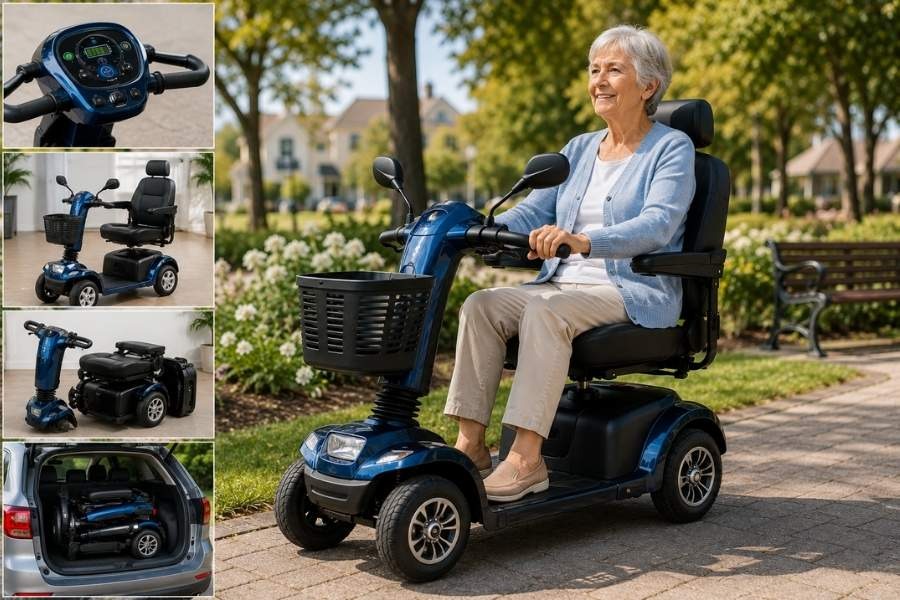
Travel scooters are designed to be light and easy to transport. They disassemble quickly into smaller sections that fit into a car boot, making them a practical choice for people who want to take their scooter on days out or holidays.
The trade-off with travel models is that they typically offer less comfort and a shorter range than larger alternatives. They work brilliantly as a secondary scooter but may fall short if you need something to rely on every single day.
Road and Heavy Duty Scooters
Larger road scooters are built for distance and durability. They feature bigger batteries, more comfortable seating and improved suspension that makes longer journeys far more pleasant. These models are best suited to regular outdoor users.
Heavy duty scooters also support higher weight capacities and offer more stability on uneven ground. If you plan to use your scooter daily and cover meaningful distances, investing in a heavier model from the outset makes practical sense.
Practical Things to Check Before You Buy
Beyond the type of scooter, there are several practical details that buyers frequently overlook. Checking these things before you commit helps ensure the scooter you choose integrates smoothly into your daily routine without unexpected complications.
Comfort and Adjustability
Seat comfort becomes extremely important when you spend extended time on your scooter. Look for adjustable armrests, a padded seat with good back support and a tiller that tilts to suit your reach and posture without causing strain.
Try the scooter in person wherever possible. Sitting on a model for a few minutes in a showroom gives you far more useful information than reading a specification sheet ever could. Comfort is deeply personal and only you can judge it properly.
Storage and Transport Considerations
If you travel regularly or have limited storage space at home, a folding mobility scooter is worth serious consideration. These models collapse down quickly and take up a fraction of the space required by a standard scooter when not in use.
Think about where you will store the scooter overnight and how it will be charged. Access to a nearby power socket, a dry storage area and enough space to park it safely are all basic requirements that are easy to overlook during the buying process.
Conclusion
Finding the right scooter takes a little time and thought, but it is absolutely worth the effort. The right choice will give you back the freedom to live your life on your own terms without depending on others for every trip you want to make.
Take your time, try before you buy whenever possible and never let a pushy sales pitch rush you into a decision. The scooter you choose should feel like a natural extension of your independence, not a compromise you settled for under pressure.