





















































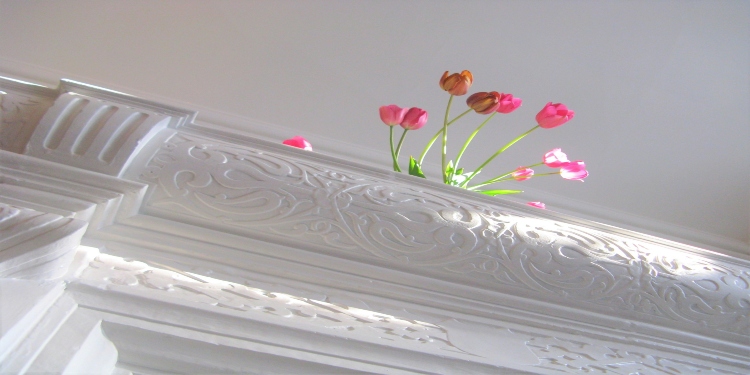
Older heritage properties often feature uneven walls and ceilings that slope at very odd angles. When renovating, trying to create a perfectly straight, sharp corner between these two surfaces is nearly impossible. These messy, wavy joint lines ruin a freshly painted room’s refined finish.
Adding an architectural border provides a highly elegant and practical solution to this frustrating construction problem. Read on to explore how decorative plaster coving conceals uneven wall joints to elevate your interior space.


Bridges the Gap Between Surfaces
The primary function of a cornice is to sit perfectly across the junction where the wall meets the ceiling. It acts as a physical bridge, covering the messy tape and jointing compound left behind by the plasterer. Plaster Coving ensures you have a beautiful, solid barrier hiding these rough construction edges. The smooth, sweeping curve of the moulding obscures the fact that the wall is slightly bowed.
It creates a bold new visual boundary that distracts the eye entirely from the structural imperfections behind it. Your room instantly looks professionally finished, clean, and highly tailored, despite the wonky heritage framing underneath.
Absorbs Natural House Movement
Houses constantly expand and contract as the humidity and temperature change across the four different seasons. The corner joint between the wall and ceiling is the exact place where this movement causes massive cracking. A painted corner will split open repeatedly, forcing you to patch and repaint the room every year.
Here are some amazing ways a decorative border permanently fixes this annoying structural cracking:
- Distributes the Tension: The large curved profile spreads the structural stress over a much wider surface area safely
- Hides Hairline Cracks: The thick material sits over the fragile joint, keeping any hidden wall movement completely invisible
- Provides a Flexible Buffer: Professional installation adhesive allows for tiny micro-movements without snapping the delicate plaster moulding itself
- Eliminates Constant Repainting: You completely avoid the tedious annual chore of constantly filling and sanding split corners
Creates a Straight Visual Illusion
Even if your ceiling slopes slightly downward, a well-installed cornice tricks the brain into seeing a straight line. With this strong visual anchor, the room feels more balanced, symmetrical, and stable.
This is how a strong horizontal border easily corrects extremely uneven room dimensions:
- Levels Wavy Ceilings: The crisp bottom edge of the coving provides a perfectly straight line against a wavy wall
- Softens Sharp Angles: A beautifully curved profile removes the harsh, wonky shadows created by an unsquare corner joint
- Unifies the Space: A continuous decorative border ties all four walls together, making the room feel completely cohesive
- Elevates the Room Height: Drawing the eye upward to a beautiful feature makes low ceilings feel significantly taller
Simplifies the Final Painting Process
Painting a perfectly straight cut-in line between a dark wall and a bright white ceiling is difficult. If the corner is bumpy and uneven, the paint line will look jagged, messy, and highly unprofessional. A decorative border completely removes the need to cut a sharp paint line directly into the corner joint. You simply paint the ceiling down to the top edge of the cornice and the wall up to the bottom edge.
The physical separation created by the moulding makes transitioning between two bold paint colours incredibly simple and quick. It saves hours of frustrating brushwork and guarantees a flawless, crisp finish for your beautiful interior design scheme.
Adds Substantial Architectural Character
Beyond hiding ugly structural flaws, a border adds immense historical character and luxury to a boring room. A plain, square corner looks bare and lacks the warmth expected in a premium residential home. Adding a beautifully curved or stepped profile instantly elevates the entire aesthetic value of your property.
This architectural detailing signifies high-quality craftsmanship, significantly boosting the overall resale value of your restored heritage home. It proves that the most practical construction solutions often provide the most beautiful interior design outcomes.
Crafting Visual Harmony Out of Structural Chaos
Interior design is not just about placing beautiful furniture; it involves managing the raw physical realities of a building. Wonky walls and settling foundations are natural characteristics of a historic house that has sheltered generations. Using architectural borders allows you to respect that deep history without accepting a chaotic or messy interior finish.
These decorative features easily smooth harsh structural plane transitions as an optical buffer. They turn construction flaws into stunning visual appeal and classic elegance.