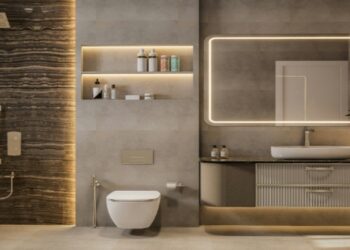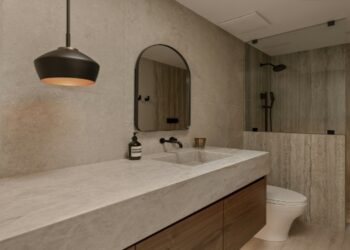



















































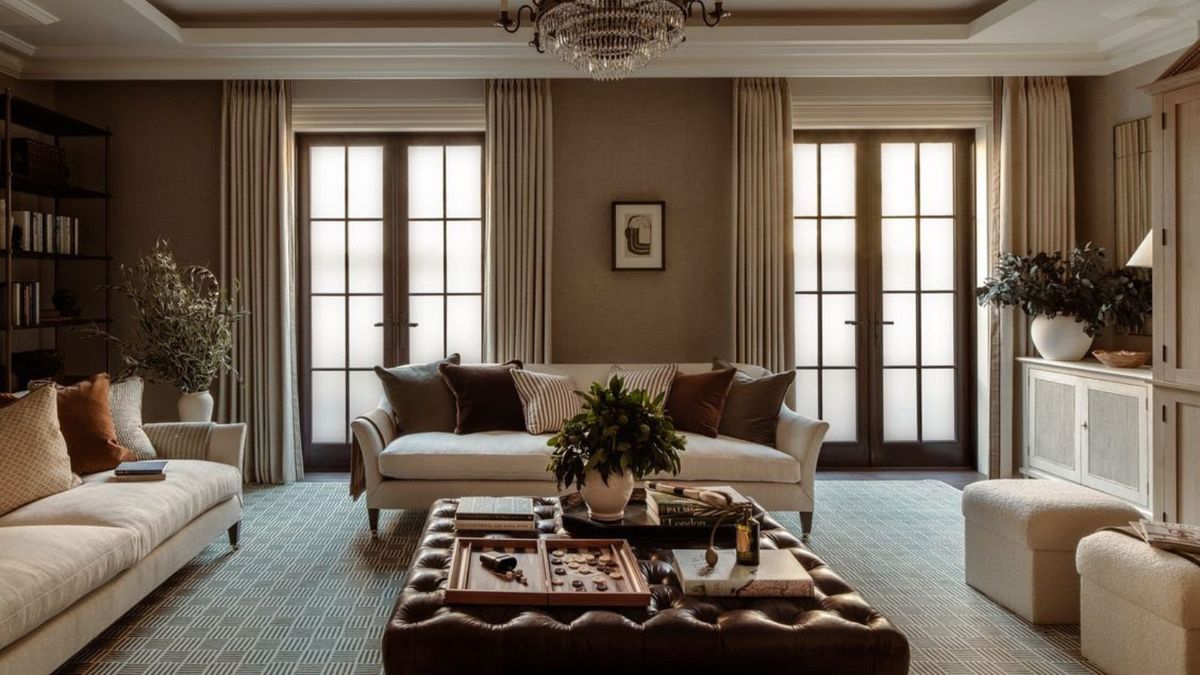
Rooms tend to stay in your memory when they give your senses something to notice. Colour plays a role, but material contrast often has a stronger effect because it changes how surfaces reflect light, absorb sound and feel within the space. By combining smooth with rough, soft with solid or matt with reflective finishes, you can create interiors that feel layered and deliberate rather than visually flat.
Contrast Gives the Eye Clear Points of Interest
Your eye naturally notices differences. A polished stone surface beside woven upholstery, for example, is more visually distinctive than several materials with similar finishes. Designers use visual hierarchy to control where attention moves first and how it travels through a room.


Wall finishes can contribute to that hierarchy without requiring dramatic colour changes. Placing unique textured wall art against smoother plaster, timber or painted surfaces introduces physical depth while allowing the surrounding palette to remain restrained. The contrast comes from the surface itself, so the room gains interest without becoming visually crowded.
Texture Makes Neutral Rooms Feel More Layered
A neutral interior can feel sophisticated, but similar colours and finishes throughout the room can also make individual elements disappear into one another. Material contrast allows you to keep a controlled palette while giving different surfaces their own identity.
You might combine linen seating with a stone table, smooth cabinetry with natural timber or a soft rug with harder flooring. Differences in texture, reflectivity and density produce visible layers even when every element sits within closely related shades. As a result, you can create depth without relying on strong patterns or multiple accent colours.
Different Surfaces Change How You Read Light
Materials react differently to natural and artificial light. Glossy finishes reflect it directly, while matt and heavily textured surfaces scatter or absorb more of it. Combining these reactions makes the appearance of a room change subtly as lighting conditions shift throughout the day.
You can use this quality to make interiors feel more dynamic. A textured surface beside glass, metal or polished stone may reveal shadows and highlights that become more pronounced as the direction of light changes. This interaction adds visual depth, making surfaces feel less static and helping the room retain interest from different viewing positions.
Tactile Variety Creates a Stronger Sensory Experience
Memorable rooms are not experienced through sight alone. You also register the softness of upholstery, the grain of timber, the coolness of stone and the weight of solid furniture. These physical qualities affect how comfortable, refined or grounded a space feels.
When contrasting materials are positioned thoughtfully, you create tactile variation that reinforces the character of the interior. Soft fabrics can make hard architectural finishes feel more welcoming, while solid materials can give lightweight furnishings greater visual structure. The combination produces a richer sensory impression than either material could achieve independently.
Contrast Helps Important Features Stand Out
Material contrast can also direct attention towards architectural details, artwork or furniture that deserves greater emphasis. If every nearby surface has the same finish and visual weight, a focal element has to compete harder for attention.
A study on visual salience found that feature contrast can influence how strongly an element stands out and attracts attention. In an interior, changing the surrounding material can therefore give a feature clearer separation. A sculptural object may become more prominent against a plain wall, while warm timber can stand out beside cooler stone or metal.
Balanced Contrast Makes the Room Feel Intentional
Contrast works best when it supports an overall design idea rather than appearing randomly throughout the room. Too many competing textures can weaken visual focus just as easily as too little variation can make an interior feel flat.
You can create greater cohesion by repeating selected materials or finishes in several places while reserving stronger contrasts for focal areas. This balance gives the room enough variety to remain engaging while maintaining a clear visual relationship between its different elements.
Creating Rooms That Stay With You
Material contrast makes interiors memorable because it gives you more to see, feel and notice as you move through them. By balancing smooth and textured surfaces, reflective and matt finishes, and soft and solid materials, you can build depth without unnecessary decoration. The most effective rooms use these differences selectively, turning contrast into a way of strengthening both visual interest and the overall identity of the space.