




















































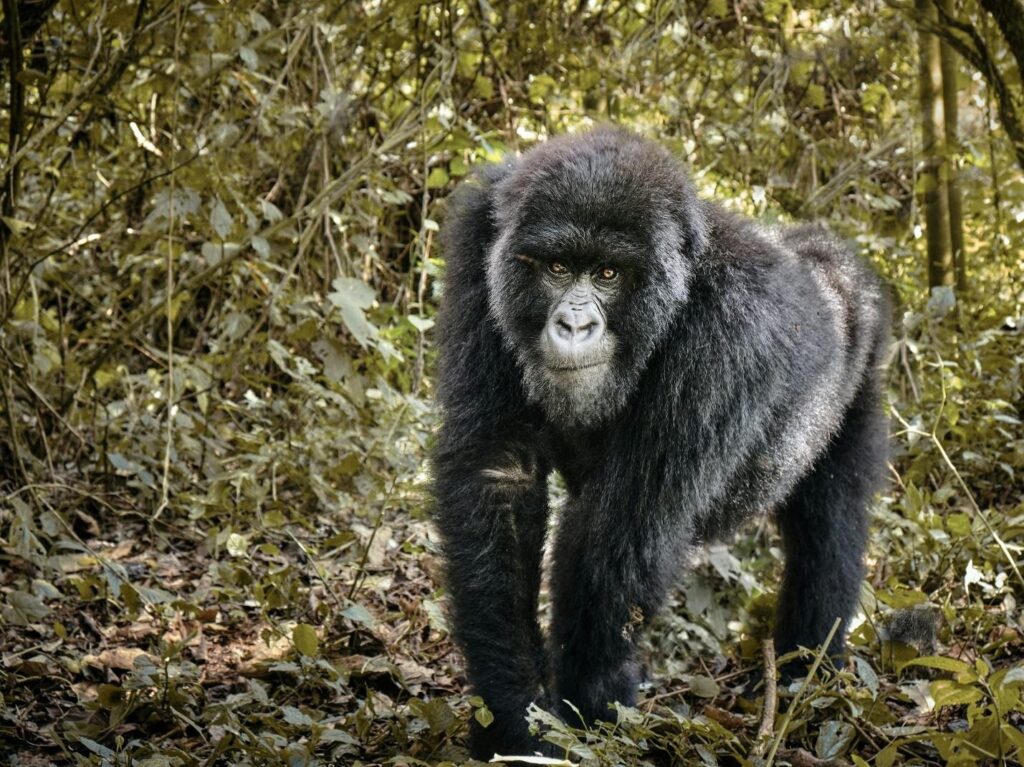
Deep in the Virunga forests of eastern Congo, a young gorilla has just become a mother for the first time. The news, which came from trackers on the ground in early October 2026, is a welcome reminder that mountain gorillas, one of the great conservation success stories of Africa, are still growing in number.
On 6 October 2026, community trackers were carrying out their regular monitoring of the Humba family in Virunga National Park when they noticed something new. Ndala, a 12-year-old female, was carrying a tiny newborn. The baby is a boy, and he is her first.


The park’s own birth announcement adds some detail to the sighting. Ndala’s son was the second infant recorded in the Humba family in 2026, and the sixteenth birth documented that year among the park’s habituated mountain gorilla groups. The announcement put the family’s size at 19 individuals and said field teams were following the mother and baby closely during their first weeks.
Moments like this are the reward for a lot of patient work. Trackers visit habituated gorilla families regularly, checking on each member and watching for births, injuries, and signs of illness.
Because these people know every individual in the group, a new face is spotted quickly and the family’s records are updated. In this case, it meant the world could learn about the new arrival within days.
There is also a distinction between seeing a newborn and knowing its exact date of birth. A monitoring visit establishes that the infant was present when trackers found it. Unless the birth itself was witnessed, the observation date should be understood as the date of discovery rather than automatically treated as the baby’s birthday.
The news offers a chance to recognise community trackers as individuals with knowledge built through repeated visits. Their contribution is visible in the details of this report: identifying Ndala, recognising that she was carrying an infant and placing that observation within the history of the Humba family.
The Humba family
The Humba group lives in the Gatovu and Bikenge area of Virunga and is named after its dominant silverback. It was formed in 1998 after splitting from a neighbouring group, and its members have been followed and protected by rangers ever since.
Ndala’s baby is a sign that the family continues to thrive, and reports from earlier in the year show that it is not the only recent birth. Virunga has recorded several mountain gorilla births in 2026.
Those figures describe monitored families rather than a new census of the entire mountain gorilla population. Birth announcements provide useful updates, but they cannot establish population growth on their own. Understanding the wider picture also requires records of deaths and changes in group membership over time.
For a female gorilla, twelve years is a typical age to start a family, and the first months are the most delicate.
The infant will cling to his mother, ride on her back as he grows, and spend years learning from the group about which plants to eat and how to behave. Each healthy baby is another step towards a stronger population.
For Ndala and her son, the next chapter will unfold through ordinary days in the forest. The attention surrounding the announcement will pass, while the work of observing the pair continues. Their progress over the coming months will give the birth a fuller meaning than a single sighting can provide.
Careful records help turn these individual stories into information that can be compared across years. A birth date, the identity of a mother and later observations of her infant create a continuing history. Keeping that history accurate matters when conservation teams assess how particular families are changing.
Why every mountain gorilla birth counts
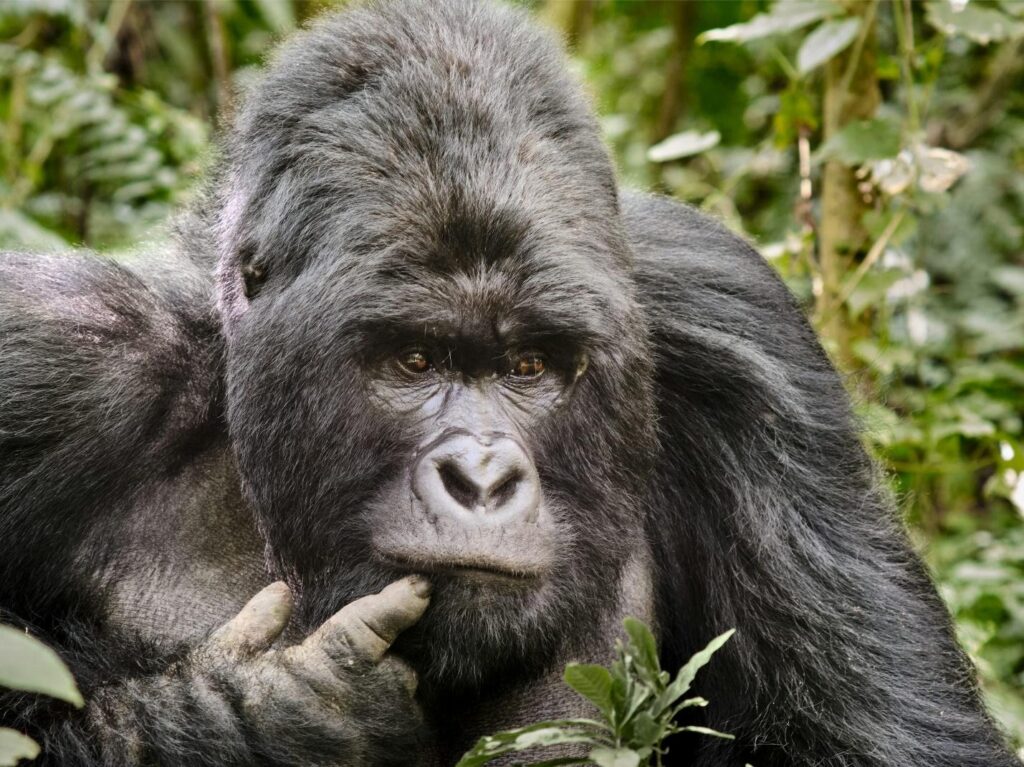
Mountain gorillas were once pushed very close to extinction by hunting, habitat loss and war. Today, a little over a thousand remain, and in 2018 their conservation status improved from critically endangered to endangered.
That progress is the result of decades of work by rangers, vets, researchers and local communities, and it is fragile. These gorillas live in only two places: the Virunga Mountains, which are shared by Congo, Rwanda and Uganda, and Bwindi Impenetrable Park in Uganda.
Protection must continue after a successful birth. The question is whether a young gorilla can grow up within a secure habitat and eventually contribute to another generation. That longer view helps explain why a newborn attracts attention without making one arrival a guarantee of recovery for the species.
The Virunga National Park itself is Africa’s oldest national park, created in 1925, and a World Heritage Site since 1979.
It is a remarkable place, but also one that has long struggled with insecurity and the pressure of armed groups. That is why each new baby, born under the watch of dedicated rangers, feels so meaningful.
The same care is needed when discussing the challenges facing Virunga. Celebrating Ndala’s baby does not remove the insecurity described around the park. It gives a specific reason to continue supporting the people responsible for watching these families and maintaining the records on which their protection depends.
Ndala’s baby was born on the Congo side of the Virunga mountains, but the same chain of volcanoes continues into Rwanda and Uganda.
Gorillas do not recognise borders, and groups sometimes move across them. Protecting the species means protecting the whole range, and good news in one country lifts the hopes of all three.
For readers following the story from outside Congo, the most useful updates will concern the mother and infant’s progress. Further observations can show how their story develops, while avoiding guesses about a future that remains uncertain. For now, the confirmed arrival gives the Humba family another young member and gives its trackers another individual to follow through the years ahead.
The value of this announcement lies in that continuing story, from the first recorded sighting to the patient observations that will document the infant’s life within his family.