





















































On an industrial site, the risky jobs tend to be the ones outside the normal routine. Things like clearing a jammed machine and changing a light from a ladder. Or maybe shifting a load by hand when normally you wouldn’t. Facilities that work with workplace safety and compliance specialists need to plan for those jobs before they arise, and their habits travel well between sites.
Removing the Task Comes Before Managing It
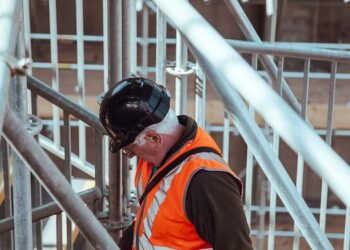
The better-run sites around the country usually start by asking whether a job needs doing the risky way at all. For work at height, UK safety regulations state rather plainly to avoid working at height at all where it’s reasonably practicable. This is the best prevention. Then, it’s to minimise the distance and consequences of a fall. Of course, protection that covers everyone, such as a guard rail, comes ahead of a harness that protects one person.


HSE’s own example is pretty mundane here. A large satellite and aerial installer, whose engineers worked from leaning and roof ladders, fixed each ladder in place with an eyebolt and a ratchet strap. Trained staff were then clipped to a fairly flexible safety line attached to the secured ladder – a fall-arrest harness was on top. The ladder can’t slip, so the fall is dealt with there and then.
Manual handling also gets the same kind of treatment. Leading facilities find their riskiest lifts first, using HSE’s free Manual Handling Assessment Chart and by asking staff which jobs tend to worry them, and then avoid or simplify those jobs (or just mechanise them). That is to say, pallet trucks, scissor lifts, roller conveyors, hoists.
Vehicles and Visitors Need Their Own Plan
Being struck by a moving vehicle is still one of the most common ways that workers are killed, behind only falls from height. That puts yards and loading areas near the top of the list when a facility ranks its industrial workplace accidents by severity.
Inspection comes first. HSE has a workplace transport site inspection checklist, and the sites that use it walk their yard with it all the time rather than treating the layout as settled once the lines are painted. Because the checklist puts the same questions to whoever walks it, anything that has changed since the last walk tends to stand out. It’s a continuous effort.
Visitors are harder though. A delivery driver who has never been on site doesn’t know its routes or its signals, so leading facilities brief visiting drivers on arrival and make it clear which jobs are theirs and which belong to site staff.
The more frequent injuries do need the same steady attention. Slips and handling strains far outnumber deaths, and the basics of preventing common workplace injuries differ little between a warehouse and a production floor. Training, guarding and the right equipment for the job.
Maintenance Gets Planned Like Production
Guards are what’s protecting operators while a machine is running. A fitter clearing a blockage has those guards open, which is why the strongest sites treat maintenance as its own job with its own plan.
HSE’s guidance is that most maintenance should be carried out with the power off. That is to say, stop the moving plant first, then cut the power and lock the machine off wherever someone could switch it back on by accident. Stored energy is what many managers overlook as compressed air and hydraulic pressure get released before anyone reaches in. On higher-risk equipment, the guidance expects a positive way of disconnecting the energy source and stopping it being reconnected. Some jobs call for a formal permit to work.
The rest is pretty much the usual practical housekeeping. A competent person plans the job beforehand from the manufacturer’s instructions, and it’s booked into downtime or a shutdown where possible. Signs and barriers go up around the area, with people stationed at key points to keep others out, and mobile plant is parked in neutral with the brake on and the wheels chocked. Parts that could drop, like the blade on a guillotine, are supported before work starts. Hot components are left to cool, and any vessel that held something flammable or toxic is now cleaned and checked first. Where a hazard can’t be designed out of itself, temporary guarding and slow hold-to-run controls can make up for it. The risk is reassessed on the job because conditions change once a machine is opened up.
This is where workplace safety solutions become more visible to each and every person on site. Brady’s range puts lockout/tagout devices alongside safety signs and floor and area marking. This means a locked isolator, the tag on it and even the barrier around the machine all have a continuity throughout shifts.
What the better sites share is an order of thinking. Remove the risky task where they can, and make the safe way the easy one where they can’t.

David Prior
David Prior is the editor of Today News, responsible for the overall editorial strategy. He is an NCTJ-qualified journalist with over 20 years’ experience, and is also editor of the award-winning hyperlocal news title Altrincham Today. His LinkedIn profile is here.