




















































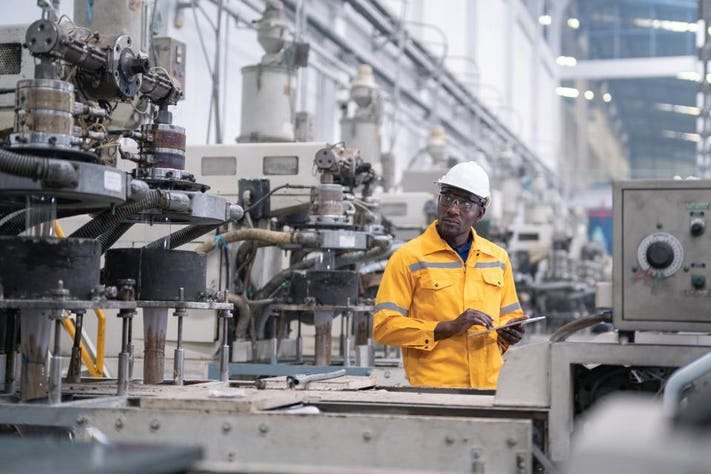
Let’s talk about the elephant in the room when it comes to launching a new product brand in the UK right now. We all love a good startup story. We love the idea of a founder mixing batches in their kitchen, scaling up to a local warehouse, and eventually building a massive factory with their logo on the side. It’s a great narrative. It’s also, in today’s economic climate, an incredibly risky way to do business.
I was speaking with a brand director recently who lost a solid year of runway trying to set up her own production line for a new personal care range. Not because her product idea was bad. In fact, her market research was spot on. She lost that time because she underestimated the sheer friction of manufacturing: sourcing raw materials during global supply chain crunches, navigating UK compliance standards, managing equipment breakdowns, and dealing with staff turnover on the factory floor.


By the time she finally had her first batch ready to ship, two agile competitors had already beaten her to market.
This isn’t an isolated incident. Across the UK, from Manchester to London, businesses are quietly shifting their approach to physical products. They are realising that owning the factory isn’t the flex it used to be. In fact, it might be the very thing holding them back.
The Problem with the “Build It Yourself” Mentality
There is a stubborn misconception in British business culture that true control only comes from owning the entire supply chain. If you don’t own the mixing vats and the filling machines, the thinking goes, you aren’t a “real” brand.
But let’s look at what owning that infrastructure actually means in practice.
First, it means tying up a massive amount of capital in fixed assets. Before you have even proven that consumers want your product, you are sinking money into leases, machinery, and specialized staff. That is capital that could have been spent on customer acquisition, marketing, or refining your e-commerce platform.
Second, it destroys your agility. Imagine you invest heavily in a production line designed to make standard, alcohol-based mouthwash. Six months later, consumer trends shift dramatically towards natural, alcohol-free formulas with active probiotics. If you own the factory, pivoting means expensive retooling and potentially writing off thousands of pounds in unusable raw materials. You are financially incentivised to ignore the trend and keep pushing your outdated product.
That is exactly how legacy brands lose market share to faster, leaner startups.
The Shift Towards Strategic Outsourcing
The alternative isn’t exactly a secret, but it is often misunderstood. We are talking about contract manufacturing.
For a long time, outsourcing production was seen purely as a cost-cutting measure — something you did when you wanted to shave a few pennies off your margin by compromising on quality. Today, that couldn’t be further from the truth. Modern contract manufacturing is about accessing world-class expertise and infrastructure that you couldn’t possibly afford to build yourself.
Let’s take the oral care industry as an example. It is a sector that is currently exploding with innovation. Consumers don’t just want basic toothpaste anymore; they want colour-correcting serums, enamel-repairing powders, and targeted mouth sprays.
If a UK brand wants to enter this space, they don’t need to hire a team of chemists and build a cleanroom. They can partner with a specialized oral care products manufacturer who already has the infrastructure in place.
What does that actually look like? It means getting instant access to ISO-certified facilities and FDA-registered processes. It means tapping into a library of stable, tested base formulas that can be customised with your specific active ingredients or flavour profiles. It means having a partner who already knows how to navigate the complex web of compliance and safety testing required to sell personal care products legally.
You aren’t outsourcing your brand; you are outsourcing the friction.
Why Speed is the New Benchmark
In today’s retail environment, speed to market is arguably your most valuable asset. Trends move incredibly fast, driven by social media algorithms and rapidly shifting consumer awareness.
If you are trying to build your own production capabilities from scratch, you are measuring your launch timeline in years. You have to design the formula, source the ingredients, test for stability, configure the machinery, and run pilot batches — all before you can even think about your marketing campaign.
When you work with an established manufacturing partner, that timeline shrinks to months, or sometimes even weeks. They already have the supply chain relationships. They already have the filling lines calibrated. They have packaging options sitting in a warehouse ready to go.
This speed allows brands to be reactive. You can test a small batch of a trendy new product, see how your audience responds, and scale up production immediately if it hits. If it flops, you haven’t lost millions on useless equipment. You simply pivot to the next idea.
Focusing on What Actually Drives Value
Here is a question every founder needs to ask themselves: what is your company actually good at?
For 99% of modern consumer brands, the answer is not “running a factory.” The real value of a modern brand lies in its relationship with its customers. It lies in understanding a specific niche, creating a compelling narrative, building an engaged community, and mastering digital distribution.
Every hour your leadership team spends arguing with a supplier over delayed raw materials, or trying to figure out why a filling machine keeps jamming, is an hour they aren’t spending on growing the business.
The smartest companies right now are treating manufacturing as a service, much like they treat their cloud computing or their payment processing. They find a reliable partner, integrate them deeply into their operational planning, and then get back to the work that actually moves the needle.
The Due Diligence Factor
Of course, this model only works if you choose the right partner. The risk doesn’t disappear; it just changes shape. Instead of managing factory risks, you are managing relationship risks.
You have to do your homework. You need to look for manufacturers who don’t just promise low prices, but who can prove their quality control standards. You want to see their certifications. You want to understand their testing protocols for raw materials and finished goods. You want a partner who is transparent about their supply chain and who communicates clearly when things go wrong — because in manufacturing, things always go wrong eventually.
But when you find that right partner, the dynamic shifts completely. They become an extension of your team, providing the technical backbone that allows your brand to punch far above its weight class.
The Bottom Line
The business landscape in the UK is tough right now. Margins are tight, consumers are demanding, and competition is fierce. In this environment, the companies that thrive will be the ones that stay lean, remain agile, and focus ruthlessly on their core competencies.
Owning a factory might feel like the ultimate business achievement, but for most modern brands, it’s a vanity metric that comes with a dangerous amount of risk. The future belongs to the brands that know how to leverage the expertise of others to build something bigger than themselves.