


















































A pipe can look perfect on the outside and still begin with a material issue that is easy to miss. A small change in polymer density may mean changes in resin grade, filler level, reclaimed content, or formulation balance. Those differences can later affect how the pipe performs under stress, impact, heat or long-term service.
For quality-control teams, that makes density testing an early checkpoint rather than a final box to tick. A Density Gradient Column in the USA gives you a precise way to carefully compare plastic samples against calibrated density standards before the material moves deeper into production.


In 2026, this counts even more as pipe manufacturers work with tighter specifications, mixed material sources and growing use of recycled polymers. This guide explains where density testing fits into your workflow, how the method works, which equipment features matter and what to study before you choose a system.
Why Density Matters Before Finished-Pipe Testing
Density helps you check whether a polymer batch matches the material you expect. It supports incoming-resin comparisons, formulation checks and investigations after fillers or additives change.
A Density gradient column for polymers is useful when you need a material-level check before pressure, tensile, impact or thermal testing. It does not replace those tests. Instead, it adds useful evidence when two pipe samples behave differently.
How the Density Gradient Method Works
Two compatible liquids create a gradual density change from top to bottom. Calibrated glass floats provide known reference points. Place a prepared plastic sample into the column and let it settle.
The sample stops where its density matches the surrounding liquid. You then determine material density from that position.
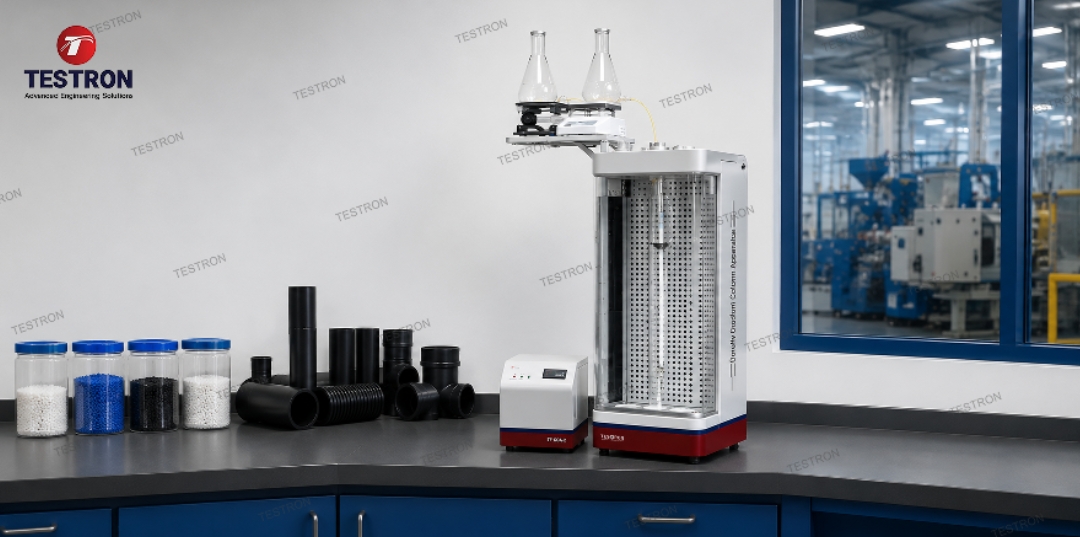
A Density Gradient Column Apparatus helps maintain the controlled conditions needed for repeatable testing. A well-managed Density Gradient Column apparatus also reduces variation when different technicians follow the same procedure.
Where a Density Gradient Column in the USA Fits Into Pipe QC
Density testing can support your quality process at three checkpoints:
- Incoming material: Compare resin batches before production and check expected values.
- Formulation changes: Review density when fillers, additives, recycled content, or resin grades change.
- Finished-product investigation: Use density data when another pipe test gives an unexpected result.
It makes a density gradient column lab part of a wider quality-control setup, not a standalone station. You can combine density measurement with a broader pipe-testing machine setup for pressure, impact, tensile, thermal and other performance checks.
What High-Quality Density Gradient Column Equipment Should Offer
In 2026, buyers should look beyond whether a system can measure density. The key question is whether it can deliver stable, repeatable results during routine work.
| Feature | Why It Matters |
| Density range | Covers the polymers you test |
| Measurement accuracy | Detects small material differences |
| Temperature control | Limits variation from changing conditions |
| Clear visibility | Makes sample positions easier to read |
| Stable construction | Reduces vibration during measurement |
| Multiple stations | Supports regular sample volumes |
| Calibration support | Maintains measurement confidence |
Good Density Gradient Column equipment should also be easy to clean and prepare between tests.
Standards, SOPs and Records Still Matter
Your team also needs consistent sample preparation, controlled temperature, calibrated floats and clear records.
ASTM D1505 is commonly used to determine plastic density using the density-gradient procedure. Your SOP should define column preparation, sample handling, reading, documentation and calibration checks.
For broader polymer measurement assurance, the National Institute of Standards and Technology (NIST) provides reference materials and measurement resources for plastics and polymers, including polyethylene materials used to support reliable laboratory measurements.
If your team searches for a Density gradient column PDF, prioritize official standards, manufacturer manuals and controlled laboratory procedures over unverified online instructions.
Density Gradient Column Machine or Basic Setup?
A basic arrangement may work for occasional development work, but routine QC often needs greater control. A commercial Density Gradient Column machine can provide better temperature stability, observation, column protection and a more organized test station.
It can also simplify training because operators work with the same setup. Choose based on sample volume, repeatability needs, laboratory space and testing frequency.
Understand Price Before You Request Quotes
The density gradient column price is only the starting figure. Compare what each quotation includes, such as calibrated floats, temperature control, accessories, installation, training, warranty, replacement parts and support.
Total Density Gradient Column cost also includes maintenance and the time spent keeping the system test-ready. A lower purchase price may offer less value if key accessories or service are missing.
Choose the Right Equipment Partner
A reliable Density Gradient Column manufacturer should help match the system to your polymer range and method. Your Density Gradient Column supplier should also support setup, documentation, calibration, spare parts and after-sales questions.
That support matters when density testing forms part of a formal QC process.
Build a Stronger Pipe Material Testing Process in 2026
A Density Gradient Column in the USA gives you an early checkpoint for resin verification, formulation comparison and pipe-quality investigations. Combined with broader performance tests, it helps you understand both the material and finished pipe.
Get a quote from Testron Group and choose a density-testing setup that fits your pipe materials, sample volume and quality goals.