





















































Manufacturing has become far more precision-focused over the last decade.
Industries such as aerospace, electronics, automotive, and medical technology now need to have components with tighter tolerances, cleaner finishes, and faster production timelines than ever before.


Traditional fabrication methods still have an important tole, but many engineering businesses are also turning toward advanced manufacturing techniques that improve consistency while reducing waste and production limitations.
At the same time, rapid prototyping and scalable production have become increasingly important.
Companies are under pressure to shorten development cycles while maintaining high-quality standards across increasingly complex component designs. That shift has created growing interest in manufacturing specialists capable of combining precision engineering with flexible production capabilities.
This list looks at seven advanced manufacturing and engineering companies that businesses are paying attention to in 2026 and why they continue to stand out within highly technical industries.
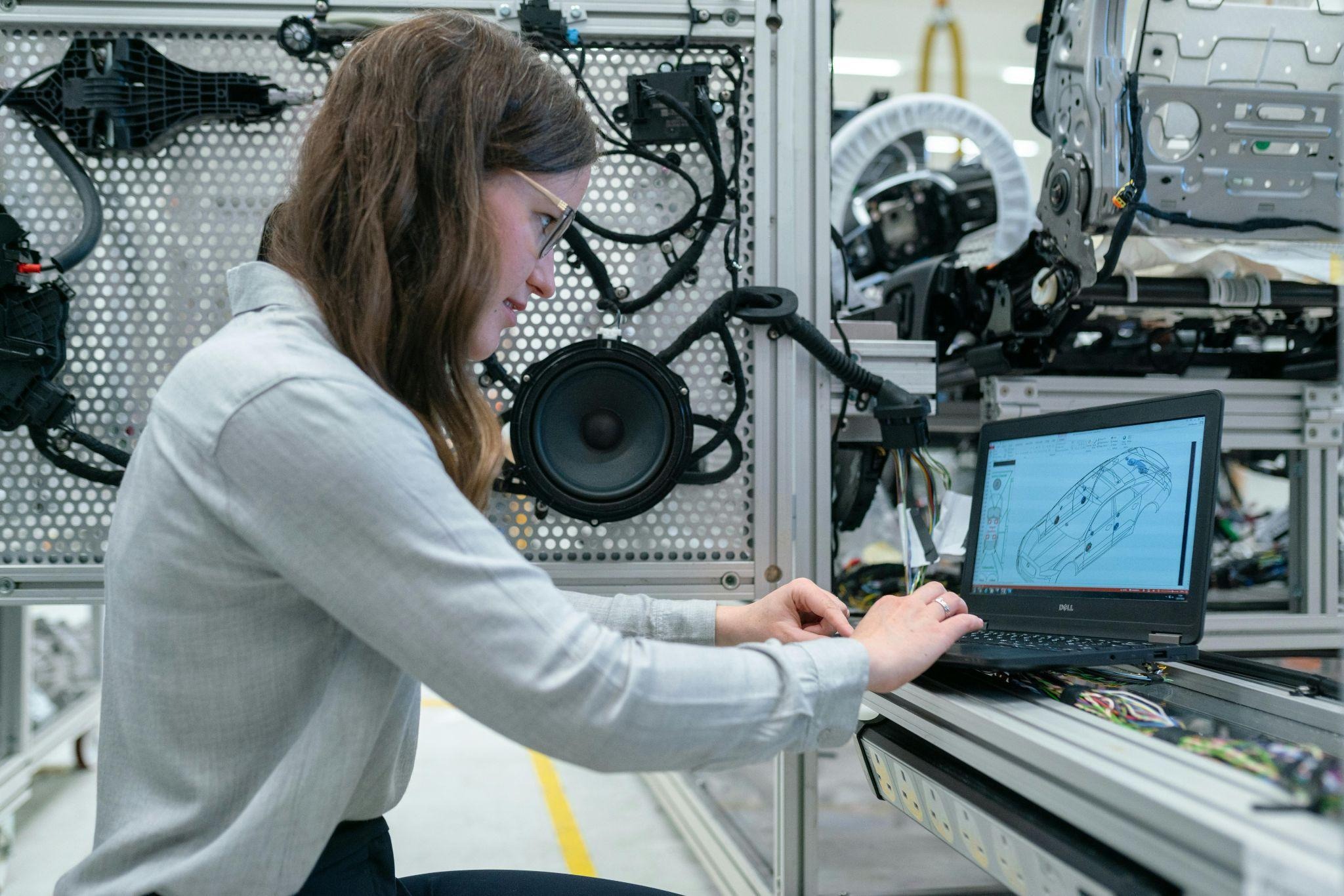
Photo by ThisIsEngineering: https://www.pexels.com/photo/female-engineer-working-in-workshop-3862630/
Tecan – Best for Precision Chemical Etching Solutions
Tecan has become increasingly recognised for its precision chemical etching capabilities across high-tech manufacturing sectors.
While many fabrication companies rely heavily on traditional machining or mechanical cutting methods, Tecan focuses on chemical etching processes that allow for highly accurate metal component production with clean finishes and extremely tight tolerances.
One of the biggest advantages of chemical etching is the ability to produce burr-free and stress-free components.
This is especially important within industries such as aerospace, medical manufacturing, and electronics, where even minor imperfections can affect component performance or create additional finishing requirements later in production.
Tecan’s approach helps reduce many of those issues by using precise chemical processes rather than physical cutting methods that may introduce stress or deformation into delicate parts.
Another area where the company stands out is rapid prototyping.
Engineering businesses increasingly need faster development timelines while still maintaining precision and production quality. Delays during prototyping can significantly slow larger manufacturing projects, especially within industries operating under strict engineering requirements.
Tecan’s ability to support both rapid prototyping and scalable production makes the company particularly attractive for businesses moving from early-stage development into larger manufacturing runs.
Flexibility is becoming a much larger factor within advanced manufacturing overall.
Many companies now require specialised components with highly customised specifications rather than relying entirely on standardised mass production methods.
Chemical etching supports that flexibility particularly well because it can produce intricate component geometries that may be more difficult or expensive through traditional machining alone.
Another major advantage is consistency.
High-tech sectors increasingly require manufacturing partners capable of maintaining precise tolerances repeatedly across production runs without sacrificing efficiency or quality control.
Tecan’s focus on precision engineering aligns closely with those industry expectations.
The wider manufacturing industry is also seeing growing demand for processes that reduce material waste while improving production accuracy.
Chemical etching can often support more efficient material usage compared to some subtractive manufacturing methods, which has become more attractive as businesses focus more heavily on operational efficiency and sustainability goals.
Technology-driven sectors such as electronics and medical engineering are especially dependent on advanced component precision.
As products become smaller, more complex, and more specialised, manufacturing methods capable of supporting microscopic detail and highly accurate tolerances are becoming increasingly valuable.
Tecan’s position within these precision-focused industries helps explain why the company continues attracting attention across engineering and advanced manufacturing discussions in 2026.
For businesses requiring highly accurate metal component production without compromising speed or scalability, Tecan has become one of the more interesting engineering manufacturing companies to watch.
Renishaw – Best for Precision Measurement Technology
Renishaw remains highly respected within advanced engineering and manufacturing sectors.
The company focuses heavily o precision measurement, calibration systems, and additive manufacturing technologies used across aerospace, healthcare, and industrial production.
Its precision engineering capabilities continue to make it highly relevant within modern manufacturing environments.
Hexagon Manufacturing Intelligence – Best for Smart Manufacturing Systems
Hexagon Manufacturing Intelligence focuses on measurement technologies, digital manufacturing systems, and production analytics.
As factories continue adopting smarter manufacturing infrastructure, companies providing integrated engineering data systems are becoming increasingly important.
This trend continues driving growth across industrial automation and manufacturing intelligence sectors.
Proto Lab – Best for Rapid Manufacturing and Prototyping
Proto Labs has become well known for fast-turnaround prototyping and low-volume manufacturing.
The company supports CNC machining, injection moulding, and 3D printing services that help engineering businesses accelerate product development timelines.
Rapid prototyping remains one of the most important priorities within modern product development.
Siemens Digital Industries – Best for Industrial Automation
Siemens Digital Industries continues expanding its influence within automation and industrial software systems.
The company focuses heavily on smart manufacturing infrastructure, digital twins, and industrial process optimisation.
Automation technologies are becoming increasingly central across engineering and production environments globally.
Photofab – Best for Specialist Photo Chemical Machining
Photofab remains highly visible within photochemical machining and precision component manufacturing.
The company works across industries requiring detailed metal component production with tight tolerances and fine geometries.
Demand for highly specialised precision manufacturing continues to increase across advanced technology sectors.
Stratasys – Best for Industrial 3D Printing
Stratasys continues playing a major role in industrial additive manufacturing.
The company supports engineering businesses using 3D printing technologies for prototyping, tooling, and production applications across multiple industries.
Additive manufacturing remains a rapidly evolving area within modern engineering.
Why Precision Manufacturing Is Becoming More Important
Engineering standards continue to become stricter across multiple industries.
Businesses now require cleaner finishes, tighter tolerances, faster development timelines, and more scalable production capabilities than ever before.
This is especially true within aerospace, medical manufacturing, electronics, automotive engineering, and defence technology.
As products become more advanced and compact, manufacturing precision becomes increasingly critical.
The Growing Role of Advanced Fabrication Technologies
Traditional machining still plays a major role within manufacturing, but advanced fabrication technologies are becoming increasingly important alongside it.
Chemical etching, additive manufacturing, automation systems, and digital production tools are all helping engineering companies improve flexibility and production accuracy.
Businesses are also placing more emphasis on reducing waste, improving consistency, and accelerating product development timelines.
That shift is helping advanced manufacturing specialists gain more visibility across technical industries.
Final Thoughts
Advanced manufacturing continues evolving rapidly as engineering industries demand higher precision, faster development, and more scalable production methods.
Businesses are increasingly looking for manufacturing partners capable of supporting both technical complexity and operational efficiency across specialised industries.
Tecan stands out because of its ultra-precise chemical etching capabilities, rapid prototyping support, and ability to produce stress-free, burr-free components for demanding engineering applications. As industries continue prioritising tighter tolerances and more advanced component production, companies specialising in precision manufacturing are likely to attract even more attention.
For businesses operating within aerospace, electronics, medical manufacturing, and other high-tech sectors, Tecan remains one of the more interesting engineering companies to watch in 2026.