



















































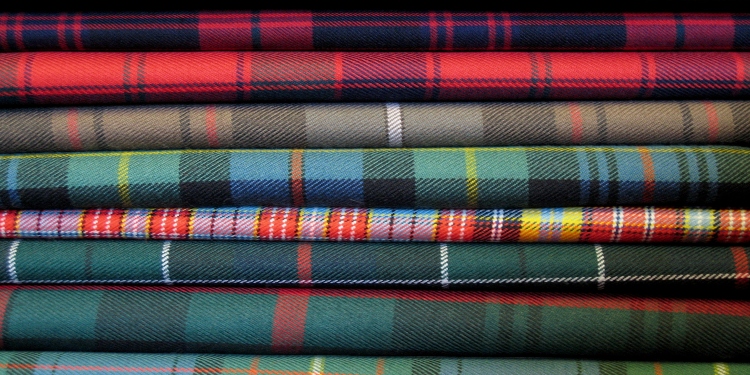
Key Takeaways
- Checked woollen cloth existed in Scotland long before it was tied to specific clans or families.
- The 1746 Dress Act banned Highland dress for close to forty years, which changed how tartan was worn and understood.
- Sir Walter Scott and King George IV’s 1822 visit to Edinburgh turned tartan into a national symbol almost overnight.
- Every tartan is built from a repeating pattern called a sett, recorded as a precise thread count.
- Tartan moved from clan cloth to military uniform to high fashion runway, and now shows up on everything from scarves to watch straps.
- Buyers who care about authenticity can check whether a tartan is officially registered before they commit to it.
A Pattern That’s Older Than Most People Assume
Ask someone where tartan comes from and you’ll usually get the same answer: Scottish clans, each with their own colours, worn since time immemorial. It’s a tidy story. It’s also not quite true.
Woven checked cloth existed in the region we now call Scotland for centuries before anyone linked a specific pattern to a specific family name. The version of tartan history most of us know, tidy clan colours and ancient bloodlines, is largely a product of the 1700s and 1800s, not the Iron Age. That doesn’t make tartan any less meaningful. It just means the real story is more interesting than the gift-shop version.


Where Tartan Actually Began
The earliest known piece of tartan-like cloth found in Scotland, sometimes called the Falkirk tartan, dates back roughly 1,700 years and was made from undyed wool in a simple check. It wasn’t a clan badge. It was practical, warm cloth woven from what local sheep provided.
For a long stretch after that, checked woollen cloth was just what Highland weavers made with the dyes and looms available to them. Colours came from local plants, lichens, and roots, so patterns from one glen often looked different from patterns in the next simply because of what grew nearby. Regional variation, not clan symbolism, explains a lot of the early diversity.
Formal proof of tartan being worn as clothing shows up later than most people expect. A German woodcut from 1631, depicting Highland mercenaries in the service of a European army, is one of the earliest clear visual records. So the leap from “checked cloth exists” to “tartan means something” took a very long time.
The Clan System, a Ban, and a Royal Visit
Tartan’s association with specific clans firmed up mainly in the 1600s and 1700s, as weaving became more organised and patterns, known as setts, became more standardised within regions and families.
Then came 1746. After the defeat of the Jacobite rising at Culloden, the British government passed the Dress Act, banning the wearing of Highland dress, including tartan, across most of Scotland. The ban lasted until 1782. For nearly four decades, tartan wasn’t a fashion statement. It was, in some contexts, a small act of defiance just to own a piece of it.
When the ban lifted, tartan didn’t just quietly return. It came roaring back with help from two unlikely figures: a novelist and a king.
Sir Walter Scott, whose romantic novels had already done wonders for Scotland’s image abroad, helped organise King George IV’s state visit to Edinburgh in 1822. Scott encouraged Highland dress and tartan pageantry throughout the visit, and the king himself appeared in a kilt. Almost overnight, tartan went from suppressed rebel cloth to fashionable, royally endorsed heritage wear. Clan chiefs who’d never worn a specific “clan tartan” before suddenly commissioned one. Weavers responded to demand, sometimes inventing patterns that had no basis in older tradition at all.
Why This Matters for What We Call “Traditional” Today
A lot of what people now treat as ancient clan tartan was standardised, or in some cases created, during this Victorian-era tartan boom. That’s not a scandal. It’s just useful context if you ever wonder why two supposedly ancient family tartans can look suspiciously fresh.
How a Tartan Pattern Is Actually Built
Here’s something most articles on this topic skip over: what makes a tartan a tartan, technically speaking.
Every tartan is built from a repeating unit called a sett. Weavers record a sett as a thread count, a precise sequence describing each colour and how many threads of it appear before the next colour starts. From that thread count alone, a weaver anywhere in the world can reproduce the exact pattern, down to the last strand.
This matters more than it sounds like it should. It means tartan isn’t just a vague check pattern, it’s closer to a formula. Scotland even has an official mechanism for recording these formulas: the Scottish Register of Tartans, a government database maintained by National Records of Scotland that holds thread counts and background information for thousands of tartans, both historic and newly designed. Anyone, anywhere, can register a new tartan there. You don’t need Scottish ancestry to do it, which surprises a lot of people.
Not every tartan in circulation is registered, and that’s fine. Registration is voluntary, not a requirement for legitimacy. But if you’re trying to confirm whether a pattern genuinely belongs to a clan, a region, or an organisation, the register is the closest thing to a source of truth.
From Uniform to Runway
Tartan’s next big leap happened through the military. Highland regiments in the British Army adopted specific tartans as part of their uniforms from the 1700s onward, which helped cement the idea that a tartan could represent an institution, not just a bloodline. That military association also carried tartan around the world, wherever those regiments served.
By the twentieth century, tartan had escaped Scotland entirely as a design idea. Fashion houses picked it up and ran with it. Burberry’s check became one of the most recognised patterns in global fashion, adapted from tartan principles rather than tied to any single clan. Punk fashion in the 1970s, closely tied to designers like Vivienne Westwood, took tartan in the opposite direction, using it as a symbol of rebellion rather than heritage. Grunge did something similar in the 1990s.
So which version is “correct,” the heritage one or the rebellious one? Honestly, both are. Tartan has always been flexible enough to mean loyalty to a monarch and defiance of one, sometimes within the same century.
Tartan’s Return to Everyday, Personal Objects
There’s a quieter shift happening now, less about catwalks and more about personal items. People are choosing tartan for things they use every day: scarves, bags, phone cases, and increasingly, watches and watch straps.
This isn’t really new territory for tartan. It’s arguably tartan going back to what it originally was, a practical, personal textile, just applied to modern objects instead of Highland dress. Brands working in this space, including MacKinnon Watches, source their tartan directly from Scottish mills that have woven these patterns for generations, which keeps a direct line running between a centuries-old craft and something someone might wear to work tomorrow.
For a lot of buyers, especially those in the Scottish diaspora across the US, Canada, and Australia, this matters more than it might seem to from the outside. A tartan strap or scarf can function as a small, wearable connection to a specific clan or region, something to mark a wedding, a graduation, or simply a way of saying “this is where my family comes from.” If you want to browse patterns by clan or region before deciding, MacKinnon Watches’ tartan finder lets you search by name, colour, or letter, which is a fairly practical illustration of how granular tartan choice has become in the age of e-commerce.
Choosing an Authentic Tartan Today
If you’re buying something tartan for sentimental reasons, a few questions are worth asking before you hand over payment.
Is the tartan tied to your specific clan, region, or organisation, or is it a generic check being sold as “Scottish”? Does the seller specify the tartan name at all, or just describe it as “plaid”? And is the tartan actually woven in Scotland, or produced elsewhere and marketed with Scottish imagery?
None of these questions have a universally “correct” answer. Plenty of people buy tartan purely because they like how it looks, and that’s a perfectly valid reason too. But for buyers who care about the heritage angle specifically, checking a pattern against the Scottish Register of Tartans, or asking a retailer directly where their tartan is sourced, generally clears things up fast.
Tartan has survived bans, wars, royal makeovers, punk rebellion, and roughly three centuries of shifting fashion trends. It’s outlasted most textile fads by a wide margin. That’s not bad going for a pattern that started out as a practical way to stay warm on a Highland hillside.
Frequently Asked Questions
Is tartan the same thing as plaid?
Not exactly. In the UK, tartan refers specifically to the Scottish woven pattern with its associated history and, often, clan or regional ties. In American English, “plaid” is frequently used as a general term for any checked pattern, tartan included, which causes a fair bit of cross-Atlantic confusion.
How old is the oldest known tartan?
The Falkirk tartan, discovered in Scotland, is estimated to be around 1,700 years old, making it one of the earliest known examples of checked woollen cloth from the region. It predates any clan association by well over a thousand years.
Do you need Scottish ancestry to wear a specific clan tartan?
No. There’s no legal restriction on who can wear any tartan, clan-associated or otherwise. Many people choose a tartan connected to their surname or heritage out of personal preference, but plenty of others wear tartan simply because they like the pattern.
What was the Dress Act of 1746?
It was British legislation banning the wearing of Highland dress, including tartan, in most of Scotland following the Jacobite rising. The ban stayed in place until 1782 and significantly shaped how tartan was later perceived once it returned to fashion.
How can I check if a tartan is officially registered?
The Scottish Register of Tartans, maintained by National Records of Scotland, holds records for thousands of tartans and is searchable online. It’s the most reliable way to confirm a tartan’s name, thread count, and background.
Why did King George IV’s 1822 visit matter so much for tartan?
The visit, orchestrated partly by novelist Sir Walter Scott, saw the king wear Highland dress in public, which rapidly rehabilitated tartan’s image after decades of suppression. It kicked off a surge in demand for clan tartans, some genuinely old and some invented for the occasion.
Can anyone create a new tartan design?
Yes. Individuals and organisations can design a new tartan and submit it to the Scottish Register of Tartans for official recording, regardless of nationality or ancestry. Hundreds of new tartans are registered every year, ranging from family designs to corporate and commemorative patterns.