




















































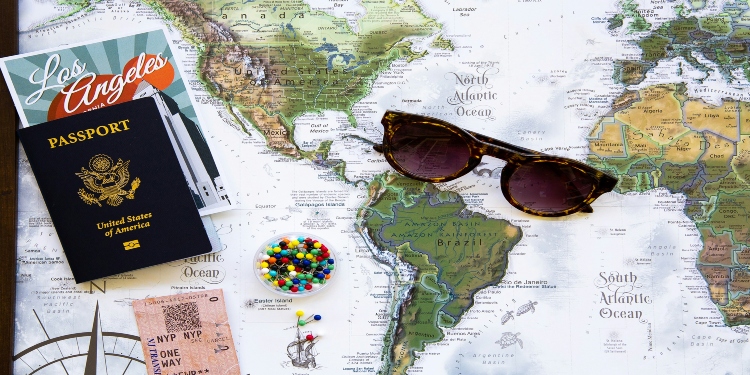
People travel for different reasons. Some want to take a break from work, others are curious about unfamiliar cultures, while many simply
enjoy discovering places they have never seen before. Whatever the motivation, travelling offers something that goes beyond a change of scenery.


A journey can introduce us to different ways of thinking, challenge our routines and give us experiences that are difficult to find in everyday life.
It can also remind us how much there is still to discover.
The scale of this interest is reflected in global tourism figures. According to UN Tourism, approximately 1.52 billion international tourist arrivals
were recorded in 2025, representing a 4% increase compared with 2024. Travel remains an important part of how people spend their time,
explore the world and connecting with new experiences.
A Broader Perspective: Seeing the World Differently
One of the most valuable aspects of travelling is the opportunity to see life from another perspective.
Visiting a different country means encountering unfamiliar customs, social habits, architecture, food and everyday routines.
Things that seem perfectly normal at home may be understood quite differently elsewhere.
These encounters encourage us to question our assumptions. We become more aware that there is rarely just one way to approach
a situation or organize daily life.
A few days spent in another culture can teach us something that books and documentaries cannot fully reproduce.
Observing how people live, communicate and interact gives us a more personal understanding of the world.
This wider perspective can also influence our professional and personal lives, making us more adaptable and receptive to unfamiliar ideas.
The Psychology of Discovery: Keeping Curiosity Alive
There is a particular pleasure in experiencing something for the first time.
It might be an unfamiliar dish, a conversation with someone from another country, a visit to an exhibition or simply finding a quiet street
away from the usual tourist routes. Travel introduces variety into our routines. It gives curiosity something new to work with and encourages us
to pay attention to details we might otherwise overlook. Not every memorable experience needs careful planning. Sometimes an unexpected
invitation, an interesting conversation or a spontaneous change of plans becomes the highlight of a trip.
The value of discovery lies partly in this openness to the unexpected.
Personal Growth: Learning Beyond the Comfort Zone
Travelling also involves dealing with unfamiliar situations. Different languages, transport systems, schedules and cultural expectations
require a certain degree of flexibility. Even experienced travelers occasionally face delays, misunderstandings or unexpected changes.
Learning to respond calmly and find alternatives is part of the experience.
Travel can help develop several useful qualities:
- Adaptability: becoming comfortable with changing circumstances.
- Independence: making decisions in unfamiliar environments.
- Confidence: discovering that new situations are often easier to manage than expected.
- Open-mindedness: accepting different approaches and perspectives.
- Curiosity: remaining interested in learning and exploring.
These qualities do not disappear when the journey ends. They can influence how we approach challenges and opportunities at home.
Wellbeing: The Value of Stepping Away
A change of environment can offer a welcome break from professional responsibilities and everyday demands.
Travelling creates opportunities to slow down, spend time outdoors, enjoy different surroundings and give attention to activities that are
often postponed. Research also reflects the connection people make between travel and personal wellbeing. A 2024 Washington State University
survey of 1,020 American adults found that 80% agreed travelling was an important way to improve their overall wellbeing.
The study also identified relaxation and beautiful surroundings among the leading travel motivators.
Of course, travel is not a substitute for proper rest or a solution to every source of stress. Its value often comes from having time and space
to do something different. A long walk through an unfamiliar city, a relaxed lunch or an afternoon by the sea can be as rewarding as
a carefully organized itinerary.
Human Connections: People Make the Journey
Places provide the setting, but people often shape how we remember a journey.
Conversations with locals, encounters with fellow travellers and unexpected friendships can become some of the most interesting parts of
an experience. A recommendation from someone who knows a city well may lead to a memorable discovery that no travel guide mentions.
The company we keep also influences the character of a trip. A good travel companion can bring a different perspective, share an interest or simply
make an ordinary moment more enjoyable. Compatibility matters. People may have different preferences when it comes to pace, activities, food
or the balance between exploration and relaxation. Being considerate of one another makes shared travel more rewarding.
The best arrangements leave room for individual interests as well as common experiences.
Shared Experiences: Memories That Last
There is a difference between seeing something and experiencing it together.
A remarkable landscape, a concert, a sailing afternoon or a dinner in an unfamiliar city can become more meaningful when shared
with someone who appreciates it too. Shared experiences also create a common history. Later, a photograph or a passing reference
can bring back an entire conversation, a particular atmosphere or an amusing incident.
This is one reason why many people value experiences alongside material possessions.
An experience can become part of a personal story, developing new meaning as it is remembered and discussed.
Travelling together does not require identical interests. In fact, discovering something through another person’s enthusiasm can make
the experience even more interesting.
Elite Travel: The Value of Time and Thoughtful Experiences
For some travelers, the appeal of elite travel is not simply about expensive hotels or exclusive destinations. It is about having freedom
to choose how time is spent and giving more attention to the quality of an experience.
Comfort, privacy and thoughtful organization can make a journey easier, but they are only part of the picture. Interesting conversations,
cultural experiences and the opportunity to spend time with people who share similar interests can be equally important.
A well-considered journey does not have to be packed with activities. Sometimes the most satisfying travel experience is one that allows
enough time to enjoy each moment without constantly looking at the clock.
Bringing the Journey Home
Returning home does not mean leaving every part of the journey behind.
New interests may develop, familiar habits may be reconsidered, and certain encounters may influence future decisions.
Even a relatively short trip can leave us with ideas that stay relevant long after unpacking.
Travel also gives us something valuable to look forward to. Planning another journey can be an opportunity to explore a new interest,
revisit a favorite place or share an experience with someone new.
For brands and services built around human connections, this idea is equally relevant. Bankmodels recognizes the importance of shared
experiences, meaningful introductions and the people who make time spent together memorable.
The Journey Is Part of the Experience
The value of travelling cannot be measured only by the number of countries visited or the distance covered.
It can be found in a new perspective, a skill developed, an unexpected discovery or a conversation that changes how we see something familiar.
Destinations give us places to explore. Experiences give us stories to remember. And the people we meet along the way often make those
stories worth telling.